Genre
native american music
Top Native american music Artists
Showing 25 of 1,372 artists



About Native american music
Native American music is a broad umbrella for the hundreds of distinct musical traditions of Indigenous peoples across North America. It encompasses ceremonial songs, social dances, prairie melodies, courtly chants, and increasingly, contemporary hybrids that fuse traditional sounds with jazz, rock, hip‑hop, and electronic music. What ties these forms together is a living sense of community, storytelling, and the deep spiritual and social roles music plays in daily life, healing, and celebration.
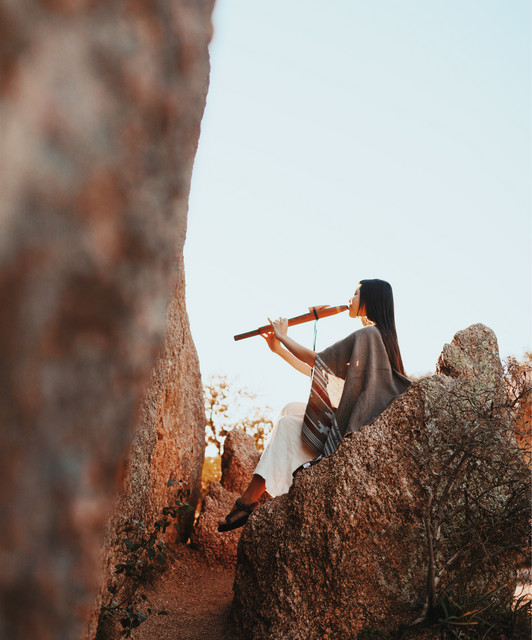
Historically, Native American music grew out of centuries of ritual and everyday life. Across tribes, songs were learned orally, passed from elder to apprentice, and tied to specific ceremonies, harvests, hunts, or rites of passage. The drum—the heartbeat of many nations—along with rattles, flutes, and voice, often carried the main melodic and rhythmic load. Vocables—syllables without a fixed meaning—are a common feature, giving songs a universal immediacy and meditative power that transcends language. In the Plains and Southwest, for example, the drum circle and interlocking vocal rhythms create a communal soundscape, while in the Northwest and Arctic regions, complex vocal techniques and unique wind or string instruments add color to the repertoire. The modern “powwow” drum and style emerged prominently in the late 19th and 20th centuries as a pan-tribal, social and competitive music form that helped preserve and adapt traditions under difficult historical circumstances.
In the late 20th century, Native American music began to reach wider audiences and evolve through cross-cultural collaboration. Contemporary artists and ensembles have become ambassadors, translating centuries-old sound into accessible, contemporary art. Notable figures include Buffy Sainte‑Marie, a Cree singer‑songwriter and activist whose work blends folk, pop, and Indigenous perspectives; Robbie Robertson, Mohawk guitarist and songwriter who helped bring Indigenous voices to a global audience through The Band; and R. Carlos Nakai, whose soaring Native American flute has become a cornerstone of the modern instrumental tradition. In Canada, artists like Tanya Tagaq have pushed Indigenous vocal traditions into bold, genre‑defying realms, while powwow groups such as Northern Cree continue to energize dancers and listeners with award‑winning repertoire.
Today, the genre enjoys a global footprint, with the United States and Canada as the core hubs—home to countless communities, festivals, and recording projects. There is also growing interest in Greenland, Mexico, and European circles where ethnomusicologists, festival curators, and adventurous listeners explore Indigenous North American sounds. Hybrid acts—such as electronic‑powwow collaborations—demonstrate how ancient practices can dialogue with modern production, expanding the palette for enthusiasts who crave rhythmic complexity, ceremonial dignity, and expressive vocal timbres.
For the music enthusiast, Native American music offers a profound sense of place and purpose—dense with history, ritual energy, and communal exchange—while also inviting exploration of new forms born from the fusion of tradition and innovation.
Historically, Native American music grew out of centuries of ritual and everyday life. Across tribes, songs were learned orally, passed from elder to apprentice, and tied to specific ceremonies, harvests, hunts, or rites of passage. The drum—the heartbeat of many nations—along with rattles, flutes, and voice, often carried the main melodic and rhythmic load. Vocables—syllables without a fixed meaning—are a common feature, giving songs a universal immediacy and meditative power that transcends language. In the Plains and Southwest, for example, the drum circle and interlocking vocal rhythms create a communal soundscape, while in the Northwest and Arctic regions, complex vocal techniques and unique wind or string instruments add color to the repertoire. The modern “powwow” drum and style emerged prominently in the late 19th and 20th centuries as a pan-tribal, social and competitive music form that helped preserve and adapt traditions under difficult historical circumstances.
In the late 20th century, Native American music began to reach wider audiences and evolve through cross-cultural collaboration. Contemporary artists and ensembles have become ambassadors, translating centuries-old sound into accessible, contemporary art. Notable figures include Buffy Sainte‑Marie, a Cree singer‑songwriter and activist whose work blends folk, pop, and Indigenous perspectives; Robbie Robertson, Mohawk guitarist and songwriter who helped bring Indigenous voices to a global audience through The Band; and R. Carlos Nakai, whose soaring Native American flute has become a cornerstone of the modern instrumental tradition. In Canada, artists like Tanya Tagaq have pushed Indigenous vocal traditions into bold, genre‑defying realms, while powwow groups such as Northern Cree continue to energize dancers and listeners with award‑winning repertoire.
Today, the genre enjoys a global footprint, with the United States and Canada as the core hubs—home to countless communities, festivals, and recording projects. There is also growing interest in Greenland, Mexico, and European circles where ethnomusicologists, festival curators, and adventurous listeners explore Indigenous North American sounds. Hybrid acts—such as electronic‑powwow collaborations—demonstrate how ancient practices can dialogue with modern production, expanding the palette for enthusiasts who crave rhythmic complexity, ceremonial dignity, and expressive vocal timbres.
For the music enthusiast, Native American music offers a profound sense of place and purpose—dense with history, ritual energy, and communal exchange—while also inviting exploration of new forms born from the fusion of tradition and innovation.