Genre
new isolationism
Top New isolationism Artists
Showing 5 of 5 artists
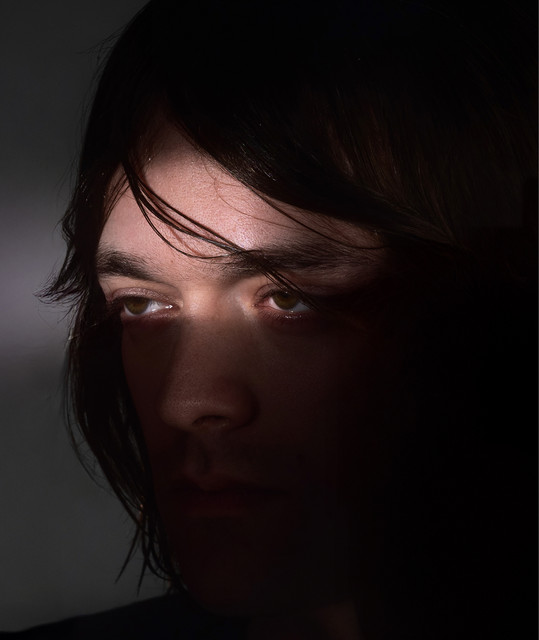



About New isolationism
New isolationism is a term you’ll encounter in contemporary music discourse to describe a evolving branch of experimental sound that treats solitude as a sonic medium. It’s not simply “calm ambient” or “minimal techno with reverb”; it’s a mindset that foregrounds space, restraint, and inward listening. The result is music that tends to feel like architecture you can hear: rooms, corners, drifts of air, and the quiet intensities that emerge when everything is pared down to texture, timing, and atmosphere.
Origins and birth
Scholars and critics place the emergence of new isolationism in the late 2010s and early 2020s, as a direct reaction to the age of constant streams and networked noise. Producers and composers operating in bedrooms and small studios began to favor sparse, carefully calibrated gestures over a rush of density. Influences braid together intricate ambient, post-minimalism, industrial mis en scène, and avant-garde techno, with an emphasis on deliberate pacing and the perception of space as an instrument. In this sense, the movement is as much about listening posture as it is about sound: music designed for solitary, contemplative consumption, rather than communal, club-centric moments.
Key artists and ambassadors
Because the term is still debated, critics often point to a core group whose work epitomizes the aesthetic rather than naming a fixed canon. Tim Hecker’s sculpted drones and tactile timbres offer “humid” spaces that feel both intimate and cathedral-like. Oneohtrix Point Never (Daniel Lopatin) pushes deconstructed, synthetic textures that fracture conventional song structures while preserving a sense of cold, contemplative distance. Fennesz blends guitar fragments with lush, grainy electronics to create tactile landscapes that could belong to an interior universe. Ben Frost builds architectural soundscapes—drone, percussion, and low-end walls that press in and invite focused listening. Gazelle Twin crafts eerie, claustrophobic atmospheres that fuse claustro-melodic motifs with unsettling isolation. More recently, artists such as Hildur Guðnadóttir and Lawrence English have been cited for work that leans into sonic architecture and stillness as political and emotional stakes.
Geography and popularity
New isolationism tends to find prominent reception in Europe and North America, with strong scenes in the United Kingdom, Germany, France, and the United States. It also resonates in Japan and parts of Scandinavia, where experimental scenes prize precise sonic control and contemplative listening. Labels that have helped propagate the sound—PAN, Kranky, Editions Mego, and Room40 among them—act as hubs for like-minded producers and for audiences seeking music that rewards patience and attentive listening. Beyond these hubs, independent artists across Latin America and Asia are increasingly contributing, reinforcing the sense that the genre is a global, if underground, phenomenon.
What it sounds like and how to listen
Expect rarefied dynamics, microtonal shifts, spacious reverb, and a willingness to let silence do work. Compositions often unfold in slow tempos or stretch out across long durations, inviting the listener to inhabit a sonic room rather than follow a traditional narrative arc. For enthusiasts, the appeal lies in the tactile, almost physical response of sound to space—how a single sustained tone can imply vastness, or how a fragmented texture can feel like a memory returning in fragments.
If you’re curious, start with a few representative listening sessions: a Tim Hecker drone piece, a Oneohtrix Point Never ambient excursion, a Fennesz texture study, and a Ben Frost architectural piece. You’ll hear a shared impulse—music that isolates sound within space, inviting deep, solitary focus.
Origins and birth
Scholars and critics place the emergence of new isolationism in the late 2010s and early 2020s, as a direct reaction to the age of constant streams and networked noise. Producers and composers operating in bedrooms and small studios began to favor sparse, carefully calibrated gestures over a rush of density. Influences braid together intricate ambient, post-minimalism, industrial mis en scène, and avant-garde techno, with an emphasis on deliberate pacing and the perception of space as an instrument. In this sense, the movement is as much about listening posture as it is about sound: music designed for solitary, contemplative consumption, rather than communal, club-centric moments.
Key artists and ambassadors
Because the term is still debated, critics often point to a core group whose work epitomizes the aesthetic rather than naming a fixed canon. Tim Hecker’s sculpted drones and tactile timbres offer “humid” spaces that feel both intimate and cathedral-like. Oneohtrix Point Never (Daniel Lopatin) pushes deconstructed, synthetic textures that fracture conventional song structures while preserving a sense of cold, contemplative distance. Fennesz blends guitar fragments with lush, grainy electronics to create tactile landscapes that could belong to an interior universe. Ben Frost builds architectural soundscapes—drone, percussion, and low-end walls that press in and invite focused listening. Gazelle Twin crafts eerie, claustrophobic atmospheres that fuse claustro-melodic motifs with unsettling isolation. More recently, artists such as Hildur Guðnadóttir and Lawrence English have been cited for work that leans into sonic architecture and stillness as political and emotional stakes.
Geography and popularity
New isolationism tends to find prominent reception in Europe and North America, with strong scenes in the United Kingdom, Germany, France, and the United States. It also resonates in Japan and parts of Scandinavia, where experimental scenes prize precise sonic control and contemplative listening. Labels that have helped propagate the sound—PAN, Kranky, Editions Mego, and Room40 among them—act as hubs for like-minded producers and for audiences seeking music that rewards patience and attentive listening. Beyond these hubs, independent artists across Latin America and Asia are increasingly contributing, reinforcing the sense that the genre is a global, if underground, phenomenon.
What it sounds like and how to listen
Expect rarefied dynamics, microtonal shifts, spacious reverb, and a willingness to let silence do work. Compositions often unfold in slow tempos or stretch out across long durations, inviting the listener to inhabit a sonic room rather than follow a traditional narrative arc. For enthusiasts, the appeal lies in the tactile, almost physical response of sound to space—how a single sustained tone can imply vastness, or how a fragmented texture can feel like a memory returning in fragments.
If you’re curious, start with a few representative listening sessions: a Tim Hecker drone piece, a Oneohtrix Point Never ambient excursion, a Fennesz texture study, and a Ben Frost architectural piece. You’ll hear a shared impulse—music that isolates sound within space, inviting deep, solitary focus.