Genre
nordic orchestra
Top Nordic orchestra Artists
Showing 25 of 41 artists









About Nordic orchestra
Nordic orchestra is not a strict genre with rigid rules, but a descriptive umbrella for the orchestral music produced in the Nordic countries—Finland, Sweden, Norway, Denmark, and Iceland. It is defined less by a single recipe than by a shared instinct: transparency and clarity of texture, an emphasis on natural atmospheres, and a sensibility that often pairs restrained lyricism with sudden, elemental energy. Its roots reach back to the late 19th century, when composers in the Nordic nations embraced national identity and landscapes as fuel for orchestral color.
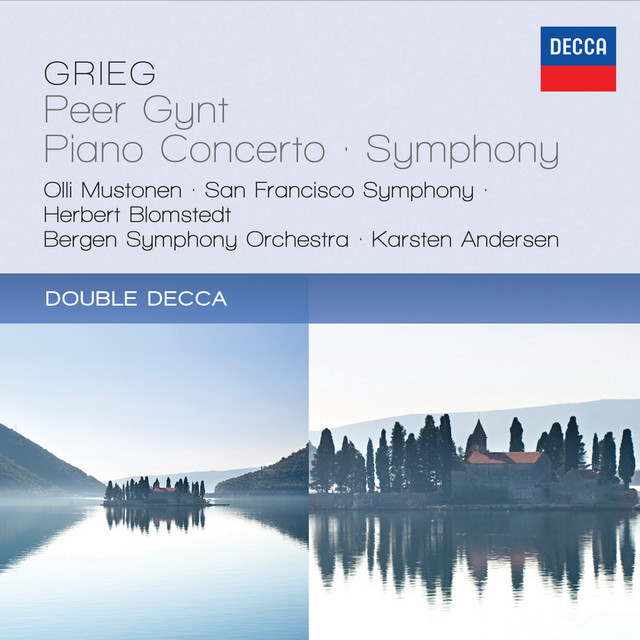
The birth of the Nordic orchestral voice sits most clearly with the great late-Romantic figures. Finland’s Jean Sibelius (1865–1957) fused Finnish legends, sweeping codas, and bracing orchestration to become perhaps the most recognizably Nordic sound. Norway’s Edvard Grieg (1843–1907) brought vivid folk-inflected color to the orchestra, while Denmark’s Carl Nielsen (1865–1931) introduced a brisk energy and architectural clarity in his symphonies. Together these composers helped establish an orchestral language that was at once intimate and monumental, often featuring luminous strings, bright brass, and woodwinds with a keen sense of seasonal light. In Sweden, a parallel stream—with figures such as Wilhelm Stenhammar and later Helgeström–era composers—consolidated a national voice that could be both lyrical and architecturally disciplined.
The Nordic sound then evolved through the 20th century as modernist currents touched the region while the emphasis on tonal clarity remained. Finland’s Magnus Lindberg (b. 1958) became a leading figure in contemporary orchestration, pushing dense textures into sculpted, cinematic shapes. Denmark’s Per Nørgård, Sweden’s Anders Hillborg, and their peers expanded harmonic language while preserving the transparent, daylight-bright quality associated with Nordic music. In recent decades the scene has embraced a broader circle of voices, from Iceland’s Anna Thorvaldsdottir to film-score virtuosos like Hildur Guðnadóttir, whose orchestral writing navigates vast timbral landscapes with a Nordic impulse toward atmosphere and rupture.
Ambassadors and engines of the scene today include renowned conductors such as Esa-Pekka Salonen (Finnish) and Sakari Oramo (Finnish), who have championed Nordic orchestral repertoire on the world stage. The orchestras most closely linked to this tradition are the major Nordic ensembles: the Oslo Philharmonic, the Royal Swedish Philharmonic (Kungliga Filharmonikerna), the Danish National Symphony Orchestra, the Iceland Symphony Orchestra, and their peers across the region. Outside the Nordic circle, these works have found eager audiences in Germany, the United Kingdom, and the United States, especially at major festivals and in touring programs that spotlight contemporary Nordic music.
What to listen for when exploring Nordic orchestral music: a sense of spacious, almost crystalline textures; clear lines in the strings and winds; a preference for expressive arc built through orchestral color rather than excessive density; and a relationship to nature—ice, wind, water, forests—translated into sound. Core works to start with include Sibelius’s Symphony No. 2 or Finlandia, Grieg’s orchestral suites from Peer Gynt, Nielsen’s The Inextinguishable, and then move into Lindberg’s bright, sculptural modernism and Thorvaldsdottir’s architecturally expansive textures. The Nordic orchestra, in its many guises, remains a living dialogue between landscape, lineage, and fearless orchestral invention.
The birth of the Nordic orchestral voice sits most clearly with the great late-Romantic figures. Finland’s Jean Sibelius (1865–1957) fused Finnish legends, sweeping codas, and bracing orchestration to become perhaps the most recognizably Nordic sound. Norway’s Edvard Grieg (1843–1907) brought vivid folk-inflected color to the orchestra, while Denmark’s Carl Nielsen (1865–1931) introduced a brisk energy and architectural clarity in his symphonies. Together these composers helped establish an orchestral language that was at once intimate and monumental, often featuring luminous strings, bright brass, and woodwinds with a keen sense of seasonal light. In Sweden, a parallel stream—with figures such as Wilhelm Stenhammar and later Helgeström–era composers—consolidated a national voice that could be both lyrical and architecturally disciplined.
The Nordic sound then evolved through the 20th century as modernist currents touched the region while the emphasis on tonal clarity remained. Finland’s Magnus Lindberg (b. 1958) became a leading figure in contemporary orchestration, pushing dense textures into sculpted, cinematic shapes. Denmark’s Per Nørgård, Sweden’s Anders Hillborg, and their peers expanded harmonic language while preserving the transparent, daylight-bright quality associated with Nordic music. In recent decades the scene has embraced a broader circle of voices, from Iceland’s Anna Thorvaldsdottir to film-score virtuosos like Hildur Guðnadóttir, whose orchestral writing navigates vast timbral landscapes with a Nordic impulse toward atmosphere and rupture.
Ambassadors and engines of the scene today include renowned conductors such as Esa-Pekka Salonen (Finnish) and Sakari Oramo (Finnish), who have championed Nordic orchestral repertoire on the world stage. The orchestras most closely linked to this tradition are the major Nordic ensembles: the Oslo Philharmonic, the Royal Swedish Philharmonic (Kungliga Filharmonikerna), the Danish National Symphony Orchestra, the Iceland Symphony Orchestra, and their peers across the region. Outside the Nordic circle, these works have found eager audiences in Germany, the United Kingdom, and the United States, especially at major festivals and in touring programs that spotlight contemporary Nordic music.
What to listen for when exploring Nordic orchestral music: a sense of spacious, almost crystalline textures; clear lines in the strings and winds; a preference for expressive arc built through orchestral color rather than excessive density; and a relationship to nature—ice, wind, water, forests—translated into sound. Core works to start with include Sibelius’s Symphony No. 2 or Finlandia, Grieg’s orchestral suites from Peer Gynt, Nielsen’s The Inextinguishable, and then move into Lindberg’s bright, sculptural modernism and Thorvaldsdottir’s architecturally expansive textures. The Nordic orchestra, in its many guises, remains a living dialogue between landscape, lineage, and fearless orchestral invention.