Genre
nuevo folklore mexicano
Top Nuevo folklore mexicano Artists
Showing 4 of 4 artists



About Nuevo folklore mexicano
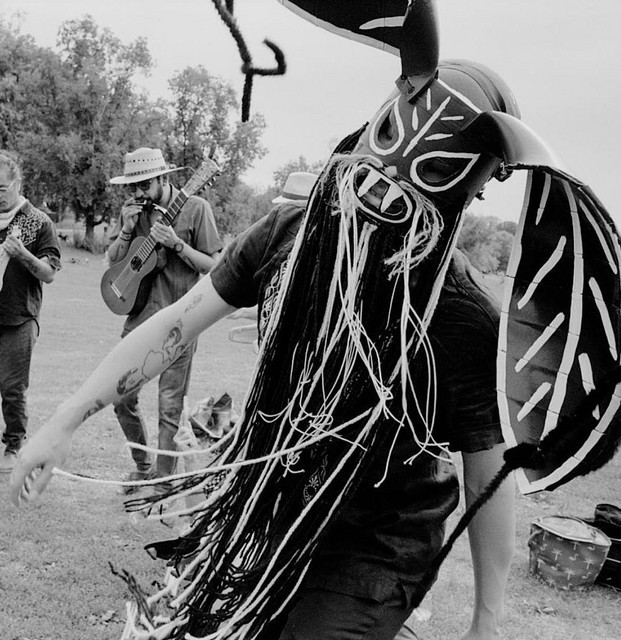
Nuevo folklore mexicano is a contemporary revival and reimagining of traditional Mexican folk music. It’s not a single fixed style but a movement that blends regional roots with modern sensibilities, creating a sound that feels at once ancestral and new. The approach honors regional repertoires—sones from Veracruz, huapangos from the Huasteca, zapateados, jarana forms, and mariachi-inflected textures—while inviting contemporary production, diverse instrumentation, and cross-genre collaboration. The result is music that speaks to both old and new audiences, and to the social and political textures of today.
Origins and era
The impulse behind nuevo folklore mexicano began to crystallize in the late 1990s and early 2000s in Mexico City, Oaxaca and other cultural hubs. It grew out of a broader folk revival in Latin America and the influence of nueva canción, global folk and world-music circuits. Artists sought to revive forgotten melodies and regional voices, but with arrangements, languages, and recording techniques that resonated with the 21st century. The movement also aligned with a renewed interest in Indigenous languages and regional identities, giving voice to communities that had long been underrepresented in mainstream media.
Sound and aesthetics
Core to the genre is a dialogue between tradition and experimentation. You’ll hear authentic folk timbres—jarana and other regional strings, vihuela, trumpets in certain rural ensembles, percussive dances—and still feel contemporary textures: intimate acoustic moments, subtle electronic textures, indie and pop-inspired songwriting, and cinematic or chamber-like arrangements. The genre often foregrounds storytelling and social reflection, weaving personal memory with collective history. It’s common to encounter bilingual or multilingual projects, incorporating Indigenous languages such as Nahuatl, Zapotec, Mixtec or Otomi alongside Spanish, which deepens the sense of cultural continuity and innovation.
Key figures and ambassadors
Several artists are widely cited as central to the nuevo folklore mexicano narrative. Lila Downs is frequently highlighted as a pioneer who fused traditional Mexican forms with global influences and who emphasizes Indigenous heritage in her music. Natalia Lafourcade, with her folk-inflected songwriting and refined productions, helped popularize a modern, accessible lodestar for the movement. Julieta Venegas’ contemporary folk-pop sensibility and collaborations broadened the audience for traditional-inspired material. In recent years, Silvana Estrada has emerged as a powerful voice, pairing intimate, almost journal-like lyrics with spare, sculpted arrangements. Together, these artists act as ambassadors, showing how old sounds can live in new bodies and reach diverse listeners.
Geography of popularity
Nuevo folklore mexicano is most strongly rooted in Mexico, where regional traditions are varied and vibrant. It has also found a significant audience among Mexican and Latin American diaspora communities in the United States—especially in California, Texas, and New York—where there is a receptive market for culturally resonant Mexican folk with modern production. Beyond North America, the approach has resonated in Spain and Europe through world-music networks and festivals, as well as in broader Latin American musical conversations, where its emphasis on memory, language and identity echoes in other regional folk revivals.
Why it matters
For enthusiasts, nuevo folklore mexicano offers a fertile listening ground: songs that honor heritage while engaging with today’s sonic language; performances that celebrate regional languages and communities; and a sense of continuity that links generations. It’s a living archive and a forward-looking project, inviting listeners to explore Mexico’s diverse musical landscapes through fresh, contemporary voices.
Origins and era
The impulse behind nuevo folklore mexicano began to crystallize in the late 1990s and early 2000s in Mexico City, Oaxaca and other cultural hubs. It grew out of a broader folk revival in Latin America and the influence of nueva canción, global folk and world-music circuits. Artists sought to revive forgotten melodies and regional voices, but with arrangements, languages, and recording techniques that resonated with the 21st century. The movement also aligned with a renewed interest in Indigenous languages and regional identities, giving voice to communities that had long been underrepresented in mainstream media.
Sound and aesthetics
Core to the genre is a dialogue between tradition and experimentation. You’ll hear authentic folk timbres—jarana and other regional strings, vihuela, trumpets in certain rural ensembles, percussive dances—and still feel contemporary textures: intimate acoustic moments, subtle electronic textures, indie and pop-inspired songwriting, and cinematic or chamber-like arrangements. The genre often foregrounds storytelling and social reflection, weaving personal memory with collective history. It’s common to encounter bilingual or multilingual projects, incorporating Indigenous languages such as Nahuatl, Zapotec, Mixtec or Otomi alongside Spanish, which deepens the sense of cultural continuity and innovation.
Key figures and ambassadors
Several artists are widely cited as central to the nuevo folklore mexicano narrative. Lila Downs is frequently highlighted as a pioneer who fused traditional Mexican forms with global influences and who emphasizes Indigenous heritage in her music. Natalia Lafourcade, with her folk-inflected songwriting and refined productions, helped popularize a modern, accessible lodestar for the movement. Julieta Venegas’ contemporary folk-pop sensibility and collaborations broadened the audience for traditional-inspired material. In recent years, Silvana Estrada has emerged as a powerful voice, pairing intimate, almost journal-like lyrics with spare, sculpted arrangements. Together, these artists act as ambassadors, showing how old sounds can live in new bodies and reach diverse listeners.
Geography of popularity
Nuevo folklore mexicano is most strongly rooted in Mexico, where regional traditions are varied and vibrant. It has also found a significant audience among Mexican and Latin American diaspora communities in the United States—especially in California, Texas, and New York—where there is a receptive market for culturally resonant Mexican folk with modern production. Beyond North America, the approach has resonated in Spain and Europe through world-music networks and festivals, as well as in broader Latin American musical conversations, where its emphasis on memory, language and identity echoes in other regional folk revivals.
Why it matters
For enthusiasts, nuevo folklore mexicano offers a fertile listening ground: songs that honor heritage while engaging with today’s sonic language; performances that celebrate regional languages and communities; and a sense of continuity that links generations. It’s a living archive and a forward-looking project, inviting listeners to explore Mexico’s diverse musical landscapes through fresh, contemporary voices.