Genre
orthodox chant
Top Orthodox chant Artists
Showing 25 of 25 artists




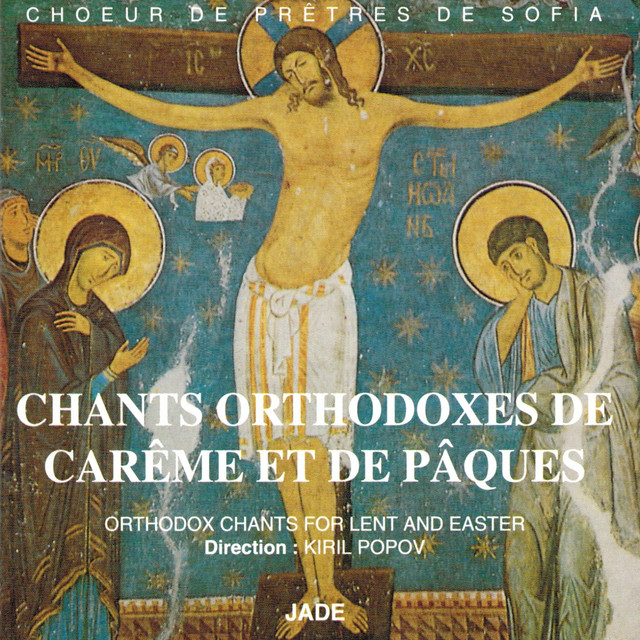

About Orthodox chant
Orthodox chant is the liturgical singing tradition of Eastern Orthodox (and some Oriental Orthodox) churches. It is not a single fixed style but a family of modal, resonant chant practices that share a commitment to sacred texts, a strong sense of communal voice, and a long history tied to the rhythms of the church year. For music enthusiasts, it offers a deep dive into modal melodies, ancient notation, and the interplay between chant, hymnography, and liturgy.
Origins and development
The roots of Orthodox chant lie in the late antique and early Byzantine world. By the 6th–9th centuries, monastic communities in Constantinople and across the Byzantine world were shaping a living repertoire of hymnography and melodic formulae. Early hymnographers such as Romanos the Melodist (6th century), St. Kassia (9th century), and Kosmas of Maiuma crafted kontakia, kontakaria, stichera, and kathismata—texts that would become central to the daily and seasonal offices. The system of eight modes, the octoechos, began to take shape during the Middle Byzantium and remains a structural backbone of most Orthodox chant, governing pitch contours, melodic formulas, and mood across the liturgical year.
Notational and performative evolution
Notation emerged more fully from roughly the 9th century onward in the Byzantine world, moving chant from oral tradition toward more standardized practices. In the 18th and 19th centuries, a decisive codification occurred with the reformers known as the “Great Church” team—Chrysanthos of Madytos, Gregorios the Protopsaltis, and Chourmouzios the Archivist—who systematized chant pedagogy and introduced a modernized notation and pedagogy that shaped Greek Orthodox chant for generations. These changes helped preserve the tradition in a rapidly changing world while enabling it to travel beyond its historic homelands.
Key figures and ambassadors
Historically, the canon of Orthodox chant rests on hymnographers whose texts and melodies shaped worship for centuries: Romanos the Melodist, St. Kassia, and John of Damascus are frequently cited as foundational contributors. In the contemporary era, several ensembles and choirs have become ambassadors of the genre to a global audience. The Cappella Romana (Portland, USA) and the Greek Byzantine Choir are especially influential in presenting Byzantine and post-Byzantine repertoires to concert audiences. In the milieu of liturgical practice, churches across Greece, Russia, Serbia, Bulgaria, and Georgia respectively maintain robust performing and teaching traditions, while diaspora communities in the United States, Canada, Australia, and the United Kingdom foster vibrant, living practices of Orthodox chant.
Geography and reception
Orthodox chant is most deeply rooted in Greece and Cyprus, where the Greek liturgical language and the Byzantine chant tradition are closely intertwined. It also thrives in Russia, Serbia, Bulgaria, and Georgia, each with distinctive regional idioms—Church Slavonic in many Slavic churches, Georgian in the unique polyphonic tradition of the Georgian church, and localized languages in other Orthodox centers. In modern concert settings, listeners encounter Orthodox chant in a range of configurations—from intimate a cappella renderings to richly textured multi-part choirs—often performed in churches, concert halls, and academic settings.
What to listen for
Expect modal melodies that rise and fold with prayerful intensity, often sung a cappella, sometimes with a drone (ison) or simple accompaniment in certain traditions. The atmosphere is contemplative and austere, yet deeply expressive, inviting the listener into a sense of timeless liturgy. For enthusiasts, Orthodox chant is a gateway to centuries of sacred music, theology expressed through sound, and a living, evolving bridge between ancient chant, church ritual, and contemporary performance.
Origins and development
The roots of Orthodox chant lie in the late antique and early Byzantine world. By the 6th–9th centuries, monastic communities in Constantinople and across the Byzantine world were shaping a living repertoire of hymnography and melodic formulae. Early hymnographers such as Romanos the Melodist (6th century), St. Kassia (9th century), and Kosmas of Maiuma crafted kontakia, kontakaria, stichera, and kathismata—texts that would become central to the daily and seasonal offices. The system of eight modes, the octoechos, began to take shape during the Middle Byzantium and remains a structural backbone of most Orthodox chant, governing pitch contours, melodic formulas, and mood across the liturgical year.
Notational and performative evolution
Notation emerged more fully from roughly the 9th century onward in the Byzantine world, moving chant from oral tradition toward more standardized practices. In the 18th and 19th centuries, a decisive codification occurred with the reformers known as the “Great Church” team—Chrysanthos of Madytos, Gregorios the Protopsaltis, and Chourmouzios the Archivist—who systematized chant pedagogy and introduced a modernized notation and pedagogy that shaped Greek Orthodox chant for generations. These changes helped preserve the tradition in a rapidly changing world while enabling it to travel beyond its historic homelands.
Key figures and ambassadors
Historically, the canon of Orthodox chant rests on hymnographers whose texts and melodies shaped worship for centuries: Romanos the Melodist, St. Kassia, and John of Damascus are frequently cited as foundational contributors. In the contemporary era, several ensembles and choirs have become ambassadors of the genre to a global audience. The Cappella Romana (Portland, USA) and the Greek Byzantine Choir are especially influential in presenting Byzantine and post-Byzantine repertoires to concert audiences. In the milieu of liturgical practice, churches across Greece, Russia, Serbia, Bulgaria, and Georgia respectively maintain robust performing and teaching traditions, while diaspora communities in the United States, Canada, Australia, and the United Kingdom foster vibrant, living practices of Orthodox chant.
Geography and reception
Orthodox chant is most deeply rooted in Greece and Cyprus, where the Greek liturgical language and the Byzantine chant tradition are closely intertwined. It also thrives in Russia, Serbia, Bulgaria, and Georgia, each with distinctive regional idioms—Church Slavonic in many Slavic churches, Georgian in the unique polyphonic tradition of the Georgian church, and localized languages in other Orthodox centers. In modern concert settings, listeners encounter Orthodox chant in a range of configurations—from intimate a cappella renderings to richly textured multi-part choirs—often performed in churches, concert halls, and academic settings.
What to listen for
Expect modal melodies that rise and fold with prayerful intensity, often sung a cappella, sometimes with a drone (ison) or simple accompaniment in certain traditions. The atmosphere is contemplative and austere, yet deeply expressive, inviting the listener into a sense of timeless liturgy. For enthusiasts, Orthodox chant is a gateway to centuries of sacred music, theology expressed through sound, and a living, evolving bridge between ancient chant, church ritual, and contemporary performance.