Genre
oud
Top Oud Artists
Showing 19 of 19 artists





About Oud
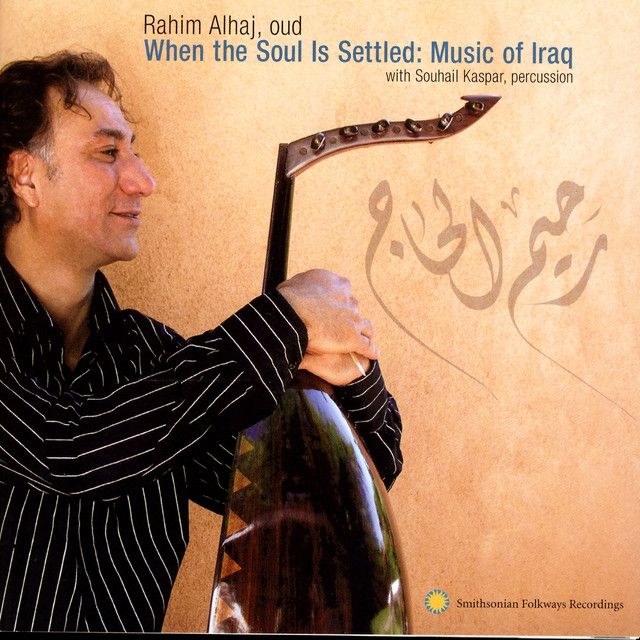
The oud is a pear-shaped, fretless plucked instrument that sits at the core of Arab classical music and, more broadly, the musical culture of the Near East and North Africa. It is one of the oldest continuously used plucked instruments in the world and is widely regarded as the direct ancestor of the European lute. The instrument’s modern silhouette solidified in the medieval courts of the Abbasid era in the region that is now Iraq and Syria, though its roots reach further back to earlier lutes from Mesopotamia, Egypt, and the wider Mediterranean. By the medieval period the oud had become a central voice in ensembles and solo performance, a status it retains in the contemporary world.
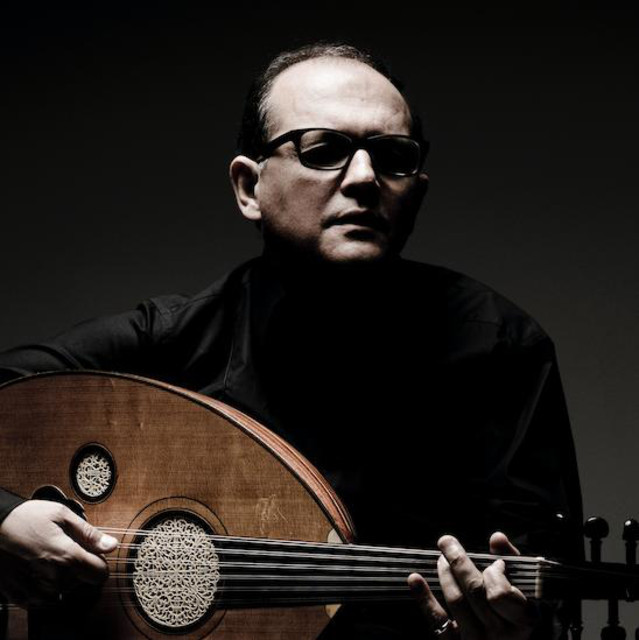
Constructed from carved wood with a deep back and a short neck, the oud’s soundboard bears a large, ornate sound hole or rosette. It typically carries 11 strings in five or six double courses (with occasional single bass strings), and it is famously fretless, which allows for the microtonal freedom essential to maqam-based improvisation. The instrument’s characteristic warmth, sweetness, and percussive attack make it uniquely expressive for intimate solo pieces and expansive ensemble works alike. Its technique emphasizes delicate glissandi, vibrato, subtle trills, and a rich palette of ornaments that lyricize long melodic lines.
In performance practice, the oud usually functions within a takht or larger ensemble, alongside qanun, ney, violin, percussion (riq or dumbek), and sometimes a viol or cello. The melodic material centers on maqamat, sophisticated modal systems that use notes and intervals beyond the Western scale, often embracing quarter- and microtones. Improvisation and repertoire range from classical taqsim (improvised solos) to notated pieces in a broad spectrum of moods, from lyrical lyricism to virtuosic bravura.
The oud’s popularity is strongest in the Arab world and its diaspora. It is a cornerstone in Egypt, Iraq, Syria, Lebanon, Palestine, and Jordan, with a long tradition in North Africa—especially in Morocco and Algeria—where it mingles with local styles and historical forms. It is also present in Turkish and Iranian music, where the instrument has influenced regional lutes and throat-singing traditions. Outside the region, the oud has found audiences in Europe and the Americas through world-music festivals, fusion projects, and academic study, strengthening cross-cultural collaborations and contemporary experimentation.
Key ambassadors have shaped the instrument’s modern identity. Farid al-Atrash, a Syrian-born Egyptian icon, fused oud virtuosity with popular song and cinema, helping popularize the instrument across Arab audiences. Munir Bashir, an Iraqi master who refined concert oud technique and elevated improvisational fluency, is often celebrated as a pivotal figure in 20th-century oud playing. Naseer Shamma, widely regarded as an ambassador of the oud in the modern era, has expanded its reach through pedagogy, orchestration, and global touring. Anouar Brahem from Tunisia has become a leading innovator, blending traditional Arabic improvisation with jazz, contemporary classical, and world-music sensibilities. Together, these artists demonstrate the oud’s versatility—from intimate solo performance to large-scale, cross-cultural collaborations.
For the dedicated listener, the oud offers a gateway to centuries of musical memory, a breathy, intimate voice that travels across continents while remaining distinctly of the Arab musical imagination.
Constructed from carved wood with a deep back and a short neck, the oud’s soundboard bears a large, ornate sound hole or rosette. It typically carries 11 strings in five or six double courses (with occasional single bass strings), and it is famously fretless, which allows for the microtonal freedom essential to maqam-based improvisation. The instrument’s characteristic warmth, sweetness, and percussive attack make it uniquely expressive for intimate solo pieces and expansive ensemble works alike. Its technique emphasizes delicate glissandi, vibrato, subtle trills, and a rich palette of ornaments that lyricize long melodic lines.
In performance practice, the oud usually functions within a takht or larger ensemble, alongside qanun, ney, violin, percussion (riq or dumbek), and sometimes a viol or cello. The melodic material centers on maqamat, sophisticated modal systems that use notes and intervals beyond the Western scale, often embracing quarter- and microtones. Improvisation and repertoire range from classical taqsim (improvised solos) to notated pieces in a broad spectrum of moods, from lyrical lyricism to virtuosic bravura.
The oud’s popularity is strongest in the Arab world and its diaspora. It is a cornerstone in Egypt, Iraq, Syria, Lebanon, Palestine, and Jordan, with a long tradition in North Africa—especially in Morocco and Algeria—where it mingles with local styles and historical forms. It is also present in Turkish and Iranian music, where the instrument has influenced regional lutes and throat-singing traditions. Outside the region, the oud has found audiences in Europe and the Americas through world-music festivals, fusion projects, and academic study, strengthening cross-cultural collaborations and contemporary experimentation.
Key ambassadors have shaped the instrument’s modern identity. Farid al-Atrash, a Syrian-born Egyptian icon, fused oud virtuosity with popular song and cinema, helping popularize the instrument across Arab audiences. Munir Bashir, an Iraqi master who refined concert oud technique and elevated improvisational fluency, is often celebrated as a pivotal figure in 20th-century oud playing. Naseer Shamma, widely regarded as an ambassador of the oud in the modern era, has expanded its reach through pedagogy, orchestration, and global touring. Anouar Brahem from Tunisia has become a leading innovator, blending traditional Arabic improvisation with jazz, contemporary classical, and world-music sensibilities. Together, these artists demonstrate the oud’s versatility—from intimate solo performance to large-scale, cross-cultural collaborations.
For the dedicated listener, the oud offers a gateway to centuries of musical memory, a breathy, intimate voice that travels across continents while remaining distinctly of the Arab musical imagination.