Genre
persian hip hop
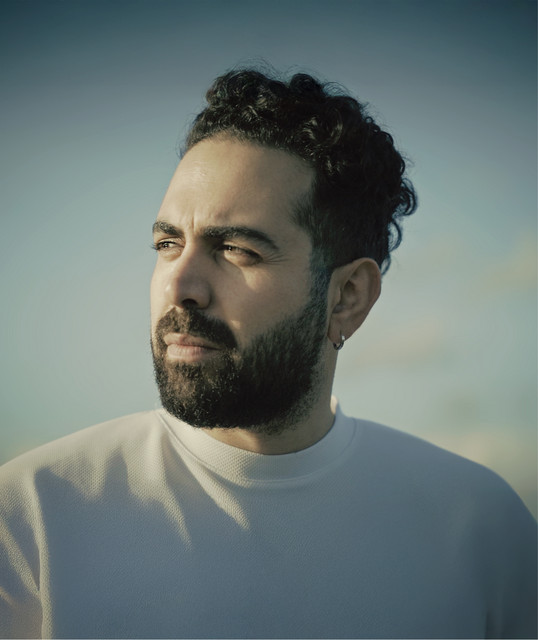
Top Persian hip hop Artists
Showing 25 of 66 artists

About Persian hip hop
Persian hip hop, often called Iranian hip hop or Persian rap, is a genre that folds the cadence and swagger of urban American rap into Persian language and Iranian sensibilities. It is a music movement born in Tehran’s streets and bedrooms, where internet access and a forbidden- but-fervent appetite for self-expression allowed a new voice to emerge in the late 1990s and early 2000s. From underground courtyards to online channels, Persian hip hop has grown into a bridge between tradition and modern youth culture, a counterpoint to censorship and a way to talk about daily life, love, and social critique in Iran and beyond.
Texture and language: The sound often leans on boom-bap-inspired beats, but it absorbs trap, electronic, and dance-floor textures as it travels through diasporic scenes. Lyrically, it ranges from gritty street narratives and social commentary to introspective poetry and wordplay—often delivered in Farsi, with occasional Persian dialects or code-switching when artists address international audiences.
Origins and pioneers: Hichkas is widely regarded as the father of Persian hip hop, pushing lyrical vulnerability and street realism into the Iranian mainstream. The Tehran-based collective Zedbazi expanded the movement, shaping its aesthetics and public profile in the late 2000s and helping the genre reach a wider audience inside Iran and among Persian-speaking communities abroad. Later generations built on those foundations with artists who connect the Iranian underground to diasporic scenes in Europe and North America. One of the most visible figures in contemporary Persian rap is Pishro, who has helped bring Persian-language lyrics into larger venues and streaming platforms.
Inside Iran, censorship and social constraints have forced the scene to operate with a blend of secrecy and resilience. Music often travels through online channels, private gatherings, and underground venues, where artists experiment with a fusion of traditional sounds and modern beats. Producers frequently incorporate elements of Persian instrumentation—such as subtle uses of modal melodies and samples nodding to classical poetry—to create a distinctive texture within a global hip hop frame.
Global footprint: Persian hip hop thrives primarily in Iran and Afghanistan, where Dari and Persian rhetoric mingle with local slang; it also resonates in Tajikistan and among Persian-speaking diasporas in Sweden, the United Kingdom, the Netherlands, Canada, and the United States. In places with sizable Iranian or Afghan communities, local producers fuse Persian rap with regional influences, creating hybrid sounds that push the genre forward.
Ambition and themes: The genre often addresses urban hardship, censorship, identity, longing for freedom, and social critique of politics and economy. It is also a space for poets and rappers to experiment with the Persian language, referencing classical poetry and modern slang in the same breath. In recent years, cross-border collaborations have flourished, expanding the sonic palette and bringing fresh energy from Europe and North America back to Iranian and Persian-speaking audiences.
Listening approach: For newcomers, start with the foundational work by Hichkas, then explore Zedbazi’s era-defining releases, and move into contemporary Persian rappers who blend traditional sensibilities with global hip hop production. Persian hip hop is a living, evolving form that continues to adapt as it crosses borders and languages, while preserving its core impulse: to give voice to Iranians and Persian-speaking communities in a world of rapid change.
Texture and language: The sound often leans on boom-bap-inspired beats, but it absorbs trap, electronic, and dance-floor textures as it travels through diasporic scenes. Lyrically, it ranges from gritty street narratives and social commentary to introspective poetry and wordplay—often delivered in Farsi, with occasional Persian dialects or code-switching when artists address international audiences.
Origins and pioneers: Hichkas is widely regarded as the father of Persian hip hop, pushing lyrical vulnerability and street realism into the Iranian mainstream. The Tehran-based collective Zedbazi expanded the movement, shaping its aesthetics and public profile in the late 2000s and helping the genre reach a wider audience inside Iran and among Persian-speaking communities abroad. Later generations built on those foundations with artists who connect the Iranian underground to diasporic scenes in Europe and North America. One of the most visible figures in contemporary Persian rap is Pishro, who has helped bring Persian-language lyrics into larger venues and streaming platforms.
Inside Iran, censorship and social constraints have forced the scene to operate with a blend of secrecy and resilience. Music often travels through online channels, private gatherings, and underground venues, where artists experiment with a fusion of traditional sounds and modern beats. Producers frequently incorporate elements of Persian instrumentation—such as subtle uses of modal melodies and samples nodding to classical poetry—to create a distinctive texture within a global hip hop frame.
Global footprint: Persian hip hop thrives primarily in Iran and Afghanistan, where Dari and Persian rhetoric mingle with local slang; it also resonates in Tajikistan and among Persian-speaking diasporas in Sweden, the United Kingdom, the Netherlands, Canada, and the United States. In places with sizable Iranian or Afghan communities, local producers fuse Persian rap with regional influences, creating hybrid sounds that push the genre forward.
Ambition and themes: The genre often addresses urban hardship, censorship, identity, longing for freedom, and social critique of politics and economy. It is also a space for poets and rappers to experiment with the Persian language, referencing classical poetry and modern slang in the same breath. In recent years, cross-border collaborations have flourished, expanding the sonic palette and bringing fresh energy from Europe and North America back to Iranian and Persian-speaking audiences.
Listening approach: For newcomers, start with the foundational work by Hichkas, then explore Zedbazi’s era-defining releases, and move into contemporary Persian rappers who blend traditional sensibilities with global hip hop production. Persian hip hop is a living, evolving form that continues to adapt as it crosses borders and languages, while preserving its core impulse: to give voice to Iranians and Persian-speaking communities in a world of rapid change.