Genre
polish folk
Top Polish folk Artists
Showing 8 of 8 artists



About Polish folk
Polish folk is not a single sound so much as a living map of Poland’s regional voices, dances, and everyday rituals turned into music. It encompasses the deep ruts of village tradition as well as the highland melodies from the Tatra foothills and the plains songs of Mazovia. What binds them is a shared devotion to community singing, seasonal celebrations, and a reverence for the sound of traditional instruments—from fiddles and accordions to bagpipes, hammered dulcimers, and wooden flutes. The result is music that can feel rustic and earthy one moment, radiant and celebratory the next.
The genre’s roots reach back to rural life and the long memory of common songs sung around harvests, weddings, and church holidays. In the 19th century, as Poland underwent a national revival, collectors and folklorists began to document regional repertoires, turning a living oral culture into a corpus that could be preserved and studied. Oskar Kolberg, among others, compiled vast song collections that helped anchor a sense of national identity in the folk sounds of Podhale, Kurpie, Mazovia, Łowicz, and Silesia. By the early 20th century, composers and performers drew on these materials to shape concert music, theatre, and popular song, laying the groundwork for a stronger folk-inspired current that could be heard beyond village square.
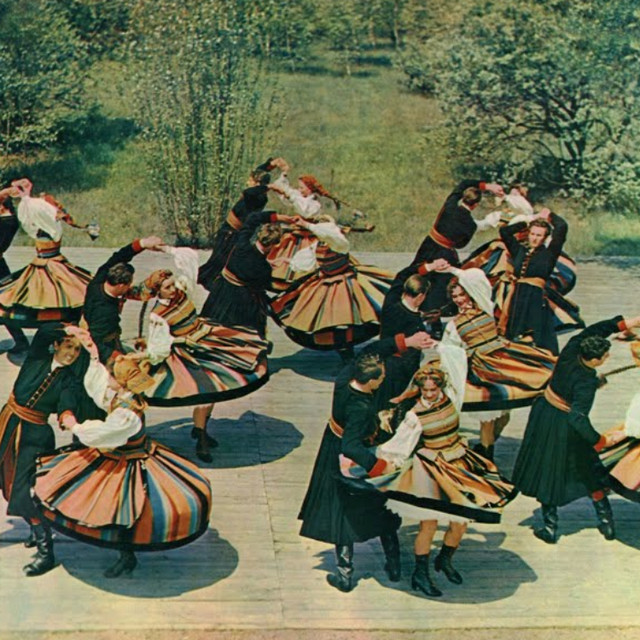
The postwar era in Poland brought a decisive turn: state-supported ensembles that broadcast Polish folk to domestic audiences and abroad. Mazowsze and Śląsk became the most famous ambassadors of the tradition, delivering choreographed showcases of regional dances, costumes, and songs on large stages and international tours. Their repertoires sampled the country’s variety—Podhale highland tunes with lively reels, Kurpie forest melodies, and the nostalgic laments of village life—presented with polished, collective singing and orchestral backing. These ensembles helped normalize Polish folk on the world stage, influencing countless later groups.
In more recent decades, a broader ecosystem of artists has kept Polish folk dynamic and recyclable for new moods. Contemporary ambassadors include Trebunie-Tutki, a Podhale family group famed for keeping highland melodies alive while inviting new listeners to their tradition. Kapela Ze Wsi Warszawa and Golec uOrkiestra (among others) have fused village roots with contemporary textures—raps, rock allusions, and electronica—creating a bridge between ancestral sound and modern sensibilities. Other outfits, like Stare Dobre Małżeństwo at their peak, explored folk-inflected lyricism with a rock edge, while neo-folk and world-music scenes have absorbed Polish modes into a global palette.
Polish folk remains most popular in Poland, where regional identities still thrive and where concerts, dances, and harvest festivals (dożynki) keep the tradition lively. It also travels with the Polish diaspora: the United States, Canada, the United Kingdom, Germany, Ireland, and across Central and Eastern Europe. Across borders, the music continues to evolve—honoring roots while absorbing new influences—so that Polish folk endures not as a museum piece but as a living, breathing conversation between past and present.
The genre’s roots reach back to rural life and the long memory of common songs sung around harvests, weddings, and church holidays. In the 19th century, as Poland underwent a national revival, collectors and folklorists began to document regional repertoires, turning a living oral culture into a corpus that could be preserved and studied. Oskar Kolberg, among others, compiled vast song collections that helped anchor a sense of national identity in the folk sounds of Podhale, Kurpie, Mazovia, Łowicz, and Silesia. By the early 20th century, composers and performers drew on these materials to shape concert music, theatre, and popular song, laying the groundwork for a stronger folk-inspired current that could be heard beyond village square.
The postwar era in Poland brought a decisive turn: state-supported ensembles that broadcast Polish folk to domestic audiences and abroad. Mazowsze and Śląsk became the most famous ambassadors of the tradition, delivering choreographed showcases of regional dances, costumes, and songs on large stages and international tours. Their repertoires sampled the country’s variety—Podhale highland tunes with lively reels, Kurpie forest melodies, and the nostalgic laments of village life—presented with polished, collective singing and orchestral backing. These ensembles helped normalize Polish folk on the world stage, influencing countless later groups.
In more recent decades, a broader ecosystem of artists has kept Polish folk dynamic and recyclable for new moods. Contemporary ambassadors include Trebunie-Tutki, a Podhale family group famed for keeping highland melodies alive while inviting new listeners to their tradition. Kapela Ze Wsi Warszawa and Golec uOrkiestra (among others) have fused village roots with contemporary textures—raps, rock allusions, and electronica—creating a bridge between ancestral sound and modern sensibilities. Other outfits, like Stare Dobre Małżeństwo at their peak, explored folk-inflected lyricism with a rock edge, while neo-folk and world-music scenes have absorbed Polish modes into a global palette.
Polish folk remains most popular in Poland, where regional identities still thrive and where concerts, dances, and harvest festivals (dożynki) keep the tradition lively. It also travels with the Polish diaspora: the United States, Canada, the United Kingdom, Germany, Ireland, and across Central and Eastern Europe. Across borders, the music continues to evolve—honoring roots while absorbing new influences—so that Polish folk endures not as a museum piece but as a living, breathing conversation between past and present.