Genre
polish old school hip hop
Top Polish old school hip hop Artists
Showing 25 of 41 artists





About Polish old school hip hop
Polish old school hip hop is the first wave of Polish rap, born in the mid-1990s when Poland opened culturally after the political changes of 1989 and affordable studio gear brought new possibilities for underground scenes. It arrived with a DIY mindset: crews formed in city basements and garages, rhymes were written in Polish, and the music borrowed from American funk, jazz, and early hip hop while rooting itself in local life, slang, and urban concerns. The result was a distinctly Polish sound—rhythmic, narrative, and technically ambitious—that defined a generation and laid the groundwork for everything that followed.
The era’s soundscape centers on sample-heavy production, crisp drum breaks, and the lyrical density that fans of old school hip hop treasure. You hear brass and jazz loops crunching against tight kick patterns, with MCs trading bars that mix street realism, social observation, and introspection. Language plays a crucial role: Polish rhyme and cadence shape the flow in ways that feel native and precise, turning everyday city life into cinematic storytelling. It was as much a cultural movement as a musical one, linking breakdancing, graffiti, and street culture into a cohesive underground culture that could still reach mainstream listeners through radio and early music videos.
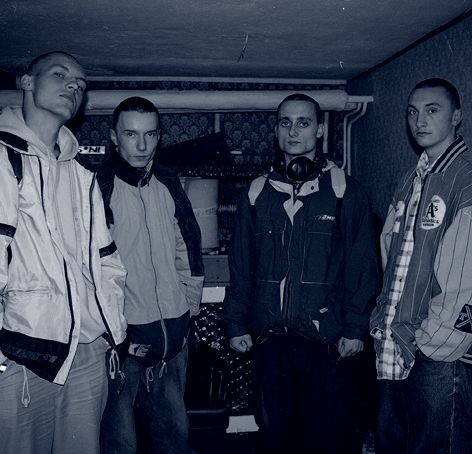
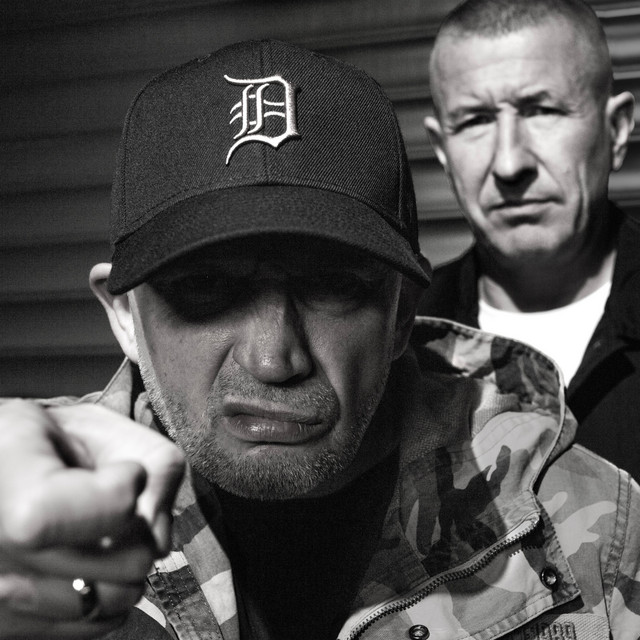
Among the pioneers, several acts became touchstones and ambassadors of the sound. Liroy is often cited as one of the earliest breakout stars, whose streetwise hit and subsequent releases helped bring Polish rap into popular awareness. Kaliber 44 emerged as a landmark group, with a debut that fused dark, psychedelic textures with intricate Polish lyricism and futuristic beats—an archetype of the era’s experimental edge. Paktofonika followed a few years later with Kinematografia (2000), a cinematic, narrative-driven album that is frequently hailed as a centerpiece of Polish hip hop’s classic period; its trajectory—culminating in Magik’s untimely death—turned the record into a cult artifact and a symbol of the era’s emotional depth. Slums Attack and O.S.T.R. also rose to prominence in the late 1990s and early 2000s, bringing street-level grit, technical prowess, and a broadening audience to the scene. Artists like Tede expanded the lyrical landscape, pushing harder on storytelling and social critique. In the foreground stood poets and performers who could ride dense wordplay and still connect with listeners who valued authenticity, craft, and a strong sense of place.
Today, the genre’s footprint is strongest in Poland, where the old school ethos remains a touchstone for many younger artists and fans. Beyond Poland, Polish old school hip hop has found listening communities among the Polish diaspora in Germany, the United Kingdom, and the Americas, as well as sympathetic audiences in neighboring Central and Eastern European countries. In recent years, streaming and festival culture have helped reintroduce this period to new generations while preserving its historical weight. If you listen closely, the music speaks of post-socialist city life, of resilience, and of a community that built its own stage, its own clubs, and its own legends from the ground up.
The era’s soundscape centers on sample-heavy production, crisp drum breaks, and the lyrical density that fans of old school hip hop treasure. You hear brass and jazz loops crunching against tight kick patterns, with MCs trading bars that mix street realism, social observation, and introspection. Language plays a crucial role: Polish rhyme and cadence shape the flow in ways that feel native and precise, turning everyday city life into cinematic storytelling. It was as much a cultural movement as a musical one, linking breakdancing, graffiti, and street culture into a cohesive underground culture that could still reach mainstream listeners through radio and early music videos.
Among the pioneers, several acts became touchstones and ambassadors of the sound. Liroy is often cited as one of the earliest breakout stars, whose streetwise hit and subsequent releases helped bring Polish rap into popular awareness. Kaliber 44 emerged as a landmark group, with a debut that fused dark, psychedelic textures with intricate Polish lyricism and futuristic beats—an archetype of the era’s experimental edge. Paktofonika followed a few years later with Kinematografia (2000), a cinematic, narrative-driven album that is frequently hailed as a centerpiece of Polish hip hop’s classic period; its trajectory—culminating in Magik’s untimely death—turned the record into a cult artifact and a symbol of the era’s emotional depth. Slums Attack and O.S.T.R. also rose to prominence in the late 1990s and early 2000s, bringing street-level grit, technical prowess, and a broadening audience to the scene. Artists like Tede expanded the lyrical landscape, pushing harder on storytelling and social critique. In the foreground stood poets and performers who could ride dense wordplay and still connect with listeners who valued authenticity, craft, and a strong sense of place.
Today, the genre’s footprint is strongest in Poland, where the old school ethos remains a touchstone for many younger artists and fans. Beyond Poland, Polish old school hip hop has found listening communities among the Polish diaspora in Germany, the United Kingdom, and the Americas, as well as sympathetic audiences in neighboring Central and Eastern European countries. In recent years, streaming and festival culture have helped reintroduce this period to new generations while preserving its historical weight. If you listen closely, the music speaks of post-socialist city life, of resilience, and of a community that built its own stage, its own clubs, and its own legends from the ground up.