Genre
pops orchestra
Top Pops orchestra Artists
Showing 25 of 29 artists







About Pops orchestra
Pop orchestral, or the pops orchestra, is a crossover style that treats pop songs, film melodies, Broadway tunes, and other approachable favorites as material for the symphonic palette. It blends contemporary hooks with the expressive color of a full orchestra—lush strings, gleaming brass, shimmering woodwinds, and tactile percussion. The effect is immediate and cinematic: melodies feel familiar, yet the arrangement elevates them into an immersive, large‑scale sound world. Audiences often experience a sense of gateway accessibility—familiar tunes reframed with orchestral grandeur, inviting both longtime classical listeners and pop enthusiasts to share a common listening moment.
Its birth lies in the long arc of concert-hall programming. The seeds of orchestral pop extend back to the 19th century, but the form crystallized in the United States as orchestras sought to attract broader audiences. The Boston Pops Orchestra, established in 1885 as a lighter affiliate of the Boston Symphony, became the definitive prototype. Under the long leadership of conductor Arthur Fiedler (1930–1979), the ensemble popularized a repertoire built from film scores, Broadway tunes, radio melodies, and arrangements of well‑known pop songs. The approachable, crowd-pleasing programming helped convert many listeners into regular attendees of orchestral concerts and inspired similar pops series in cities around the world.
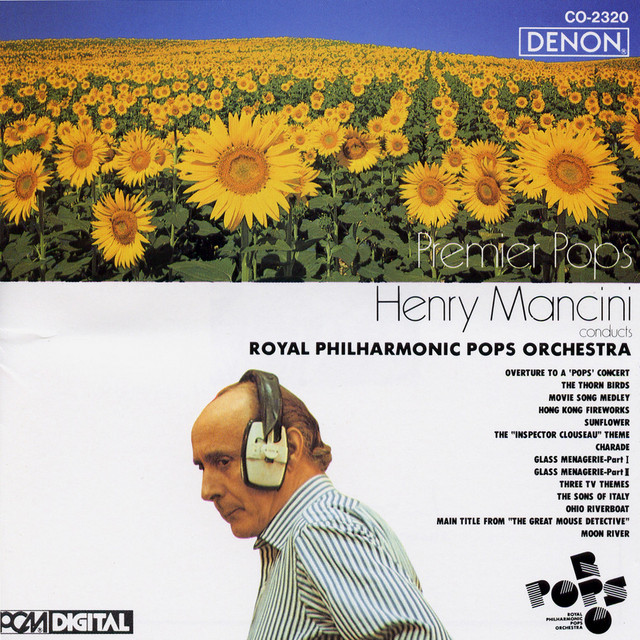
Ambassadors of the genre include Fiedler’s charismatic standard and a lineage of conductors who champion crossovers. John Williams, whose prolific film-score legacy bridged movie music and concert halls, has conducted and arranged for orchestral pops programs, highlighting how cinematic themes can carry the emotional weight of symphonic performance. Henry Mancini’s melodic craft—Moon River and The Pink Panther, among others—demonstrated how a contemporary composer’s ideas could live inside a symphonic frame. The New York Pops, founded in 1983 by Skitch Henderson, became another major platform for the format, pairing guest soloists with conductor-led programming and expanding the audience for orchestral pop beyond traditional classical concertgoers.
Repertoire spans film scores, TV themes, Broadway numbers, and state‑of‑the‑art pop arrangements. It often receives reinterpretation through lush string writing, robust brass, and an orchestral heartbeat that adds scale and drama to familiar tunes. The scoring tradition—melody first, color next—remains intact, yet the textures are modern, sometimes cinematic in sweep, sometimes intimate in chamber‑like moments. Pop orchestral concerts may feature medleys, thematic suites, or complete cycles that tell a narrative arc, enabling listeners to trace a melody across moods. The form rewards clever collaboration with contemporary arrangers, vocalists, and guest artists who can bridge genres while honoring the source material.
Geographically, the genre has its strongest footprint in the United States and the United Kingdom, where many major symphony organizations maintain dedicated pops seasons. It has also found enthusiastic audiences in Japan, continental Europe, Australia, and beyond, often through touring companies and festival programs that combine pop, cinema, and orchestral works. In many regions, the pops format functions as an accessible entry point to symphonic music, a bridge between listening habits formed by media and the conventions of classical performance. Today, the model continues to evolve with multimedia concerts, collaborations with contemporary pop artists, and streaming-friendly arrangements that keep orchestral pop relevant for new generations of enthusiasts.
Its birth lies in the long arc of concert-hall programming. The seeds of orchestral pop extend back to the 19th century, but the form crystallized in the United States as orchestras sought to attract broader audiences. The Boston Pops Orchestra, established in 1885 as a lighter affiliate of the Boston Symphony, became the definitive prototype. Under the long leadership of conductor Arthur Fiedler (1930–1979), the ensemble popularized a repertoire built from film scores, Broadway tunes, radio melodies, and arrangements of well‑known pop songs. The approachable, crowd-pleasing programming helped convert many listeners into regular attendees of orchestral concerts and inspired similar pops series in cities around the world.
Ambassadors of the genre include Fiedler’s charismatic standard and a lineage of conductors who champion crossovers. John Williams, whose prolific film-score legacy bridged movie music and concert halls, has conducted and arranged for orchestral pops programs, highlighting how cinematic themes can carry the emotional weight of symphonic performance. Henry Mancini’s melodic craft—Moon River and The Pink Panther, among others—demonstrated how a contemporary composer’s ideas could live inside a symphonic frame. The New York Pops, founded in 1983 by Skitch Henderson, became another major platform for the format, pairing guest soloists with conductor-led programming and expanding the audience for orchestral pop beyond traditional classical concertgoers.
Repertoire spans film scores, TV themes, Broadway numbers, and state‑of‑the‑art pop arrangements. It often receives reinterpretation through lush string writing, robust brass, and an orchestral heartbeat that adds scale and drama to familiar tunes. The scoring tradition—melody first, color next—remains intact, yet the textures are modern, sometimes cinematic in sweep, sometimes intimate in chamber‑like moments. Pop orchestral concerts may feature medleys, thematic suites, or complete cycles that tell a narrative arc, enabling listeners to trace a melody across moods. The form rewards clever collaboration with contemporary arrangers, vocalists, and guest artists who can bridge genres while honoring the source material.
Geographically, the genre has its strongest footprint in the United States and the United Kingdom, where many major symphony organizations maintain dedicated pops seasons. It has also found enthusiastic audiences in Japan, continental Europe, Australia, and beyond, often through touring companies and festival programs that combine pop, cinema, and orchestral works. In many regions, the pops format functions as an accessible entry point to symphonic music, a bridge between listening habits formed by media and the conventions of classical performance. Today, the model continues to evolve with multimedia concerts, collaborations with contemporary pop artists, and streaming-friendly arrangements that keep orchestral pop relevant for new generations of enthusiasts.