Genre
portuguese contemporary classical
Top Portuguese contemporary classical Artists
Showing 23 of 23 artists


About Portuguese contemporary classical
Portuguese contemporary classical is the art-music scene that has grown in Portugal since the late 20th century, a field where composers scatter influences from Iberian folklore, African and Atlantic rhythms, and the global avant-garde into new forms. It sits at the crossroads between tradition and experimentation, between the careful craft of European concert music and a broader, more exploratory listening culture that includes electronics, extended technique, and new performance practices. Its emergence into the public eye aligns with Portugal's post-revolution cultural liberalization (the Carnation Revolution of 1974) and the sustained support of institutions that fund new music, notably the Calouste Gulbenkian Foundation.
Origins are diffuse rather than a single manifesto. After decades of stagnation under Estado Novo, a younger generation of composers in Lisbon and Porto studied abroad, absorbed European currents—neoclassicism, serialism, spectralism, minimalism, and electroacoustic techniques—and began to write pieces defined by a distinctly Portuguese sensibility: a sense of space, memory, and lyric timbre, often integrated with linguistic or poetical material from the Lusophone world. The result was a diverse ecosystem: chamber music that sings under quiet accelerations, large-scale works with shimmering electronics, and multidisciplinary pieces that pair stage, video, and live sounds.
The language is plural rather than a single school. You can hear the austerity of post-minimalism, the color of late-romantic orchestration, the clarity of neoclassicism, and the daring of electroacoustic and live electronics. Portuguese composers often foreground natural acoustics—cavities of strings, air in the woodwinds, and the breath of singers—and they frequently invite collaboration with poets, choreographers, and visual artists. The result is a music that can feel intimate and ceremonial at once, sonically tactile yet conceptually expansive. Institutions such as the Gulbenkian Festival and Lisbon’s orchestras have provided platforms for premieres and recordings, helping to establish a repertoire that travels beyond national borders.
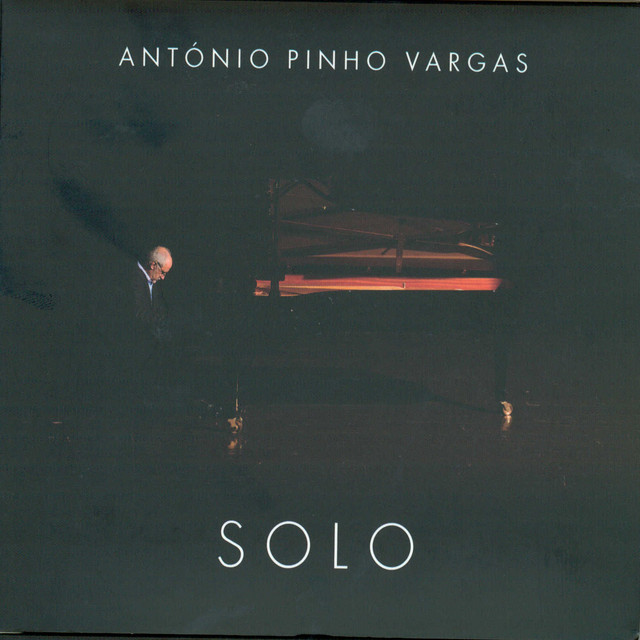
Prominent voices are often cited as the genre’s ambassadors. Fernando Lopes-Graça, a towering figure in the 20th century, fused modernist technique with folk materials and social conscience, shaping a Portuguese nationalist-modernist lineage that informs later work. António Pinho Vargas has been a central figure of late 20th- and early 21st-century music, integrating electronic textures and chamber idioms with a distinctly Portuguese lyric sense. The experimental edge of Miguel Azguime, with his electroacoustic and performance-centered practice, has pushed the scene toward installations, sound-poems, and collaborative projects that have reached international audiences.
Portugal’s contemporary classical community remains most vibrant at home, with active audiences in Lisbon and Porto and ensembles, orchestras, and festivals that invite international guests. It also resonates with Lusophone connections in Brazil, Angola, and Mozambique, and finds listeners in Europe and North America through touring ensembles, recordings and academic exchanges. For listeners, the genre offers a chance to hear a modern Portuguese voice speaking in the language of global contemporary classical music—inventive, precise, and full of color.
While still a niche, the scene is unusually cohesive for a national tradition: performances are thoughtful, audiences inquisitive, and composers increasingly present in international programs. If you crave music that speaks with a clear modern sensibility yet keeps a place for memory and lyricism, Portuguese contemporary classical offers a rewarding, distinct voice within the wider European arc of new music.
Origins are diffuse rather than a single manifesto. After decades of stagnation under Estado Novo, a younger generation of composers in Lisbon and Porto studied abroad, absorbed European currents—neoclassicism, serialism, spectralism, minimalism, and electroacoustic techniques—and began to write pieces defined by a distinctly Portuguese sensibility: a sense of space, memory, and lyric timbre, often integrated with linguistic or poetical material from the Lusophone world. The result was a diverse ecosystem: chamber music that sings under quiet accelerations, large-scale works with shimmering electronics, and multidisciplinary pieces that pair stage, video, and live sounds.
The language is plural rather than a single school. You can hear the austerity of post-minimalism, the color of late-romantic orchestration, the clarity of neoclassicism, and the daring of electroacoustic and live electronics. Portuguese composers often foreground natural acoustics—cavities of strings, air in the woodwinds, and the breath of singers—and they frequently invite collaboration with poets, choreographers, and visual artists. The result is a music that can feel intimate and ceremonial at once, sonically tactile yet conceptually expansive. Institutions such as the Gulbenkian Festival and Lisbon’s orchestras have provided platforms for premieres and recordings, helping to establish a repertoire that travels beyond national borders.
Prominent voices are often cited as the genre’s ambassadors. Fernando Lopes-Graça, a towering figure in the 20th century, fused modernist technique with folk materials and social conscience, shaping a Portuguese nationalist-modernist lineage that informs later work. António Pinho Vargas has been a central figure of late 20th- and early 21st-century music, integrating electronic textures and chamber idioms with a distinctly Portuguese lyric sense. The experimental edge of Miguel Azguime, with his electroacoustic and performance-centered practice, has pushed the scene toward installations, sound-poems, and collaborative projects that have reached international audiences.
Portugal’s contemporary classical community remains most vibrant at home, with active audiences in Lisbon and Porto and ensembles, orchestras, and festivals that invite international guests. It also resonates with Lusophone connections in Brazil, Angola, and Mozambique, and finds listeners in Europe and North America through touring ensembles, recordings and academic exchanges. For listeners, the genre offers a chance to hear a modern Portuguese voice speaking in the language of global contemporary classical music—inventive, precise, and full of color.
While still a niche, the scene is unusually cohesive for a national tradition: performances are thoughtful, audiences inquisitive, and composers increasingly present in international programs. If you crave music that speaks with a clear modern sensibility yet keeps a place for memory and lyricism, Portuguese contemporary classical offers a rewarding, distinct voice within the wider European arc of new music.