Genre
post-rock
Top Post-rock Artists
Showing 25 of 3,673 artists







12

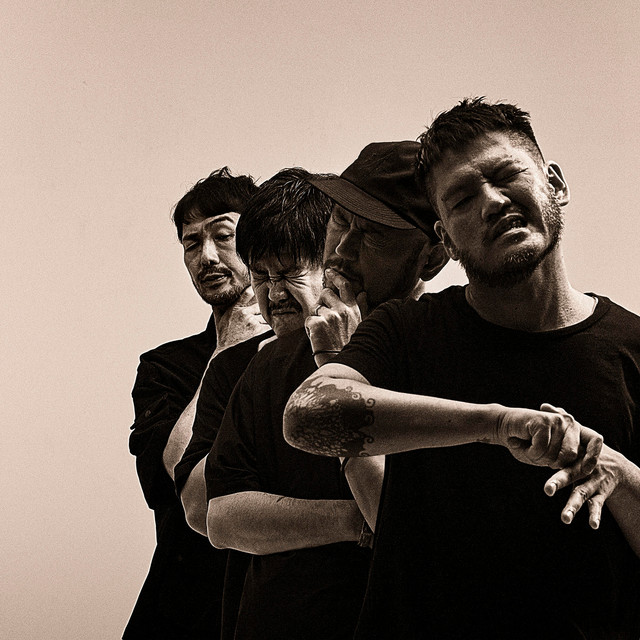
百景
Japan
100,272
328,519 listeners




About Post-rock
Post-rock is a mode of rock music that tends to foreground texture, space, and atmosphere over traditional verse-chorus-verse song structures. Born in the late 1980s and coming into its own in the 1990s, it builds expansive, cinematic landscapes from the simplest musical materials: guitars bowed or processed into drones, patient rhythms, piano, strings, and satellites of found sounds. The result is often emotionally charged and sculptural, focusing on dynamic shifts, gradual crescendos, and long-form suites rather than quick hooks.
The genre’s birth is widely tied to a few pivotal moments and scenes. In the United States, the post-rock vocabulary began coalescing around bands that stretched the expressive capabilities of guitar-based music, with Slint’s Spiderland (1991) frequently cited as a foundational touchstone for its austere restraint and sudden eruptions. In the United Kingdom and Europe, producers and critics began labeling a broader current—bands that mined minimalism, ambient textures, and industrial-tinged percussion as post-rock. The term itself gained traction in the mid-1990s, helping to describe a wave of groups that used rock instrumentation to craft non-rock ends: filmic mood, abstract soundscapes, and sometimes spoken-word or whispered vocals.
Key artists and ambassadors of post-rock include a set of bands that became synonymous with the sound. In the United States, Tortoise from Chicago helped redefine rhythm and texture with albums like Millions Now Living Will Never Die (1996) and became a touchstone for instrumental exploration. Labradford and Rothko contributed the contemplative, drone-infused side of the scene, while Explosions in the Sky and Mono (though Japanese) demonstrated the global reach of the form with epics that unfold through patience and intensity. Canada’s Godspeed You! Black Emperor and Do Make Say Think—often paired in discussions—pushed large-scale, almost symphonic structures, long-form crescendos, and cinematic storytelling. Scotland’s Mogwai brought a relentlessly tactile guitar noise that can feel both fragile and ferocious, influencing countless bands worldwide. Iceland’s Sigur Rós popularized a Nordic, ethereal take on post-rock, with vast rooms of sound and a sense of mythic scale.
Today, post-rock remains especially popular in the United States, the United Kingdom, Canada, and much of Europe, with a thriving scene in Iceland, Japan, and beyond. It often thrives in indie circles, film soundtracks, and live venues that celebrate immersive listening experiences. While many post-rock bands remain instrumental or employ sparse vocal textures, the mood is the unifying torch: a willingness to let volume, texture, and pacing tell the story, rather than flashy hooks alone.
Listening recommendations for newcomers: Slint’s Spiderland for a raw, pioneering edge; Tortoise’s Millions… for a urban, jazzy pulse; Godspeed You! Black Emperor’s F♯A♯∞ for a sprawling, documentary-like scope; Mogwai’s Young Team for a emotionally direct, explosive arc; Explosions in the Sky’s The Earth Is Not a Cold Dead Place for expansive, cinematic calm. Post-rock rewards patience, discovery, and attentive listening, inviting you to hear how quiet can carry as much weight as noise.
The genre’s birth is widely tied to a few pivotal moments and scenes. In the United States, the post-rock vocabulary began coalescing around bands that stretched the expressive capabilities of guitar-based music, with Slint’s Spiderland (1991) frequently cited as a foundational touchstone for its austere restraint and sudden eruptions. In the United Kingdom and Europe, producers and critics began labeling a broader current—bands that mined minimalism, ambient textures, and industrial-tinged percussion as post-rock. The term itself gained traction in the mid-1990s, helping to describe a wave of groups that used rock instrumentation to craft non-rock ends: filmic mood, abstract soundscapes, and sometimes spoken-word or whispered vocals.
Key artists and ambassadors of post-rock include a set of bands that became synonymous with the sound. In the United States, Tortoise from Chicago helped redefine rhythm and texture with albums like Millions Now Living Will Never Die (1996) and became a touchstone for instrumental exploration. Labradford and Rothko contributed the contemplative, drone-infused side of the scene, while Explosions in the Sky and Mono (though Japanese) demonstrated the global reach of the form with epics that unfold through patience and intensity. Canada’s Godspeed You! Black Emperor and Do Make Say Think—often paired in discussions—pushed large-scale, almost symphonic structures, long-form crescendos, and cinematic storytelling. Scotland’s Mogwai brought a relentlessly tactile guitar noise that can feel both fragile and ferocious, influencing countless bands worldwide. Iceland’s Sigur Rós popularized a Nordic, ethereal take on post-rock, with vast rooms of sound and a sense of mythic scale.
Today, post-rock remains especially popular in the United States, the United Kingdom, Canada, and much of Europe, with a thriving scene in Iceland, Japan, and beyond. It often thrives in indie circles, film soundtracks, and live venues that celebrate immersive listening experiences. While many post-rock bands remain instrumental or employ sparse vocal textures, the mood is the unifying torch: a willingness to let volume, texture, and pacing tell the story, rather than flashy hooks alone.
Listening recommendations for newcomers: Slint’s Spiderland for a raw, pioneering edge; Tortoise’s Millions… for a urban, jazzy pulse; Godspeed You! Black Emperor’s F♯A♯∞ for a sprawling, documentary-like scope; Mogwai’s Young Team for a emotionally direct, explosive arc; Explosions in the Sky’s The Earth Is Not a Cold Dead Place for expansive, cinematic calm. Post-rock rewards patience, discovery, and attentive listening, inviting you to hear how quiet can carry as much weight as noise.