Genre
psychedelic jazz fusion
Top Psychedelic jazz fusion Artists
Showing 9 of 9 artists



About Psychedelic jazz fusion
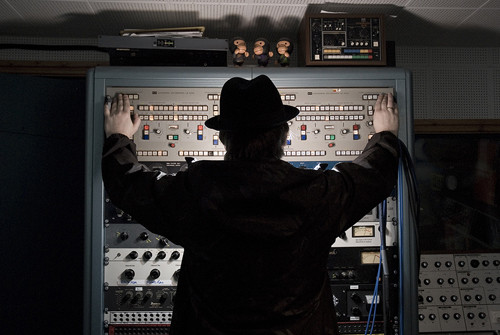
Psychedelic jazz fusion is a kaleidoscopic offspring of late-1960s experimentation, blending the improvisational daring of jazz with the electric textures, hypnotic grooves, and studio theatrics of rock and psychedelia. It grew at the crossroads of smoky club air, tape-delay experiments, and a shared appetite for pushing boundaries. The movement is not a single sound but a spectrum: vast, electric, and frequently hypnotic, with improvisation driving the journey as much as precise arrangement.
Origins and birth: By the late 1960s, jazz musicians were embracing amplification and groove, while rock was discovering the liberating possibilities of modal harmony and long-form exploration. A catalytic moment arrived with Miles Davis’s electric period—In a Silent Way (1969) and Bitches Brew (1970)—which treated studio texture as an instrument and invited psychedelic color into jazz improvisation. The same era produced a new generation of instrumental virtuosos who expanded the palette: electric piano and synths, fuzzed guitars, talk-box, and looping devices, all used to bend rhythm, timbre, and mood.
Key artists and ambassadors: John McLaughlin and his Mahavishnu Orchestra fused blistering guitar lines with rapidly shifting meters and densely folded textures, becoming a touchstone for psychedelic-prog fusion. Herbie Hancock’s Head Hunters (with Joe Zawinul’s synthesizer-driven charts) blended funk’s pulse with visionary sound design, widening fusion’s audience. Chick Corea’s Return to Forever married lyric melodies to intricate, machine-like grooves, while Weather Report—co-founded by Zawinul and Shorter—pushed harmony and texture into panoramic synth-assisted soundscapes. Tony Williams Lifetime, a powerhouse of swaggering, blues-steeped electricity, helped redefine rhythm as a forceful, exploratory engine. On the European side, Soft Machine’s mid-era records integrated jazz’s improvisation with psychedelic attack and Canterbury atmospheres; late-70s British fusion acts and continental European ensembles widened the palette with electronics and international influences. Japan’s vibrant fusion circles—feeding from studio virtuosity and precision—also became essential in shaping the global sound. Collectively, these artists formed the ambassadors of a genre that could scorch the ear with velocity or dissolve it in a spacey, meditative wash.
Where it lived and who listened: In the 1970s, psychedelic jazz fusion found its strongest footholds in the United States, the United Kingdom, and Japan, with ardent followings in continental Europe. It influenced the development of art rock and progressive rock, and its reverberations can still be felt in contemporary fusion, space-rock, and modern jazz explorations that prize atmosphere and adventurous improvisation.
Listening tips: Seek albums that balance edge and atmosphere—Miles Davis’s Bitches Brew, Mahavishnu Orchestra’s The Inner Mounting Flame, Herbie Hancock’s Headhunters, Chick Corea’s Romantic Warrior, Weather Report’s heavier sessions, Soft Machine’s Third. For a modern path, explore acts like The Comet Is Coming, Hiromi, Snarky Puppy, and Liquid Tension Experiment’s explorations, which carry the psychedelic-jazz fusion flame forward with new textures.
Why it matters to enthusiasts: psychedelic jazz fusion challenges conventional listening habits; it rewards attentive listening—how a groove mutates into a cosmic echo, how a single note can stretch into a timbral journey across headphones or a grand hall. It bridged scenes across continents, proving virtuosity, imagination, and openness to influence are not contradictory but complementary. For newcomers, start with Miles Davis’s late electric period, then follow the arc to Mahavishnu, Weather Report, and Herbie Hancock, and later explore Soft Machine and Return to Forever to hear the varied textures of the spectrum.
Origins and birth: By the late 1960s, jazz musicians were embracing amplification and groove, while rock was discovering the liberating possibilities of modal harmony and long-form exploration. A catalytic moment arrived with Miles Davis’s electric period—In a Silent Way (1969) and Bitches Brew (1970)—which treated studio texture as an instrument and invited psychedelic color into jazz improvisation. The same era produced a new generation of instrumental virtuosos who expanded the palette: electric piano and synths, fuzzed guitars, talk-box, and looping devices, all used to bend rhythm, timbre, and mood.
Key artists and ambassadors: John McLaughlin and his Mahavishnu Orchestra fused blistering guitar lines with rapidly shifting meters and densely folded textures, becoming a touchstone for psychedelic-prog fusion. Herbie Hancock’s Head Hunters (with Joe Zawinul’s synthesizer-driven charts) blended funk’s pulse with visionary sound design, widening fusion’s audience. Chick Corea’s Return to Forever married lyric melodies to intricate, machine-like grooves, while Weather Report—co-founded by Zawinul and Shorter—pushed harmony and texture into panoramic synth-assisted soundscapes. Tony Williams Lifetime, a powerhouse of swaggering, blues-steeped electricity, helped redefine rhythm as a forceful, exploratory engine. On the European side, Soft Machine’s mid-era records integrated jazz’s improvisation with psychedelic attack and Canterbury atmospheres; late-70s British fusion acts and continental European ensembles widened the palette with electronics and international influences. Japan’s vibrant fusion circles—feeding from studio virtuosity and precision—also became essential in shaping the global sound. Collectively, these artists formed the ambassadors of a genre that could scorch the ear with velocity or dissolve it in a spacey, meditative wash.
Where it lived and who listened: In the 1970s, psychedelic jazz fusion found its strongest footholds in the United States, the United Kingdom, and Japan, with ardent followings in continental Europe. It influenced the development of art rock and progressive rock, and its reverberations can still be felt in contemporary fusion, space-rock, and modern jazz explorations that prize atmosphere and adventurous improvisation.
Listening tips: Seek albums that balance edge and atmosphere—Miles Davis’s Bitches Brew, Mahavishnu Orchestra’s The Inner Mounting Flame, Herbie Hancock’s Headhunters, Chick Corea’s Romantic Warrior, Weather Report’s heavier sessions, Soft Machine’s Third. For a modern path, explore acts like The Comet Is Coming, Hiromi, Snarky Puppy, and Liquid Tension Experiment’s explorations, which carry the psychedelic-jazz fusion flame forward with new textures.
Why it matters to enthusiasts: psychedelic jazz fusion challenges conventional listening habits; it rewards attentive listening—how a groove mutates into a cosmic echo, how a single note can stretch into a timbral journey across headphones or a grand hall. It bridged scenes across continents, proving virtuosity, imagination, and openness to influence are not contradictory but complementary. For newcomers, start with Miles Davis’s late electric period, then follow the arc to Mahavishnu, Weather Report, and Herbie Hancock, and later explore Soft Machine and Return to Forever to hear the varied textures of the spectrum.