Genre
rabindra sangeet
Top Rabindra sangeet Artists
Showing 10 of 10 artists






About Rabindra sangeet
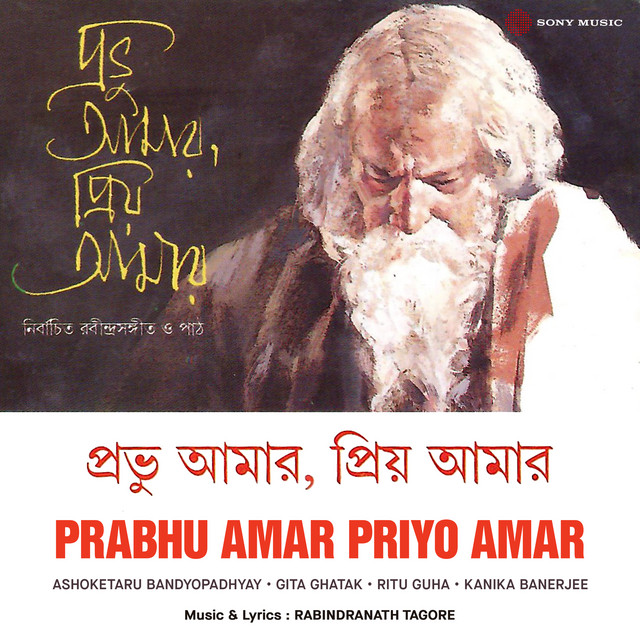
Rabindra Sangeet, literally the songs of Rabindranath Tagore, is a uniquely Bengali musical repertoire that fuses poetry, melody, and philosophy into a living art form. Born out of Tagore’s late-19th and early-20th‑century experiments with lyric poetry set to his own tunes, the body of Rabindra Sangeet matured through the 1910s and 1920s as a self-contained musical language. Tagore, already a towering literary figure, used music not merely as ornament but as a vehicle for ideas—nature, love, spirituality, social harmony, and the longing for a just world. The genre gained global visibility after Tagore’s 1913 Nobel Prize in Literature and the ensuing translations, but its heart remained tied to the Bengali-speaking world.
What makes Rabindra Sangeet distinctive is its synthesis. While rooted in Indian classical ragas and Bengal’s folk tunes, Tagore’s melodies often move beyond rigid conventions, embracing modal freedom and lyrical immediacy. The songs can be intimate and plaintive, celebratory and revolutionary, pastoral and metaphysical. They are written in accessible Bengali, yet they carry a universality of feeling that invites both formal listening and emotional response. The repertoire covers a vast emotional spectrum—from the devotional “Akash Bhara Poth Diye” to the rebellious fervor of “Bharoto Bhagyo Bidhata” (the anthem-like pieces that feed a sense of shared humanity). Instrumentation ranges from traditional tabla, harmonium, sitar, and flute to modern piano and guitar, with performers often personalizing arrangements while preserving the core emotion of Tagore’s verse.
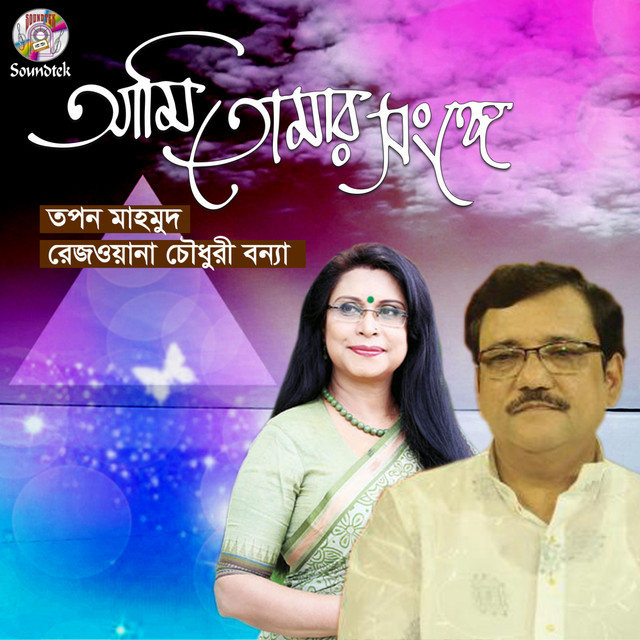
Among the genre’s most influential interpreters are Debabrata Biswas, whose expressive, nuanced phrasing became a benchmark for masculine Rabindra Sangeet; Suchitra Mitra, a pioneering exponent who helped bring theatre-inflected performance and cinematic sensibility to the songs; and Hemanta Mukherjee (Hemant Kumar), whose velvet baritone helped popularize many tunes across generations. In more recent decades, singers like Srikanto Acharya have carried Rabindra Sangeet to new audiences with a contemporary sensibility, while Rezwana Chowdhury Bannya has become the iconic voice of Rabindra Sangeet in Bangladesh, bridging the tradition with younger listeners. Each artist has added a personal handwriting, ensuring the songs remain fresh while faithfully serving Tagore’s lyric muse.
Rabindra Sangeet enjoys its strongest popularity in two core centers: West Bengal in India and Bangladesh, where Tagore’s language and imagery resonate most deeply. It is also cherished by Bengali-speaking communities around the world—especially in the United States, the United Kingdom, Canada, Singapore, and parts of the Middle East and Australia—where cultural organizations, concerts, and festivals keep the tradition vibrant. For music enthusiasts, Rabindra Sangeet offers a rare blend: the intellectual rigor of poetry, the emotional range of melody, and the social and philosophical openness Tagore advocated. It is not merely songs; it is a living dialogue between poet, musician, and listener that continues to evolve while honoring a landmark corpus of Bengali art.
What makes Rabindra Sangeet distinctive is its synthesis. While rooted in Indian classical ragas and Bengal’s folk tunes, Tagore’s melodies often move beyond rigid conventions, embracing modal freedom and lyrical immediacy. The songs can be intimate and plaintive, celebratory and revolutionary, pastoral and metaphysical. They are written in accessible Bengali, yet they carry a universality of feeling that invites both formal listening and emotional response. The repertoire covers a vast emotional spectrum—from the devotional “Akash Bhara Poth Diye” to the rebellious fervor of “Bharoto Bhagyo Bidhata” (the anthem-like pieces that feed a sense of shared humanity). Instrumentation ranges from traditional tabla, harmonium, sitar, and flute to modern piano and guitar, with performers often personalizing arrangements while preserving the core emotion of Tagore’s verse.
Among the genre’s most influential interpreters are Debabrata Biswas, whose expressive, nuanced phrasing became a benchmark for masculine Rabindra Sangeet; Suchitra Mitra, a pioneering exponent who helped bring theatre-inflected performance and cinematic sensibility to the songs; and Hemanta Mukherjee (Hemant Kumar), whose velvet baritone helped popularize many tunes across generations. In more recent decades, singers like Srikanto Acharya have carried Rabindra Sangeet to new audiences with a contemporary sensibility, while Rezwana Chowdhury Bannya has become the iconic voice of Rabindra Sangeet in Bangladesh, bridging the tradition with younger listeners. Each artist has added a personal handwriting, ensuring the songs remain fresh while faithfully serving Tagore’s lyric muse.
Rabindra Sangeet enjoys its strongest popularity in two core centers: West Bengal in India and Bangladesh, where Tagore’s language and imagery resonate most deeply. It is also cherished by Bengali-speaking communities around the world—especially in the United States, the United Kingdom, Canada, Singapore, and parts of the Middle East and Australia—where cultural organizations, concerts, and festivals keep the tradition vibrant. For music enthusiasts, Rabindra Sangeet offers a rare blend: the intellectual rigor of poetry, the emotional range of melody, and the social and philosophical openness Tagore advocated. It is not merely songs; it is a living dialogue between poet, musician, and listener that continues to evolve while honoring a landmark corpus of Bengali art.