Genre
rap conscient
Top Rap conscient Artists
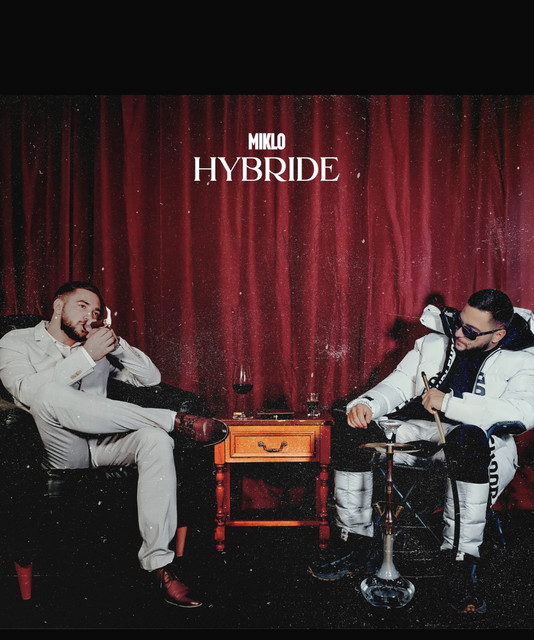


About Rap conscient
Rap conscient, or conscious rap, is a branch of hip hop that foregrounds social commentary, political critique, and personal reflection. It grows out of the broader activist impulse within the hip hop movement and found its clearest voice in the United States during the late 1980s and early 1990s. Rather than leaning solely on bravado or party-ready hooks, rap conscient uses rhyme and rhythm to examine racism, poverty, violence, education, and empowerment, inviting listeners to think as they move.
The genre drew on earlier politically charged acts such as Public Enemy and KRS-One, who treated records as tools for social education. In the 1990s, groups and artists who prioritized lyric depth—A Tribe Called Quest, De La Soul, Gang Starr, and later The Roots—helped codify a more reflective strand of hip hop. Solo voices like Mos Def (Yasiin Bey), Talib Kweli, Common, and later Lauryn Hill expanded the vocabulary with conscious storytelling and civic-minded politics. Kendrick Lamar’s late-2010s work, especially To Pimp a Butterfly and DAMN., is often cited as a modern apex of the movement: ambitious concept albums that braid personal trauma with systemic critique and wide cultural reference.
Lyricism remains the heartbeat of rap conscient. Rappers tackle police brutality, racial inequality, mass incarceration, economic precarity, education gaps, and faith or spirituality, while also celebrating community resilience, liberating history, and self-empowerment. The production often leans toward the traditional “boom bap” or jazz-inflected textures, though it can be outwardly experimental—using orchestration, spoken-word interludes, or cinematic soundscapes to deepen the message. The aim is not only to entertain but to provoke discussion, spark action, or simply offer a more nuanced mirror of society than headlines permit.
Ambassadors and key figures span generations and geographies. In the United States: KRS-One, Public Enemy, Nas, Mos Def, Talib Kweli, Common, Lauryn Hill, and Kendrick Lamar have helped define the sound and ideals of rap conscient. In the francophone world, a robust tradition exists under the banner of “rap conscient” with artists like IAM, MC Solaar, Keny Arkana, and Kery James using tight rhyme schemes to critique colonial histories, immigration, and social policy. Canada contributes voices such as K’naan, Shad, and others who blend global flows with locally relevant issues. The United Kingdom’s scene has also embraced conscious voices—poet-rapper Kate Tempest, Akala, and Lowkey among them—often addressing class, empire, and identity.
For enthusiasts, rap conscient offers a map of how hip hop can teach, resist, and heal at once. It rewards precise craftsmanship, social insight, and musical risk-taking—reminding listeners that rhyme can be a tool for understanding as well as a vehicle for pulse and groove. The genre remains international and evolving: its core remains the deep, pointed, and often urgent lyric wrapped in an equally expressive beat. Listeners who seek nuance will notice how metaphors are deployed to ethical arguments, and how choruses sometimes mask or reveal pain. The best rap conscient songs combine precise, multisyllabic rhyme with instrumentation or atmospheric samples. For collectors, exploring eras—from boom-bap to experimental productions—reveals an evolving conscience in hip hop.
The genre drew on earlier politically charged acts such as Public Enemy and KRS-One, who treated records as tools for social education. In the 1990s, groups and artists who prioritized lyric depth—A Tribe Called Quest, De La Soul, Gang Starr, and later The Roots—helped codify a more reflective strand of hip hop. Solo voices like Mos Def (Yasiin Bey), Talib Kweli, Common, and later Lauryn Hill expanded the vocabulary with conscious storytelling and civic-minded politics. Kendrick Lamar’s late-2010s work, especially To Pimp a Butterfly and DAMN., is often cited as a modern apex of the movement: ambitious concept albums that braid personal trauma with systemic critique and wide cultural reference.
Lyricism remains the heartbeat of rap conscient. Rappers tackle police brutality, racial inequality, mass incarceration, economic precarity, education gaps, and faith or spirituality, while also celebrating community resilience, liberating history, and self-empowerment. The production often leans toward the traditional “boom bap” or jazz-inflected textures, though it can be outwardly experimental—using orchestration, spoken-word interludes, or cinematic soundscapes to deepen the message. The aim is not only to entertain but to provoke discussion, spark action, or simply offer a more nuanced mirror of society than headlines permit.
Ambassadors and key figures span generations and geographies. In the United States: KRS-One, Public Enemy, Nas, Mos Def, Talib Kweli, Common, Lauryn Hill, and Kendrick Lamar have helped define the sound and ideals of rap conscient. In the francophone world, a robust tradition exists under the banner of “rap conscient” with artists like IAM, MC Solaar, Keny Arkana, and Kery James using tight rhyme schemes to critique colonial histories, immigration, and social policy. Canada contributes voices such as K’naan, Shad, and others who blend global flows with locally relevant issues. The United Kingdom’s scene has also embraced conscious voices—poet-rapper Kate Tempest, Akala, and Lowkey among them—often addressing class, empire, and identity.
For enthusiasts, rap conscient offers a map of how hip hop can teach, resist, and heal at once. It rewards precise craftsmanship, social insight, and musical risk-taking—reminding listeners that rhyme can be a tool for understanding as well as a vehicle for pulse and groove. The genre remains international and evolving: its core remains the deep, pointed, and often urgent lyric wrapped in an equally expressive beat. Listeners who seek nuance will notice how metaphors are deployed to ethical arguments, and how choruses sometimes mask or reveal pain. The best rap conscient songs combine precise, multisyllabic rhyme with instrumentation or atmospheric samples. For collectors, exploring eras—from boom-bap to experimental productions—reveals an evolving conscience in hip hop.