Genre
r&b chino
Top R&b chino Artists
Showing 25 of 56 artists
1
泰尼
49
174,319 listeners
2
头不痛
376
109,652 listeners




8

张子明
413
29,406 listeners


13
刘鹏
76
18,450 listeners



18
小鱼会唱歌
47
3,809 listeners
19

雷智皓(大能人)
54
3,357 listeners
20

超星
5
3,034 listeners

22

汐音沐辰
10
1,756 listeners
23
小鱼干
19
1,752 listeners
24
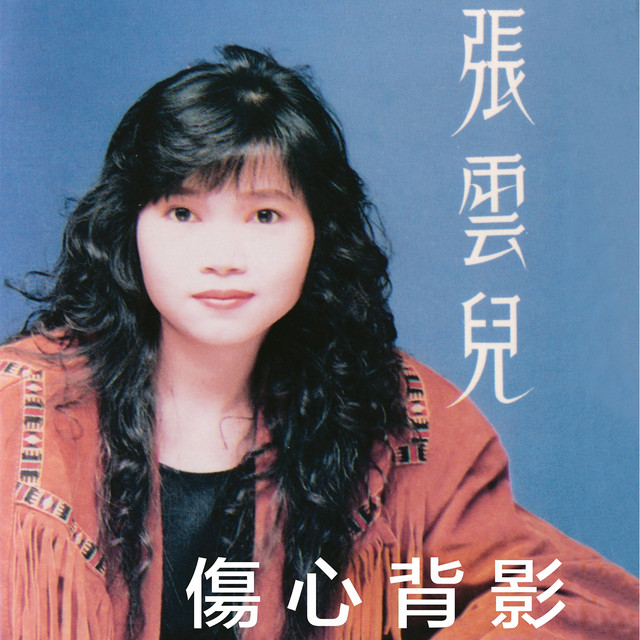
张云儿
122
1,503 listeners

About R&b chino
R&B chino is an emerging music genre that fuses the smooth, groove-driven sensibilities of American R&B with Chinese-language lyricism and melodic sensibilities. It’s less a fixed movement than a thread you can hear braided through Mandarin pop, Cantonese ballads, and the growing Chinese-speaking indie scene. The roots go back to the late 1990s and early 2000s, when artists in Taiwan and Hong Kong began to fuse Western R&B rhythms with Chinese lyric craft.
David Tao, whose self-titled debut in 1997 helped bring Mandarin-language R&B into the mainstream, is widely cited as the genre’s seminal figure. His blends of soul, funk-inflected grooves, and intimate vocal delivery planted the template for what would become R&B chino. A few years later Leehom Wang popularized a bilingual, cross-cultural approach to R&B in Mandarin and English, widening the palette for future artists. Khalil Fong, emerging in the mid-2000s from Hong Kong/Macao, became one of the genre’s most recognizable modern ambassadors, noted for his velvety vocal tone and neo-soul production in Mandarin and Cantonese.
From there, the sound matured as producers across Greater China and Southeast Asia started to layer lush live instrumentation with contemporary programming—pianos and Rhodes keys, warm bass, subtle trap-influenced drum patterns, and often a touch of jazz. The result is a spectrum that can hinge on intimate balladry—delicate runs, whispered phrasing, sighing falsetto—while also delivering confident, danceable grooves that sit comfortably in urban-pop playlists. The language question is playful rather than prescriptive; many songs stay fully in Mandarin or Cantonese, while others switch seamlessly between Chinese and English to reflect cosmopolitan identities.
In terms of production, R&B chino often balances analog warmth with digital clarity. You’ll hear Rhodes or piano-driven chords, lush guitars, and subtle horn or brass textures, all wrapped around beat-driven grooves. Vocal delivery tends to prize expressiveness and nuance: soft-sung verses that swell into soulful, sometimes gospel-inspired choruses, with tasteful vocal runs and intimate timbres that invite close listening. Songwriting frequently centers on romance, longing, or urban introspection, filtered through a sensibility that respects both Chinese linguistic cadences and Western melodic phrasing.
Geographically, R&B chino is most at home in Taiwan, Hong Kong, Mainland China, Singapore, and Malaysia, where local scenes have the infrastructure and streaming ecosystems to nurture this hybrid sound. It also travels with the Chinese-speaking diaspora to North America, Europe, and Australia, where Mandarin- and Cantonese-speaking fans discover and remix the style with local influences. The genre tends to attract listeners who savor vocal expressiveness, nuanced storytelling, and production that honors tradition (tone, timbre) while embracing Western grooves and harmonies.
Today, the best ambassadors keep redefining the category: the classic referents David Tao, Leehom Wang, and Khalil Fong anchor the sound’s roots, while a new generation of indie singers and producers experiment with bilingual phrasing and cross-genre collaborations. R&B chino is not a fixed formula but a living, evolving language—one that speaks to urban romance, introspection, and the subtle joy of a well-timed vocal riff.
David Tao, whose self-titled debut in 1997 helped bring Mandarin-language R&B into the mainstream, is widely cited as the genre’s seminal figure. His blends of soul, funk-inflected grooves, and intimate vocal delivery planted the template for what would become R&B chino. A few years later Leehom Wang popularized a bilingual, cross-cultural approach to R&B in Mandarin and English, widening the palette for future artists. Khalil Fong, emerging in the mid-2000s from Hong Kong/Macao, became one of the genre’s most recognizable modern ambassadors, noted for his velvety vocal tone and neo-soul production in Mandarin and Cantonese.
From there, the sound matured as producers across Greater China and Southeast Asia started to layer lush live instrumentation with contemporary programming—pianos and Rhodes keys, warm bass, subtle trap-influenced drum patterns, and often a touch of jazz. The result is a spectrum that can hinge on intimate balladry—delicate runs, whispered phrasing, sighing falsetto—while also delivering confident, danceable grooves that sit comfortably in urban-pop playlists. The language question is playful rather than prescriptive; many songs stay fully in Mandarin or Cantonese, while others switch seamlessly between Chinese and English to reflect cosmopolitan identities.
In terms of production, R&B chino often balances analog warmth with digital clarity. You’ll hear Rhodes or piano-driven chords, lush guitars, and subtle horn or brass textures, all wrapped around beat-driven grooves. Vocal delivery tends to prize expressiveness and nuance: soft-sung verses that swell into soulful, sometimes gospel-inspired choruses, with tasteful vocal runs and intimate timbres that invite close listening. Songwriting frequently centers on romance, longing, or urban introspection, filtered through a sensibility that respects both Chinese linguistic cadences and Western melodic phrasing.
Geographically, R&B chino is most at home in Taiwan, Hong Kong, Mainland China, Singapore, and Malaysia, where local scenes have the infrastructure and streaming ecosystems to nurture this hybrid sound. It also travels with the Chinese-speaking diaspora to North America, Europe, and Australia, where Mandarin- and Cantonese-speaking fans discover and remix the style with local influences. The genre tends to attract listeners who savor vocal expressiveness, nuanced storytelling, and production that honors tradition (tone, timbre) while embracing Western grooves and harmonies.
Today, the best ambassadors keep redefining the category: the classic referents David Tao, Leehom Wang, and Khalil Fong anchor the sound’s roots, while a new generation of indie singers and producers experiment with bilingual phrasing and cross-genre collaborations. R&B chino is not a fixed formula but a living, evolving language—one that speaks to urban romance, introspection, and the subtle joy of a well-timed vocal riff.