Genre
southern americana
Top Southern americana Artists
Showing 16 of 16 artists

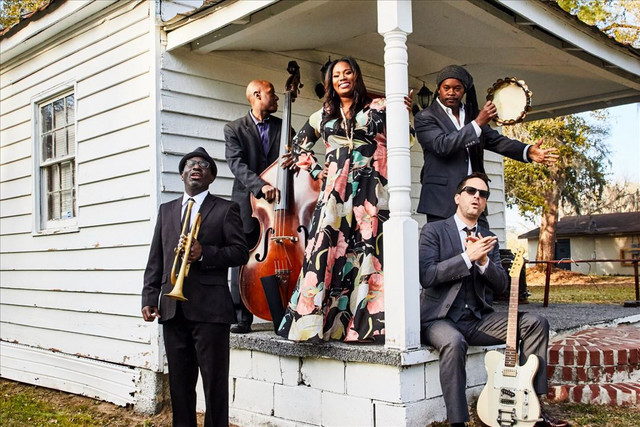


About Southern americana
Southern Americana is a roots-forward branch of American music that sits at the crossroads of country, blues, gospel, bluegrass, and folk, filtered through a distinctly Southern storytelling voice. It’s not a single sound but a family of practices: intimate, lyric-driven songs; acoustic textures and steel or Telecaster guitars; harmonies that tilt toward gospel; and a deep respect for place, memory, and weathered experience.
Its modern birth is commonly dated to the late 1990s, when the broader Americana movement began to formalize a scene around artists who traded polish for honesty and tradition for experimentation. It inherited the 1960s and 70s country-rock of bands like the Band and the Byrds’ Southern-inflected work, and the 1990s alt-country wave led by Uncle Tupelo, Son Volt, and Wilco. The Americana Music Association, founded in 1999, created a community and an awards platform that has helped countless Southern-influenced acts find a national voice. The music’s sonic palette—harmonized vocals, slide guitar and fiddle, upright bass, stubbornly folk-tinged storytelling—draws on Southern blues and gospel as much as it does on Nashville country and Appalachian roots.
Ambassadors of Southern Americana span decades and styles, united by a rhetoric of consequence and craft. Jason Isbell, Alabama-born and Nashville-raised, is a touchstone: songs that cut through the noise with precise storytelling and a bruised but hopeful perspective, from Southeastern’s intimate portraits to The Nashville Sound’s broader panorama. Sturgill Simpson, Kentucky’s maverick, has challenged conventions with Metamodern Sounds in Country Music and the orchestral, people-facing A Sailor’s Guide to Earth. Chris Stapleton, another Kentucky voice, fused blues grit with country soul on Traveller and its successors. The Avett Brothers, hailing from North Carolina, blend folk, bluegrass and a rock heartbeat with emotionally direct songwriting. Gillian Welch and Dave Rawlings have refined a modern string-band sound that feels ancient and immediate at once. Brandi Carlile’s soaring, gospel-tinged voice has helped steer mainstream audiences toward emotionally driven Americana. Tyler Childers, a newer star from Kentucky, carries the torch of rural storytelling with spare arrangements that hit hard. On stages, bands like Drive-By Truckers, Old Crow Medicine Show, and a wave of newer artists keep the Southern thread alive while inviting listeners from all over to join the road.
Popularity is strongest in the United States, where regional scenes, festivals, and radio sustain ongoing conversations about roots music. Yet Americana resonates across Europe—especially the United Kingdom, Ireland, Germany, and the Netherlands—and finds welcome audiences in Australia and parts of Asia. For enthusiasts, Southern Americana offers a continual invitation: music that sounds like a place you’ve lived or want to visit, where songs are earned and the performances feel like stories told in real time.
Its modern birth is commonly dated to the late 1990s, when the broader Americana movement began to formalize a scene around artists who traded polish for honesty and tradition for experimentation. It inherited the 1960s and 70s country-rock of bands like the Band and the Byrds’ Southern-inflected work, and the 1990s alt-country wave led by Uncle Tupelo, Son Volt, and Wilco. The Americana Music Association, founded in 1999, created a community and an awards platform that has helped countless Southern-influenced acts find a national voice. The music’s sonic palette—harmonized vocals, slide guitar and fiddle, upright bass, stubbornly folk-tinged storytelling—draws on Southern blues and gospel as much as it does on Nashville country and Appalachian roots.
Ambassadors of Southern Americana span decades and styles, united by a rhetoric of consequence and craft. Jason Isbell, Alabama-born and Nashville-raised, is a touchstone: songs that cut through the noise with precise storytelling and a bruised but hopeful perspective, from Southeastern’s intimate portraits to The Nashville Sound’s broader panorama. Sturgill Simpson, Kentucky’s maverick, has challenged conventions with Metamodern Sounds in Country Music and the orchestral, people-facing A Sailor’s Guide to Earth. Chris Stapleton, another Kentucky voice, fused blues grit with country soul on Traveller and its successors. The Avett Brothers, hailing from North Carolina, blend folk, bluegrass and a rock heartbeat with emotionally direct songwriting. Gillian Welch and Dave Rawlings have refined a modern string-band sound that feels ancient and immediate at once. Brandi Carlile’s soaring, gospel-tinged voice has helped steer mainstream audiences toward emotionally driven Americana. Tyler Childers, a newer star from Kentucky, carries the torch of rural storytelling with spare arrangements that hit hard. On stages, bands like Drive-By Truckers, Old Crow Medicine Show, and a wave of newer artists keep the Southern thread alive while inviting listeners from all over to join the road.
Popularity is strongest in the United States, where regional scenes, festivals, and radio sustain ongoing conversations about roots music. Yet Americana resonates across Europe—especially the United Kingdom, Ireland, Germany, and the Netherlands—and finds welcome audiences in Australia and parts of Asia. For enthusiasts, Southern Americana offers a continual invitation: music that sounds like a place you’ve lived or want to visit, where songs are earned and the performances feel like stories told in real time.