Genre
spanish renaissance
Top Spanish renaissance Artists
Showing 13 of 13 artists

About Spanish renaissance
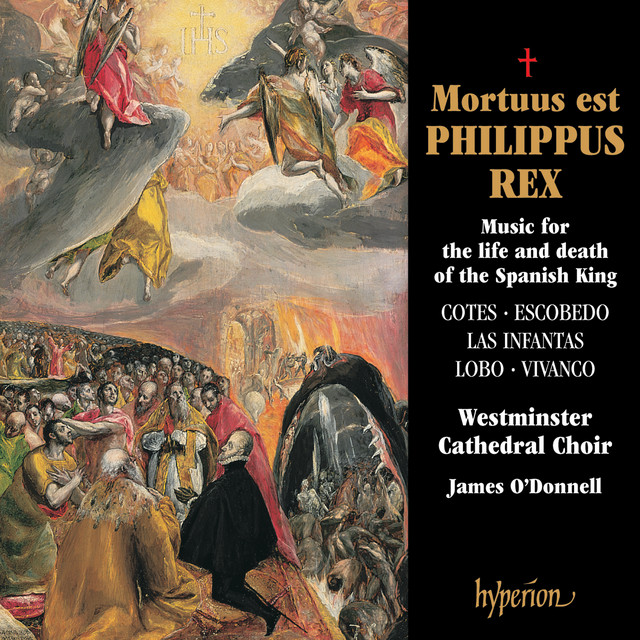
Spanish Renaissance is not a modern pop genre, but the Iberian flowering of art music during the Renaissance, roughly from the late 15th century to the early 17th. Born in the courts and cathedrals of Castile, Aragon, and their southern capitals, it grew out of a convergence of late medieval polyphony, Italian innovation, and the vibrant liturgical and secular life of Spain and Portugal. In this period, sacred music—largely vocal—dominated the concert hall of the chapel, while secular songs and instrumental music (notably for the vihuela and organ) reminded listeners that Renaissance Spain was equally adept at worldly wit as at devout ritual.
A defining characteristic of the Spanish Renaissance is its sublime sacred polyphony. Composers wrote intricate, interweaving lines that preserve modal color while embracing the expressive clarity of the liturgy. Masses, motets, and Magnificats reveal a deep devotion paired with technical refinement; sometimes the work is written for modest choirs in vast cathedrals, other times for private chapels in royal palaces. Secular song coexisted with these works in the form of the villancico, a popular vernacular genre that could be festive, witty, or poignant, often setting Christmas texts to memorable tunes. Instrumental traditions flourished too, especially the vihuela repertoire with its guitar-like sonorities and intricate variations.
Among the ambassadors of this era, a few names stand out as touchstones for listeners and scholars alike. Tomás Luis de Victoria (c. 1548–1611) stands as a towering figure in late Renaissance sacred music; his luminous vocal lines and structural clarity exemplify the Iberian polyphonic taste of his generation. Cristóbal de Morales (c. 1500–1553) helped shape the early Spanish school of the Mass and motet, balancing Flemish polyphony with distinctive Spanish inflection. Francisco Guerrero (1528–1599) carried the torch into the late 16th century, producing elaborate polyphonic cycles that continued to be revered in Madrid and Seville. Antonio de Cabezón (c. 1510–1566), though foremost as a virtuoso organist, left an enduring imprint on keyboard literature and the way instrumental color interacts with liturgical practice. The vihuela tradition—pioneered by composers who wrote for that plucked string family—also fed the Spanish Renaissance’s hybrid texture, with Luis de Narváez among its most famous advocates, and later generations absorbing and reinterpreting those idioms for keyboard and chamber ensembles.
Geographically, the movement is most closely tied to Spain and Portugal, but its influence radiated outward to the Spanish and Portuguese-speaking world. As colonization spread, Latin America absorbed aspects of this repertoire, and today early-music ensembles from Madrid to Mexico City, from Lisbon to London, keep the music alive. In the modern era, the revival of historically informed performance has brought renewed attention to the beauty of Spanish Renaissance choral writing and its intimate pairing of devotion and craftsmanship.
For the curious listener, recommended starting points include Victoria’s O magnum mysterium and his motets, Morales’s Missa Laudate pueri, Guerrero’s Masses, and the vibrant villancicos collected in Spanish songbooks of the era. A voyage through Spanish Renaissance is a study in luminous vocal translucence, architectural polyphony, and music that speaks with both reverent hush and human warmth.
A defining characteristic of the Spanish Renaissance is its sublime sacred polyphony. Composers wrote intricate, interweaving lines that preserve modal color while embracing the expressive clarity of the liturgy. Masses, motets, and Magnificats reveal a deep devotion paired with technical refinement; sometimes the work is written for modest choirs in vast cathedrals, other times for private chapels in royal palaces. Secular song coexisted with these works in the form of the villancico, a popular vernacular genre that could be festive, witty, or poignant, often setting Christmas texts to memorable tunes. Instrumental traditions flourished too, especially the vihuela repertoire with its guitar-like sonorities and intricate variations.
Among the ambassadors of this era, a few names stand out as touchstones for listeners and scholars alike. Tomás Luis de Victoria (c. 1548–1611) stands as a towering figure in late Renaissance sacred music; his luminous vocal lines and structural clarity exemplify the Iberian polyphonic taste of his generation. Cristóbal de Morales (c. 1500–1553) helped shape the early Spanish school of the Mass and motet, balancing Flemish polyphony with distinctive Spanish inflection. Francisco Guerrero (1528–1599) carried the torch into the late 16th century, producing elaborate polyphonic cycles that continued to be revered in Madrid and Seville. Antonio de Cabezón (c. 1510–1566), though foremost as a virtuoso organist, left an enduring imprint on keyboard literature and the way instrumental color interacts with liturgical practice. The vihuela tradition—pioneered by composers who wrote for that plucked string family—also fed the Spanish Renaissance’s hybrid texture, with Luis de Narváez among its most famous advocates, and later generations absorbing and reinterpreting those idioms for keyboard and chamber ensembles.
Geographically, the movement is most closely tied to Spain and Portugal, but its influence radiated outward to the Spanish and Portuguese-speaking world. As colonization spread, Latin America absorbed aspects of this repertoire, and today early-music ensembles from Madrid to Mexico City, from Lisbon to London, keep the music alive. In the modern era, the revival of historically informed performance has brought renewed attention to the beauty of Spanish Renaissance choral writing and its intimate pairing of devotion and craftsmanship.
For the curious listener, recommended starting points include Victoria’s O magnum mysterium and his motets, Morales’s Missa Laudate pueri, Guerrero’s Masses, and the vibrant villancicos collected in Spanish songbooks of the era. A voyage through Spanish Renaissance is a study in luminous vocal translucence, architectural polyphony, and music that speaks with both reverent hush and human warmth.