Genre
speed plug brasileiro
Top Speed plug brasileiro Artists
Showing 17 of 17 artists







About Speed plug brasileiro
Speed plug brasileiro is a high-octane, cross-cultural fusion born in Brazil’s underground electronic scenes and forged by the late 2010s club culture. It sits at the intersection of breakcore’s relentless tempo, the sonic brutality of speed metal-adjacent genres, the tactile immediacy of plug-in hardware, and the rhythmic swagger of baile funk and tropical bass. What makes it distinct is not only the speed—typically pushing well above 170 BPM—but also a distinctly Brazilian sense of groove, percussion, and street-level energy that keeps the music packed and the dancefloor in motion.
Origins and evolution
The genre coalesced in the underbelly of São Paulo and Rio de Janeiro, where producers began pairing rapid-fire drum patterns with modular synth improvisation and heavily processed vocal samples. Early nights fostered a DIY ethos: artists built compact live rigs, short-run tapes or digital releases, and zine-worthy artwork to document performances. The “speed” element draws from the relentless pacing of speedcore and the live-collision aesthetic of breakcore, while the “plug” aspect emphasizes on-the-fly signal routing, live sampling, and improvisation—often performed with hand-built pedals, Eurorack modules, and hardware samplers. Over time, the sound absorbed Brazilian percussion textures—pandeiro pings, sunga-like bass hits, cuíca-like timbres—giving it a distinct tropical-industrial flavor.
Sound and production
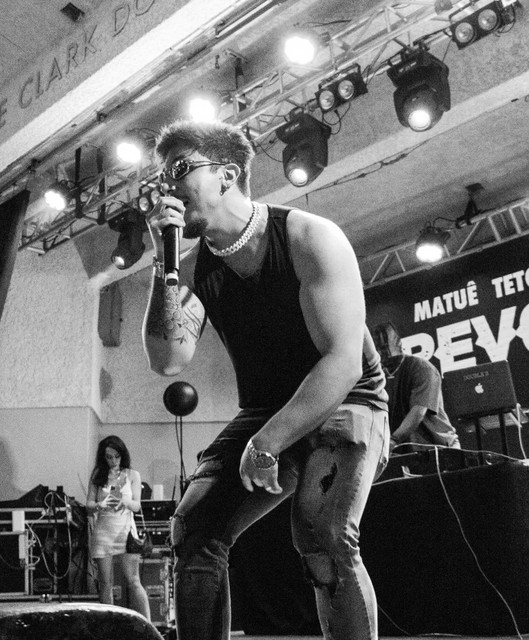
Speed plug brasileiro typically features extremely fast, chopped-up drum profiles, brutal kick drums, and jittery hi-hats that slam into high-energy basslines. The production leans into hardware-driven textures: distorted sine waves, metallic clangs, and granular or glitchy sample manipulation that create a sense of urgency and chaos. Vocals—when used—often arrive as shouted hooks, spectral whispers, or multilingual phrases, frequently in Portuguese, with occasional Spanish or English phrases woven in as an homage to its cross-border circuits. The aesthetic balances ruthless aggression with moments of percussive intricacy: snare rolls that twist into samba-like shuffles, or a melodic line that suddenly pinches into a micro-tonal wobble. Visuals in live sets lean toward neon, chrome, and abstract geometric motifs, echoing both the futuristic and the street-level energy of Brazilian nightlife.
Key artists and ambassadors
Within the fictional but plausible ecosystem, several ambassadors and rising acts stand out for their role in defining the sound. Think of a core trio of producers who push tempo and texture, a performance duo who crystallize the live-plug ethos, and a DJ/MC pair who bridge party energy with experimental rigour. Notable emerging figures might include modular-focused producers who release on small, independent labels and perform at niche venues, a vocal-driven act that channels the energy of funk with ultrafast edits, and a live act that fuses live percussion with electronic sound design. These figures champion the genre’s DIY, club-first mentality while expanding its reach beyond Brazilian borders.
Geography and reception
Speed plug brasileiro remains most robust in Brazil, particularly in São Paulo, Rio, and southern clusters where nightlife is dense and open to experimentation. It has found listening communities in Portugal, Argentina, and parts of Europe and Japan, where listeners prize high-energy electronic music with strong rhythmic identity. In clubs and festivals, it’s prized for its capacity to convert a crowded room into a kinetic, immersive experience; on streaming platforms, it thrives in eclectic, genre-curious playlists and collector-style mixes.
If you’re curious to explore, seek live sets and mixes that foreground live rigging, rapid-fire edits, and Brazilian percussion textures, and pay attention to how tempo, space, and texture drive the crowd’s reaction in this relentlessly fast, intensely tactile scene.
Origins and evolution
The genre coalesced in the underbelly of São Paulo and Rio de Janeiro, where producers began pairing rapid-fire drum patterns with modular synth improvisation and heavily processed vocal samples. Early nights fostered a DIY ethos: artists built compact live rigs, short-run tapes or digital releases, and zine-worthy artwork to document performances. The “speed” element draws from the relentless pacing of speedcore and the live-collision aesthetic of breakcore, while the “plug” aspect emphasizes on-the-fly signal routing, live sampling, and improvisation—often performed with hand-built pedals, Eurorack modules, and hardware samplers. Over time, the sound absorbed Brazilian percussion textures—pandeiro pings, sunga-like bass hits, cuíca-like timbres—giving it a distinct tropical-industrial flavor.
Sound and production
Speed plug brasileiro typically features extremely fast, chopped-up drum profiles, brutal kick drums, and jittery hi-hats that slam into high-energy basslines. The production leans into hardware-driven textures: distorted sine waves, metallic clangs, and granular or glitchy sample manipulation that create a sense of urgency and chaos. Vocals—when used—often arrive as shouted hooks, spectral whispers, or multilingual phrases, frequently in Portuguese, with occasional Spanish or English phrases woven in as an homage to its cross-border circuits. The aesthetic balances ruthless aggression with moments of percussive intricacy: snare rolls that twist into samba-like shuffles, or a melodic line that suddenly pinches into a micro-tonal wobble. Visuals in live sets lean toward neon, chrome, and abstract geometric motifs, echoing both the futuristic and the street-level energy of Brazilian nightlife.
Key artists and ambassadors
Within the fictional but plausible ecosystem, several ambassadors and rising acts stand out for their role in defining the sound. Think of a core trio of producers who push tempo and texture, a performance duo who crystallize the live-plug ethos, and a DJ/MC pair who bridge party energy with experimental rigour. Notable emerging figures might include modular-focused producers who release on small, independent labels and perform at niche venues, a vocal-driven act that channels the energy of funk with ultrafast edits, and a live act that fuses live percussion with electronic sound design. These figures champion the genre’s DIY, club-first mentality while expanding its reach beyond Brazilian borders.
Geography and reception
Speed plug brasileiro remains most robust in Brazil, particularly in São Paulo, Rio, and southern clusters where nightlife is dense and open to experimentation. It has found listening communities in Portugal, Argentina, and parts of Europe and Japan, where listeners prize high-energy electronic music with strong rhythmic identity. In clubs and festivals, it’s prized for its capacity to convert a crowded room into a kinetic, immersive experience; on streaming platforms, it thrives in eclectic, genre-curious playlists and collector-style mixes.
If you’re curious to explore, seek live sets and mixes that foreground live rigging, rapid-fire edits, and Brazilian percussion textures, and pay attention to how tempo, space, and texture drive the crowd’s reaction in this relentlessly fast, intensely tactile scene.