Genre
tabla
Top Tabla Artists
Showing 25 of 32 artists







About Tabla
Note: Tabla is not a standalone genre in the way “jazz” or “rock” are, but a rich rhythmic tradition centered on the tabla drums. When people speak of “tabla” in a musical sense, they are usually referring to the language, technique, and repertoire built around this instrument within Hindustani (North Indian) classical music and its many fusions. Here is a 500-word description aimed at music enthusiasts.
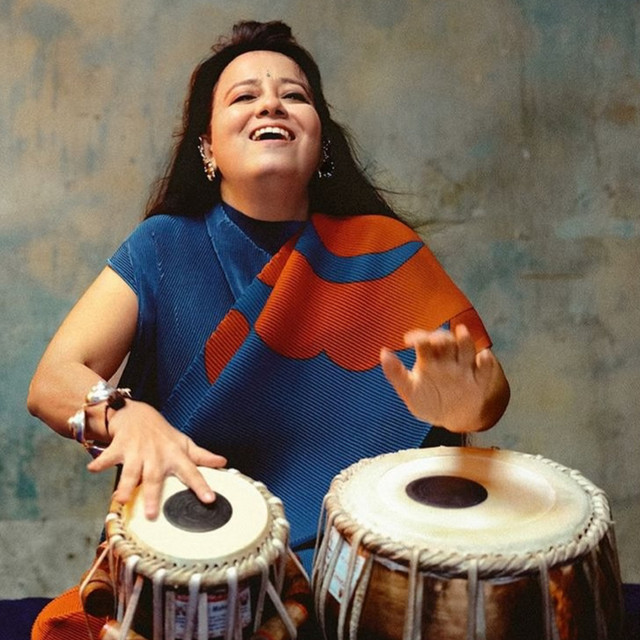
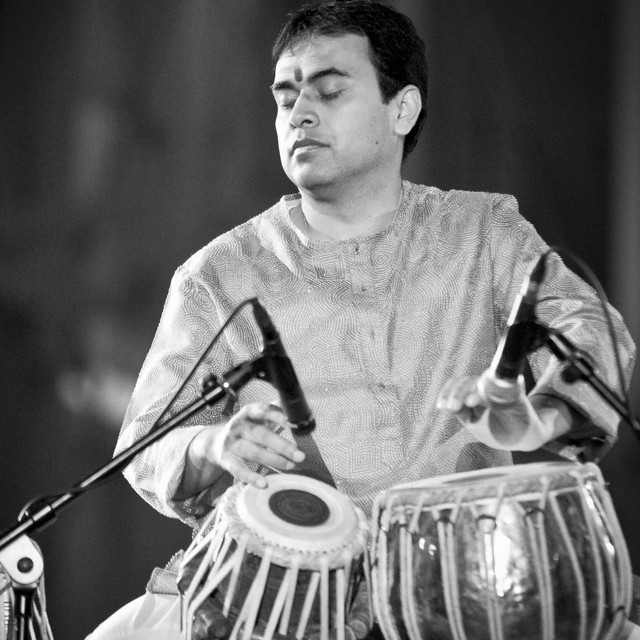
Tabla as a rhythmic tradition emerged in North India, taking shape in the 18th and 19th centuries as a paired instrument that developed from the older pakhawaj and other percussion forms. It quickly became the heartbeat of Hindustani concert music, providing a dynamic counterpoint to melodic instruments and voice. The instrument itself is a dual-drums system: the smaller, higher-pitched dayan (played with the right hand) and the larger, bass bayan (played with the left hand). The skins are tightened and tuned to produce a wide range of timbres, from crystalline trebles to resonant lows, enabling a speaker-like articulation of rhythm.
The tabla repertoire is built on a sophisticated oral language of syllables called bols. These syllables map to precise strokes and positions on the drums and form the basis of rhythmic communication in performance. Practitioners learn thousands of bols and combine them into cycles, or taals, that structure the music. Famous taals include teental (16 beats), ektaal (12), jhaptaal (10), Dadra (6), Dadra’s common variant (6), Rupak (7), and Kehrwa (8). A key feature is theka, the established pattern of bols for a given taal, which a tabla player must maintain with precision even as improvisation unfolds. The practice of tihai (repeating a phrase three times to conclude a section) showcases the craft’s precision and spontaneity at once.
Tabla performance thrives in several contexts. In Hindustani classical music, tabla accompanies vocalists and instrumentalists—sarod, sitar, flute, or violin—providing a responsive, interactive rhythmic framework that enhances the ragas’ emotional arc. Tabla solos, where the performer explores variations on a chosen taal, are a celebrated form in their own right. Beyond concert halls, tabla intertwines with film music, religious and devotional performances, and the global world-music scene. In fusion contexts, tabla has become a versatile bridge to jazz, electronica, and Western orchestration, expanding the instrument’s reach and textures.
Ambassadors and key figures help define tabla’s modern face. Ustad Alla Rakha (Allah Rakha Khansa) was a towering figure who popularized complex, virtuosic accompaniment and solos, and he trained his son, the renowned Zakir Hussain, who became perhaps the most visible tabla ambassador today through global tours, collaborations with artists like Ravi Shankar, Yo-Yo Ma’s Silk Road Ensemble, and many cross-cultural projects. The Benaras gharana and the Lucknow gharana each contribute distinct stylistic flavors—Kishan Maharaj and his lineage being especially revered for their deep, lyrical phrasing; Anindo Chatterjee and Samir Chatterjee are admired for their pedagogical clarity and performance finesse, while fusion scene figures like Talvin Singh helped bring tabla into contemporary electronic textures.
Geographically, tabla’s strongest devotion remains in India and Pakistan, with enduring popularity in Bangladesh and Nepal. The Indian diaspora—United States, United Kingdom, Canada, Australia, and parts of Europe—has nurtured vibrant tabla communities, festivals, and schools. In short, tabla is both a deeply traditional rhythmic grammar and a living, evolving art form that continues to adapt—an ambassador of Indian rhythm to listeners around the world.
Tabla as a rhythmic tradition emerged in North India, taking shape in the 18th and 19th centuries as a paired instrument that developed from the older pakhawaj and other percussion forms. It quickly became the heartbeat of Hindustani concert music, providing a dynamic counterpoint to melodic instruments and voice. The instrument itself is a dual-drums system: the smaller, higher-pitched dayan (played with the right hand) and the larger, bass bayan (played with the left hand). The skins are tightened and tuned to produce a wide range of timbres, from crystalline trebles to resonant lows, enabling a speaker-like articulation of rhythm.
The tabla repertoire is built on a sophisticated oral language of syllables called bols. These syllables map to precise strokes and positions on the drums and form the basis of rhythmic communication in performance. Practitioners learn thousands of bols and combine them into cycles, or taals, that structure the music. Famous taals include teental (16 beats), ektaal (12), jhaptaal (10), Dadra (6), Dadra’s common variant (6), Rupak (7), and Kehrwa (8). A key feature is theka, the established pattern of bols for a given taal, which a tabla player must maintain with precision even as improvisation unfolds. The practice of tihai (repeating a phrase three times to conclude a section) showcases the craft’s precision and spontaneity at once.
Tabla performance thrives in several contexts. In Hindustani classical music, tabla accompanies vocalists and instrumentalists—sarod, sitar, flute, or violin—providing a responsive, interactive rhythmic framework that enhances the ragas’ emotional arc. Tabla solos, where the performer explores variations on a chosen taal, are a celebrated form in their own right. Beyond concert halls, tabla intertwines with film music, religious and devotional performances, and the global world-music scene. In fusion contexts, tabla has become a versatile bridge to jazz, electronica, and Western orchestration, expanding the instrument’s reach and textures.
Ambassadors and key figures help define tabla’s modern face. Ustad Alla Rakha (Allah Rakha Khansa) was a towering figure who popularized complex, virtuosic accompaniment and solos, and he trained his son, the renowned Zakir Hussain, who became perhaps the most visible tabla ambassador today through global tours, collaborations with artists like Ravi Shankar, Yo-Yo Ma’s Silk Road Ensemble, and many cross-cultural projects. The Benaras gharana and the Lucknow gharana each contribute distinct stylistic flavors—Kishan Maharaj and his lineage being especially revered for their deep, lyrical phrasing; Anindo Chatterjee and Samir Chatterjee are admired for their pedagogical clarity and performance finesse, while fusion scene figures like Talvin Singh helped bring tabla into contemporary electronic textures.
Geographically, tabla’s strongest devotion remains in India and Pakistan, with enduring popularity in Bangladesh and Nepal. The Indian diaspora—United States, United Kingdom, Canada, Australia, and parts of Europe—has nurtured vibrant tabla communities, festivals, and schools. In short, tabla is both a deeply traditional rhythmic grammar and a living, evolving art form that continues to adapt—an ambassador of Indian rhythm to listeners around the world.