Genre
tape music
Top Tape music Artists
Showing 5 of 5 artists


About Tape music
Tape music is the art of shaping sound primarily with magnetic tape as the material of composition. It encompasses a set of practices—splicing, looping, varispeed, tape delay, and live manipulation—that let artists sculpt time itself from recorded fragments, voices, and improvised textures. Although the term nods to the physical medium, tape music is really a language: a way to transform everyday sound into sonic sculpture. Its rise began in the late 1940s and 1950s, when engineers and composers discovered that you could cut, rearrange, and twist tape to create entirely new auditory landscapes. The tactile act of physically editing reels became a creative method, not just a technical trick.
Origins and early pioneers: In Paris, Pierre Schaeffer and the Groupe de Recherche Musicale (GRM) popularized what would be called musique concrète, using edited tapes of railway noises, speech, and found sounds as raw material. Pierre Henry’s collaborations with Schaeffer further codified the vocabulary of tape-based composition. Across the Atlantic, the mid‑1950s saw Karlheinz Stockhausen expand the field with electronic and taped works that pushed the idea of tape as an expressive instrument. Works like Kontake (1959–60) merged live electronics with taped material, demonstrating how tape could become a medium as expressive as any instrument.
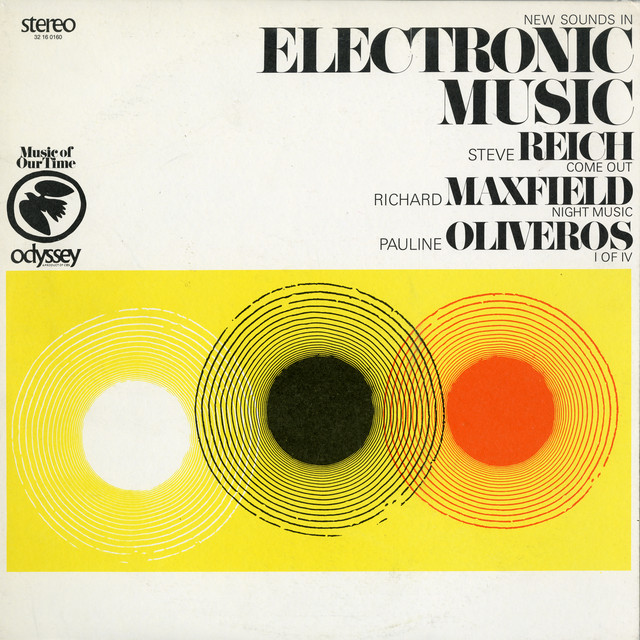
1960s and beyond: The technique rippled through experimental music. Steve Reich’s early tape pieces, including the iconic It’s Gonna Rain and Come Out, usedما two or more looping tape phrases to produce phasing and phase-shifted rhythms that pull listeners into minute, almost mathematical shifts in time. In Britain, Delia Derbyshire and the Radiophonic Workshop pioneered distinctive timbres and wound tape tricks into broadcast sound design—most famously shaping the Doctor Who theme. John Cage and his circle explored tape as a medium for chance procedures and sonic collage, helping to widen the conceptual space for tape-based experimentation.
The cassette era and DIY culture: By the 1970s and into the 1980s, the advent of compact cassettes democratized distribution. The tape offered a low-cost, accessible way for a dispersed, global community of improvisers, ambient artists, and noise-makers to share work. The rise of 4-track recorders and home dubbing fostered a thriving cassette culture in the United States, the United Kingdom, Japan, and much of Europe. This era blurred the line between “composer” and “sound designer,” giving rise to countless DIY releases, limited-run labels, and a treasure trove of lo-fi experiments that prized texture and process as much as melody or harmony. Tape became not just a tool but a subculture.
Ambassadors and influence today: Tape music remains a living thread in experimental and ambient scenes. Its historical lineage runs from Schaeffer, Henry, and Stockhausen to Reich and Derbyshire, through Eno’s ambient explorations and into contemporary cassette-focused artists who release limited editions on analog formats. In Japan, the late‑20th century noise and experimental scenes kept tape culture vibrant, with a prolific lineage of cassette releases that fed into global communities. In France, the GRM school continues to influence contemporary sound design, while the United States and the United Kingdom sustain a robust experimental ecosystem through labels, festivals, and independent artists.
For enthusiasts, tape music invites a hands-on, tactile approach to composition. It rewards curious ears with the promise that sound, cut and reassembled, can become new time itself.
Origins and early pioneers: In Paris, Pierre Schaeffer and the Groupe de Recherche Musicale (GRM) popularized what would be called musique concrète, using edited tapes of railway noises, speech, and found sounds as raw material. Pierre Henry’s collaborations with Schaeffer further codified the vocabulary of tape-based composition. Across the Atlantic, the mid‑1950s saw Karlheinz Stockhausen expand the field with electronic and taped works that pushed the idea of tape as an expressive instrument. Works like Kontake (1959–60) merged live electronics with taped material, demonstrating how tape could become a medium as expressive as any instrument.
1960s and beyond: The technique rippled through experimental music. Steve Reich’s early tape pieces, including the iconic It’s Gonna Rain and Come Out, usedما two or more looping tape phrases to produce phasing and phase-shifted rhythms that pull listeners into minute, almost mathematical shifts in time. In Britain, Delia Derbyshire and the Radiophonic Workshop pioneered distinctive timbres and wound tape tricks into broadcast sound design—most famously shaping the Doctor Who theme. John Cage and his circle explored tape as a medium for chance procedures and sonic collage, helping to widen the conceptual space for tape-based experimentation.
The cassette era and DIY culture: By the 1970s and into the 1980s, the advent of compact cassettes democratized distribution. The tape offered a low-cost, accessible way for a dispersed, global community of improvisers, ambient artists, and noise-makers to share work. The rise of 4-track recorders and home dubbing fostered a thriving cassette culture in the United States, the United Kingdom, Japan, and much of Europe. This era blurred the line between “composer” and “sound designer,” giving rise to countless DIY releases, limited-run labels, and a treasure trove of lo-fi experiments that prized texture and process as much as melody or harmony. Tape became not just a tool but a subculture.
Ambassadors and influence today: Tape music remains a living thread in experimental and ambient scenes. Its historical lineage runs from Schaeffer, Henry, and Stockhausen to Reich and Derbyshire, through Eno’s ambient explorations and into contemporary cassette-focused artists who release limited editions on analog formats. In Japan, the late‑20th century noise and experimental scenes kept tape culture vibrant, with a prolific lineage of cassette releases that fed into global communities. In France, the GRM school continues to influence contemporary sound design, while the United States and the United Kingdom sustain a robust experimental ecosystem through labels, festivals, and independent artists.
For enthusiasts, tape music invites a hands-on, tactile approach to composition. It rewards curious ears with the promise that sound, cut and reassembled, can become new time itself.