Genre
turkish instrumental
Top Turkish instrumental Artists
Showing 22 of 22 artists










About Turkish instrumental
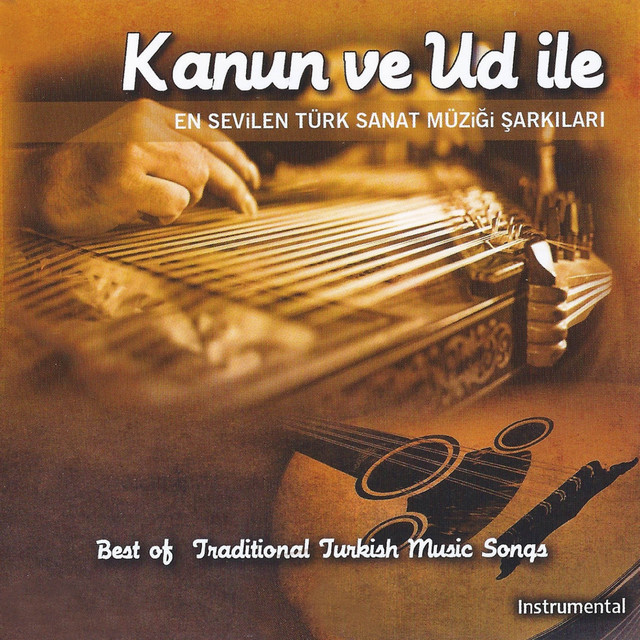
Turkish instrumental is a rich, makam-driven tradition that sits at the crossroads of Anatolian folk music and the refined courtly traditions of the Ottoman era. It is defined less by a singular sound and more by a deep emphasis on melody, timbre, and microtonal nuance. In its purest form, listening to Turkish instrumental music is to hear a conversation between instrument families—strings, wind, and percussion—that unfolds in a series of improvised explorations (taksim) or in tightly shaped instrumental suites. The genre celebrates the unique identities of instruments such as the bağlama (saz), tanbur, kanun, oud, and ney, each offering a distinct color within the same makam framework.
Origins stretch back to centuries of Ottoman classical music alongside Anatolian folk traditions. The makam system—the scalar architecture that governs pitches, ornaments, and intonation—gives Turkish instrumental music its characteristic expressive bend. By the 16th through 19th centuries, palace ensembles and professional instrumentalists honed forms such as the pesrev, saz semaisi, and taksim, shaping a repertoire that could be both virtuosic and deeply contemplative. The late Ottoman and early Republican periods saw codification and pedagogy that helped spread the tradition beyond specialist circles, laying the groundwork for contemporary instrumental practice that continues to evolve in concert halls, festivals, and recording studios.
Key ambassadors of the tradition span both historical icons and modern innovators. In the classical realm, Tanburi Cemil Bey is often celebrated as a foundational figure who helped shape modern Turkish instrumental technique on the tanbur and related plucked instruments, bridging older repertoires with newer performance sensibilities. The ney, with its breathy, penitent flame, is closely associated with ney masters and improvisers who elevated instrumental voice to a near-speech quality. In more contemporary circles, artists such as Mercan Dede have carried Turkish instrumental aesthetics into global electronic and world-music contexts, fusing traditional melodies with digital soundscapes. Omar Faruk Tekbilek—an internationally renowned multi-instrumentalist—has long popularized Turkish and Near Eastern instrumental textures throughout the world. These artists serve as ambassadors by translating traditional timbres into 21st-century listening spaces, expanding the genre’s reach without diluting its essence.
Geographically, Turkish instrumental is most deeply rooted in Turkey, where it continues to be taught, performed, and streamed in urban and rural settings alike. It also finds substantial audiences in neighboring regions with shared heritage, including the Balkans (Greece, Bulgaria, Bosnia and Herzegovina, North Macedonia, Albania) and Cyprus. The Turkish diaspora in Germany, the Netherlands, France, Austria, and the wider European scene has helped propel the genre onto festival stages, cinema soundtracks, and world-music catalogs. Beyond Europe, listeners in the Middle East, parts of the Caucasus, and increasingly North America discover the genre through fusion projects, academic programs, and contemporary composers who reward attentive listening with the genre’s characteristic warmth and complexity.
For enthusiasts, Turkish instrumental offers a rewarding blend of precision and poetry: the tactile resonance of the bağlama, the shimmering cantabile of the kanun, the breath-led phrasing of the ney, and the drum’s heartbeat that binds improvisation to form. It’s a tradition that invites both deep study and open-ended discovery, a living dialogue across centuries.
Origins stretch back to centuries of Ottoman classical music alongside Anatolian folk traditions. The makam system—the scalar architecture that governs pitches, ornaments, and intonation—gives Turkish instrumental music its characteristic expressive bend. By the 16th through 19th centuries, palace ensembles and professional instrumentalists honed forms such as the pesrev, saz semaisi, and taksim, shaping a repertoire that could be both virtuosic and deeply contemplative. The late Ottoman and early Republican periods saw codification and pedagogy that helped spread the tradition beyond specialist circles, laying the groundwork for contemporary instrumental practice that continues to evolve in concert halls, festivals, and recording studios.
Key ambassadors of the tradition span both historical icons and modern innovators. In the classical realm, Tanburi Cemil Bey is often celebrated as a foundational figure who helped shape modern Turkish instrumental technique on the tanbur and related plucked instruments, bridging older repertoires with newer performance sensibilities. The ney, with its breathy, penitent flame, is closely associated with ney masters and improvisers who elevated instrumental voice to a near-speech quality. In more contemporary circles, artists such as Mercan Dede have carried Turkish instrumental aesthetics into global electronic and world-music contexts, fusing traditional melodies with digital soundscapes. Omar Faruk Tekbilek—an internationally renowned multi-instrumentalist—has long popularized Turkish and Near Eastern instrumental textures throughout the world. These artists serve as ambassadors by translating traditional timbres into 21st-century listening spaces, expanding the genre’s reach without diluting its essence.
Geographically, Turkish instrumental is most deeply rooted in Turkey, where it continues to be taught, performed, and streamed in urban and rural settings alike. It also finds substantial audiences in neighboring regions with shared heritage, including the Balkans (Greece, Bulgaria, Bosnia and Herzegovina, North Macedonia, Albania) and Cyprus. The Turkish diaspora in Germany, the Netherlands, France, Austria, and the wider European scene has helped propel the genre onto festival stages, cinema soundtracks, and world-music catalogs. Beyond Europe, listeners in the Middle East, parts of the Caucasus, and increasingly North America discover the genre through fusion projects, academic programs, and contemporary composers who reward attentive listening with the genre’s characteristic warmth and complexity.
For enthusiasts, Turkish instrumental offers a rewarding blend of precision and poetry: the tactile resonance of the bağlama, the shimmering cantabile of the kanun, the breath-led phrasing of the ney, and the drum’s heartbeat that binds improvisation to form. It’s a tradition that invites both deep study and open-ended discovery, a living dialogue across centuries.