Genre
contrabass
Top Contrabass Artists
Showing 25 of 40 artists










About Contrabass
Contrabass, in the sense of a genre centered on the double bass, is a sonic tradition that treats the instrument as the expressive core of a wide range of music. It is not a single repertory style so much as a lineage of sound: a voice built to underpin ensembles, deepen harmony, and—when called upon—sing with a lyrical breadth. Its origins lie with the violone family in Europe, where a larger bass instrument began to take shape in the 16th century. By the 18th century, luthiers and composers sharpened its role in both orchestral and chamber settings, giving birth to the instrument we know today: four strings, typically tuned E1–A1–D2–G2, capable of a remarkable range of color from thunderous foundation to singing melodic line.
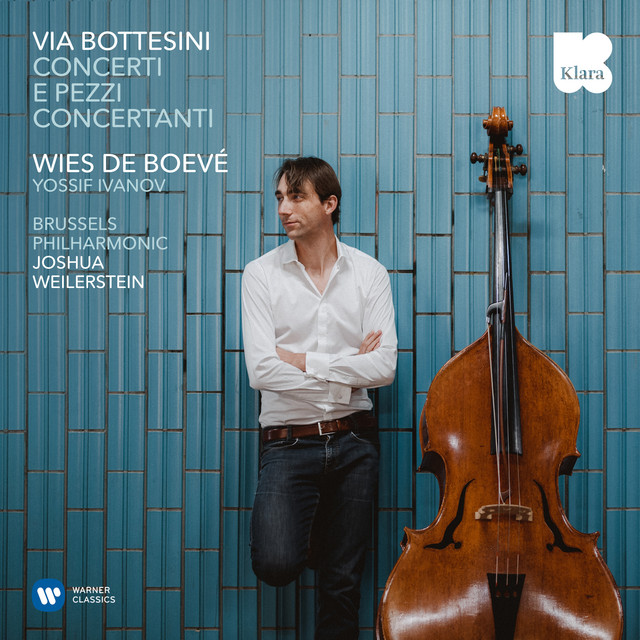
In classical music, the contrabass has long performed as the pillar of the string section, but the genre story truly expands in the 19th century with two towering virtuosi who pushed the instrument’s technical and expressive possibilities. Domenico Dragonetti (1794–1846), an Italian bassist who made a career in London, developed a powerful arco tone and expressive phrase-work that influenced generations of bass players across Europe. Giovanni Bottesini (1821–1889), often called the Paganini of the double bass, expanded the repertoire with concertos and studies that remain touchstones for bassists seeking virtuosic grandeur. These figures transformed the contrabass from a foundational voice into a solo and concert instrument with a distinct, quasi-possessed cantabile quality.
The 20th century widened the genre’s horizons dramatically through jazz and beyond. In jazz, the contrabass—or upright bass—became the heartbeat of ensembles, with players who turned the bass into a walking, swinging voice and a vehicle for improvisation. Pioneers such as Oscar Pettiford (1926–1960), Ray Brown (1926–2002), and Charles Mingus (1922–1979) elevated the instrument to front-line soloing while maintaining its essential role as groove anchor. They explored harmony and rhythm with a boldness that echoed through today’s acoustic and electric ensembles. Later, innovators like Ron Carter, Niels-Henning Ørsted Pedersen (NHØP), and Dave Holland carried that tradition into modern jazz, blending technical mastery with a wide harmonic and tonal palette.
Across continents, the contrabass has found ambassadors in contemporary classical, avant-garde, and crossover scenes. In the 20th and 21st centuries, players such as François Rabbath and other virtuosos expanded technique—thumb position, harmonics, and extended arco color—pushing the instrument into new sonic territories. Outside the concert hall, the contrabass sustains folk and world traditions (Argentina’s tango practice, certain Eastern European styles, and Balkan ensembles often feature robust, expressive bass lines), while in American and European studios it remains indispensable for jazz, fusion, and film-score orchestration.
Today, the contrabass remains most popular where orchestral traditions and jazz histories converge: the United States, Italy, the United Kingdom, and Germany, with strong scenes in France, Japan, and Scandinavia. Its resonance travels easily into modern crossover projects, where bassists explore climate-changing combinations—classical technique meeting improvisation, electronics, and contemporary composition. For enthusiasts, the contrabass genre offers a rare combination of earthbound gravity and soaring lyricism: a testament to an instrument that, while low in register, often speaks the loudest in any musical conversation.
In classical music, the contrabass has long performed as the pillar of the string section, but the genre story truly expands in the 19th century with two towering virtuosi who pushed the instrument’s technical and expressive possibilities. Domenico Dragonetti (1794–1846), an Italian bassist who made a career in London, developed a powerful arco tone and expressive phrase-work that influenced generations of bass players across Europe. Giovanni Bottesini (1821–1889), often called the Paganini of the double bass, expanded the repertoire with concertos and studies that remain touchstones for bassists seeking virtuosic grandeur. These figures transformed the contrabass from a foundational voice into a solo and concert instrument with a distinct, quasi-possessed cantabile quality.
The 20th century widened the genre’s horizons dramatically through jazz and beyond. In jazz, the contrabass—or upright bass—became the heartbeat of ensembles, with players who turned the bass into a walking, swinging voice and a vehicle for improvisation. Pioneers such as Oscar Pettiford (1926–1960), Ray Brown (1926–2002), and Charles Mingus (1922–1979) elevated the instrument to front-line soloing while maintaining its essential role as groove anchor. They explored harmony and rhythm with a boldness that echoed through today’s acoustic and electric ensembles. Later, innovators like Ron Carter, Niels-Henning Ørsted Pedersen (NHØP), and Dave Holland carried that tradition into modern jazz, blending technical mastery with a wide harmonic and tonal palette.
Across continents, the contrabass has found ambassadors in contemporary classical, avant-garde, and crossover scenes. In the 20th and 21st centuries, players such as François Rabbath and other virtuosos expanded technique—thumb position, harmonics, and extended arco color—pushing the instrument into new sonic territories. Outside the concert hall, the contrabass sustains folk and world traditions (Argentina’s tango practice, certain Eastern European styles, and Balkan ensembles often feature robust, expressive bass lines), while in American and European studios it remains indispensable for jazz, fusion, and film-score orchestration.
Today, the contrabass remains most popular where orchestral traditions and jazz histories converge: the United States, Italy, the United Kingdom, and Germany, with strong scenes in France, Japan, and Scandinavia. Its resonance travels easily into modern crossover projects, where bassists explore climate-changing combinations—classical technique meeting improvisation, electronics, and contemporary composition. For enthusiasts, the contrabass genre offers a rare combination of earthbound gravity and soaring lyricism: a testament to an instrument that, while low in register, often speaks the loudest in any musical conversation.