Genre
wind ensemble
Top Wind ensemble Artists
Showing 16 of 16 artists



About Wind ensemble
Wind ensemble is a concert-focused, non-marching tradition built around a large wind and percussion section. Its typical forces include flutes and piccolos, oboes and bassoons, clarinets, horns, trumpets, trombones, bass trombones or tubas, and a percussion battery. While it shares ancestry with military bands and the early “wind bands” of 19th-century civic and educational life, the wind ensemble in its modern sense converges around serious, sometimes symphonic repertoire written specifically for a non-string woodwind-and-brass orchestra. The result is a blend of choir-like color, brisk rhythmic clarity, and harmonic width that suits concert venues and recording studios alike.
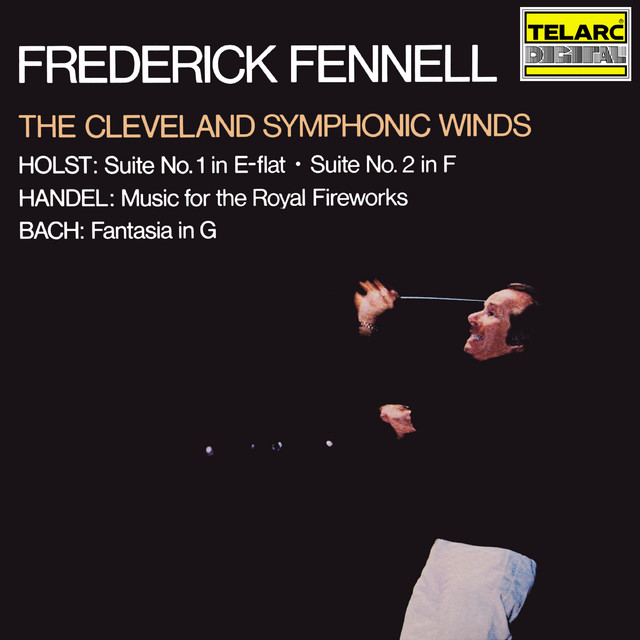
The birth of the modern wind ensemble was not a single event but a trajectory. Military and parade bands provided the initial template for large wind forces, but as composers and conductors began treating winds as capable of subtler color, structural complexity, and emotional range, wind-specific repertoire began to flourish in universities, conservatories, and civic ensembles across Europe and North America. In the early 20th century, composers such as Gustav Holst and Percy Grainger helped elevate the form. Holst’s wind-band works—often cited as milestones—demonstrated how a concert band could carry characterful, unified musical ideas rather than merely serve as a vehicle for marches. Grainger’s Lincolnshire Posy, a collection of folk-inspired pieces for winds, further established the wind ensemble as a serious artistic medium. In the American tradition, the mid-20th century saw a surge of influential composers and performers who wrote extensively for winds and helped cultivate a robust concert-band literature: Vincent Persichetti, Norman Dello Joio, and later Howard Hanson and accompanying conductors, along with prolific band-arrangement culture that enriched school and community bands.
Today, the repertoire for wind ensembles ranges from the winds’ essentials—transcriptions of orchestral masterworks and classic marches—to original, large-scale works that explore modern harmony, complex rhythms, and programmatic storytelling. Ambassadors of the genre include composers who expanded the language for winds, such as David Maslanka, Frank Ticheli, John Mackey, and Gail Kubik, as well as Americans like Percy Grainger and Holst’s European successors who wrote for symphonic winds. Conductors and performers who champion wind music—through festivals, commissions, and high-profile concerts—have helped the genre travel well beyond its North American roots.
The wind ensemble is especially popular in the United States, where school and university bands form a major cultural ecosystem, and in parts of Europe—the United Kingdom, the Netherlands, Germany, and Scandinavia—where professional and semi-professional wind groups appear in concert halls and festivals. Asia also hosts vibrant wind-band scenes, notably in Japan and Korea, where school and community ensembles keep a high-performance pace. International organizations and festivals, such as the World Association for Symphonic Bands and Ensembles (WASBE), knit together musicians, composers, and educators across borders, reinforcing wind music as a global conversation.
For enthusiasts, a wind ensemble program offers a spectrum: from the tactile thrill of virtuosic wind writing and precise ensemble coordination to the sweeping, cinematic reach of large-scale wind works. It is a living, evolving language—one where color, contrasts, and communal precision converge to reveal the instrument’s collective imagination.
The birth of the modern wind ensemble was not a single event but a trajectory. Military and parade bands provided the initial template for large wind forces, but as composers and conductors began treating winds as capable of subtler color, structural complexity, and emotional range, wind-specific repertoire began to flourish in universities, conservatories, and civic ensembles across Europe and North America. In the early 20th century, composers such as Gustav Holst and Percy Grainger helped elevate the form. Holst’s wind-band works—often cited as milestones—demonstrated how a concert band could carry characterful, unified musical ideas rather than merely serve as a vehicle for marches. Grainger’s Lincolnshire Posy, a collection of folk-inspired pieces for winds, further established the wind ensemble as a serious artistic medium. In the American tradition, the mid-20th century saw a surge of influential composers and performers who wrote extensively for winds and helped cultivate a robust concert-band literature: Vincent Persichetti, Norman Dello Joio, and later Howard Hanson and accompanying conductors, along with prolific band-arrangement culture that enriched school and community bands.
Today, the repertoire for wind ensembles ranges from the winds’ essentials—transcriptions of orchestral masterworks and classic marches—to original, large-scale works that explore modern harmony, complex rhythms, and programmatic storytelling. Ambassadors of the genre include composers who expanded the language for winds, such as David Maslanka, Frank Ticheli, John Mackey, and Gail Kubik, as well as Americans like Percy Grainger and Holst’s European successors who wrote for symphonic winds. Conductors and performers who champion wind music—through festivals, commissions, and high-profile concerts—have helped the genre travel well beyond its North American roots.
The wind ensemble is especially popular in the United States, where school and university bands form a major cultural ecosystem, and in parts of Europe—the United Kingdom, the Netherlands, Germany, and Scandinavia—where professional and semi-professional wind groups appear in concert halls and festivals. Asia also hosts vibrant wind-band scenes, notably in Japan and Korea, where school and community ensembles keep a high-performance pace. International organizations and festivals, such as the World Association for Symphonic Bands and Ensembles (WASBE), knit together musicians, composers, and educators across borders, reinforcing wind music as a global conversation.
For enthusiasts, a wind ensemble program offers a spectrum: from the tactile thrill of virtuosic wind writing and precise ensemble coordination to the sweeping, cinematic reach of large-scale wind works. It is a living, evolving language—one where color, contrasts, and communal precision converge to reveal the instrument’s collective imagination.