Data may be outdated
Last updated: 9 months ago — Click refresh to get the latest statistics.
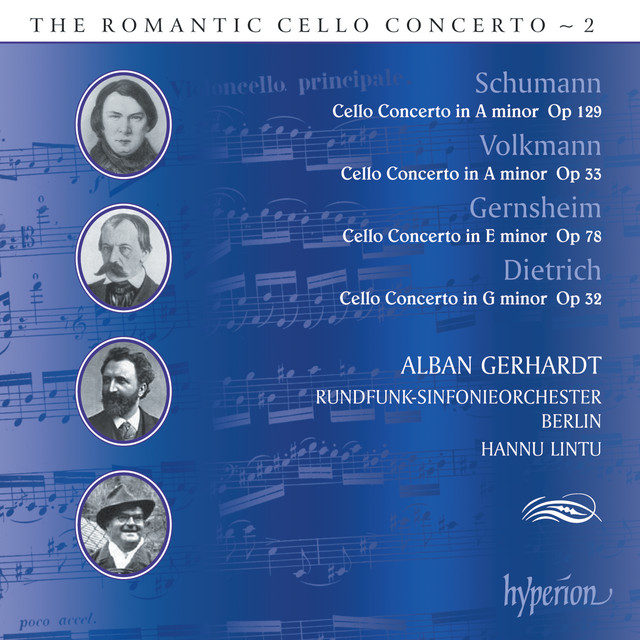
Albert Dietrich was a German composer of the Romantic era known for his association with <a href="spotify:artist:5wTAi7QkpP6kp8a54lmTOq">Brahms</a>, <a href="spotify:artist:2yzaWNFV3cxmcRZtwtr5WC">Clara</a> and <a href="spotify:artist:2UqjDAXnDxejEyE0CzfUrZ">Robert Schumann</a>, and <a href="spotify:artist:6QuJ4aZSRMebqwDXiJ3SuA">Joseph Joachim</a>. His contributions as a composer include instrument concertos, a symphony, theatrical works, and the first movement of the F-A-E Violin Sonata for <a href="spotify:artist:6QuJ4aZSRMebqwDXiJ3SuA">Joachim</a>.
Dietrich was born in 1829 near Meissen, Germany, and in 1842 enrolled at the Kreuzschule in Dresden, where he studied composition and piano under Ernst Julius Otto. He continued his education in 1847 as a philosophy student, and he also received private instruction from <a href="spotify:artist:16jXfuqWJEnpQ6wPVzGFXs">Ignaz Moscheles</a>, <a href="spotify:artist:3Zqh80EeZ5B1umADnzYlj7">Julius Rietz</a>, and Moritz Hauptmann at the Leipzig Conservatory. After his graduation in 1851, he moved to Düsseldorf, where he began studying with <a href="spotify:artist:2UqjDAXnDxejEyE0CzfUrZ">Robert Schumann</a>, and they became close friends. Dietrich also befriended <a href="spotify:artist:5wTAi7QkpP6kp8a54lmTOq">Brahms</a> in 1853, and with <a href="spotify:artist:2UqjDAXnDxejEyE0CzfUrZ">Schumann</a>, the three composers collaborated on the F-A-E Violin Sonata for their friend <a href="spotify:artist:6QuJ4aZSRMebqwDXiJ3SuA">Joseph Joachim</a>. Their playful intentions were for <a href="spotify:artist:6QuJ4aZSRMebqwDXiJ3SuA">Joachim</a> to play the sonata and then guess who wrote each movement.
Dietrich traveled to Leipzig in 1854 to conduct the premiere of his Symphony, and he became the music director for the city of Bonn in 1855. An influential leader in the community, he conducted and organized the subscription concert series, and he also taught music lessons to students such as Ernst Eduard Taubert. Dietrich left this position in 1861 for an appointment as kapellmeister for the court of Oldenburg. He was responsible for the music education of the grand duchess, and it was also around this time that he composed some of his best large-scale works, like the Violin Concerto, Op. 30, Cello Concerto, Op 32, and the opera Robin Hood, Op. 34.
After his retirement in 1890, Dietrich moved to Berlin, where he was a member of the Akademie der Künste. He published his collection of correspondences and memoirs of <a href="spotify:artist:5wTAi7QkpP6kp8a54lmTOq">Brahms</a> in 1898, and he was honored with the title of royal professor in 1899. Dietrich's music continued to be performed during his lifetime, but his worklist was practically forgotten after his death in 1908. In modern times, the famous F-A-E Sonata has appeared on numerous recordings, and his style as an orchestral composer can be heard on the 2024 release Dietrich: Symphony in D minor; Violin Concerto; Overture in C major with Klaidi Sahatci, Christoph König, and the Solistes Européens, Luxembourg. ~ RJ Lambert, Rovi
Dietrich was born in 1829 near Meissen, Germany, and in 1842 enrolled at the Kreuzschule in Dresden, where he studied composition and piano under Ernst Julius Otto. He continued his education in 1847 as a philosophy student, and he also received private instruction from <a href="spotify:artist:16jXfuqWJEnpQ6wPVzGFXs">Ignaz Moscheles</a>, <a href="spotify:artist:3Zqh80EeZ5B1umADnzYlj7">Julius Rietz</a>, and Moritz Hauptmann at the Leipzig Conservatory. After his graduation in 1851, he moved to Düsseldorf, where he began studying with <a href="spotify:artist:2UqjDAXnDxejEyE0CzfUrZ">Robert Schumann</a>, and they became close friends. Dietrich also befriended <a href="spotify:artist:5wTAi7QkpP6kp8a54lmTOq">Brahms</a> in 1853, and with <a href="spotify:artist:2UqjDAXnDxejEyE0CzfUrZ">Schumann</a>, the three composers collaborated on the F-A-E Violin Sonata for their friend <a href="spotify:artist:6QuJ4aZSRMebqwDXiJ3SuA">Joseph Joachim</a>. Their playful intentions were for <a href="spotify:artist:6QuJ4aZSRMebqwDXiJ3SuA">Joachim</a> to play the sonata and then guess who wrote each movement.
Dietrich traveled to Leipzig in 1854 to conduct the premiere of his Symphony, and he became the music director for the city of Bonn in 1855. An influential leader in the community, he conducted and organized the subscription concert series, and he also taught music lessons to students such as Ernst Eduard Taubert. Dietrich left this position in 1861 for an appointment as kapellmeister for the court of Oldenburg. He was responsible for the music education of the grand duchess, and it was also around this time that he composed some of his best large-scale works, like the Violin Concerto, Op. 30, Cello Concerto, Op 32, and the opera Robin Hood, Op. 34.
After his retirement in 1890, Dietrich moved to Berlin, where he was a member of the Akademie der Künste. He published his collection of correspondences and memoirs of <a href="spotify:artist:5wTAi7QkpP6kp8a54lmTOq">Brahms</a> in 1898, and he was honored with the title of royal professor in 1899. Dietrich's music continued to be performed during his lifetime, but his worklist was practically forgotten after his death in 1908. In modern times, the famous F-A-E Sonata has appeared on numerous recordings, and his style as an orchestral composer can be heard on the 2024 release Dietrich: Symphony in D minor; Violin Concerto; Overture in C major with Klaidi Sahatci, Christoph König, and the Solistes Européens, Luxembourg. ~ RJ Lambert, Rovi
Monthly Listeners
448
Monthly Listeners History
Track the evolution of monthly listeners over the last 28 days.
Followers
356
Followers History
Track the evolution of followers over the last 28 days.
Top Cities



Related Artists
Hermann Goetz

Ettore Causa


Laura Netzel
Svetlin Roussev

Maria Semeraro

Arden Trio

Vassily Lobanov
Mathias Halvorsen
Philippe Koch

Claver Duo

Marguerite Canal

Natalia Morozova

Paul Juon

Marc Sabbah

Yun Kyung Kim
Dario Destefano
