Genre
german romanticism
Top German romanticism Artists
Showing 25 of 59 artists



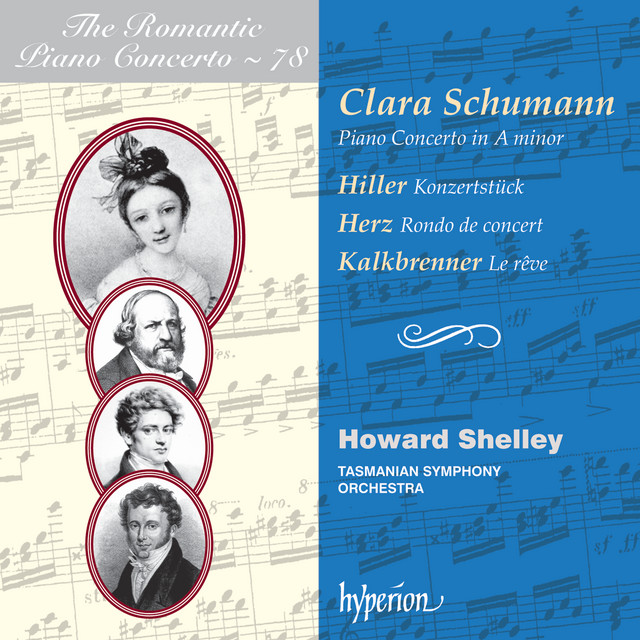
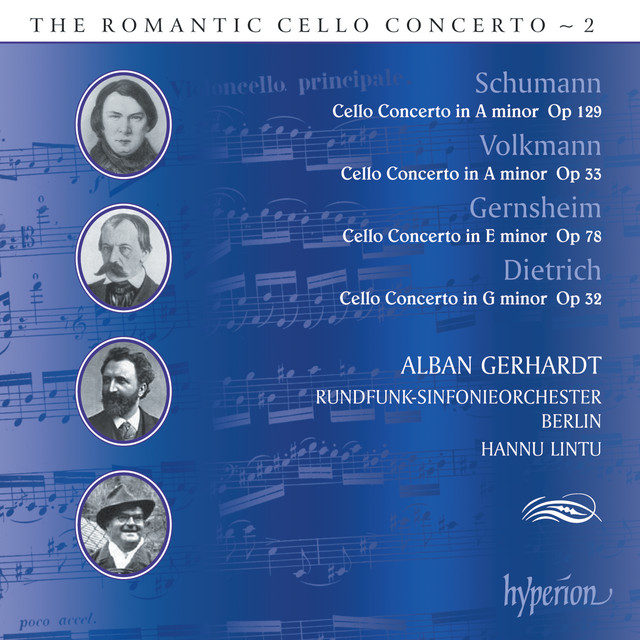





About German romanticism
German Romanticism in music is the sonorous expression of the broader Romantic movement within the German-speaking world, a period roughly spanning from the early 19th century into the early 20th. It centers on emotion, imagination, and narrative, seeking to fuse personal feeling with nature, folklore, and myth, while expanding harmonic language and formal freedom beyond the tight structures of Classicism. It’s not a single “sound,” but a evolving mood and language that shaped opera, chamber music, symphonies, and song.
Its birth is often dated to the late works of Beethoven, whose heroic expansion of form and expressive reach opened a door for Romantic sensibility. By the 1820s and 1830s, composers such as Carl Maria von Weber in opera and the rising generation—Franz Schubert, Felix Mendelssohn, and later Robert and Clara Schumann—crystallized a distinctly German Romantic language: the intimate Lied meeting poetry, programmatic orchestral color, and a longing for individuality and national identity expressed through music. The movement quickly diversified: melodious lyricism, storm and stormy chromaticism, and a fascination with nature and the supernatural became common currencies.
Key forms and attitudes define the style. The Lied, especially in Schubert’s output, fused music with poetry to reveal private emotion in public performance. The orchestral and instrumental repertoire grew to include programmatic tone poems and symphonic works that painted scenes or narratives. Opera embraced myth, legend, and epic drama, with Der Freischütz by Weber standing as an early landmark for its magical realism and national character. Later, Brahms synthesized Romantic passion with classical architectural discipline, offering monumental cups of emotion tempered by form. Clara Schumann, a brilliant pianist and composer in her own right, helped shape the era’s performance practice and repertoire, proving that Romantic temperament could be expressed from a female artistic voice as well.
Ambassadors of the genre include Beethoven as the hinge between Classicism and Romantic drama; Franz Schubert, the supreme melodist of the Lied; Weber, who brought German opera toward a Romantic spell; Mendelssohn, who combined lyric warmth with refined craftsmanship; Robert and Clara Schumann, champions of intimate musical storytelling and resilience; Johannes Brahms, who fused emotional depth with architectural rigor; Richard Wagner, who transformed opera with leitmotifs and the Gesamtkunstwerk ideal; and Richard Strauss, who carried late Romantic color into the modern age with tone poems and operas. These figures helped define a musical culture in which literature, visual art, and folklore intertwined with sound.
Geographically, the movement’s cradle remains the German-speaking nations—Germany, Austria, and Switzerland—where many pivotal works were born and first performed. Yet its resonance quickly crossed borders: the mature Romantic language spread across Europe and found devoted listeners in the United States, United Kingdom, Scandinavia, Eastern Europe, and even Japan and other parts of Asia. Today, the German Romantic canon is a staple of concert programs, recital repertoires, and opera houses worldwide, inviting listeners to trace the arc from intimate lieder to sweeping, mythic cycles.
If you’re exploring, listen for a blend of ardent lyric melody, bold chromatic adventure, and a sense of storytelling through musical color. In Wagner and Strauss you’ll hear theater-like scale and thematic unity; in Schubert and Schumann you’ll sense a more intimate confession. German Romanticism remains a living, breathing language for describing longing, struggle, and wonder through sound.
Its birth is often dated to the late works of Beethoven, whose heroic expansion of form and expressive reach opened a door for Romantic sensibility. By the 1820s and 1830s, composers such as Carl Maria von Weber in opera and the rising generation—Franz Schubert, Felix Mendelssohn, and later Robert and Clara Schumann—crystallized a distinctly German Romantic language: the intimate Lied meeting poetry, programmatic orchestral color, and a longing for individuality and national identity expressed through music. The movement quickly diversified: melodious lyricism, storm and stormy chromaticism, and a fascination with nature and the supernatural became common currencies.
Key forms and attitudes define the style. The Lied, especially in Schubert’s output, fused music with poetry to reveal private emotion in public performance. The orchestral and instrumental repertoire grew to include programmatic tone poems and symphonic works that painted scenes or narratives. Opera embraced myth, legend, and epic drama, with Der Freischütz by Weber standing as an early landmark for its magical realism and national character. Later, Brahms synthesized Romantic passion with classical architectural discipline, offering monumental cups of emotion tempered by form. Clara Schumann, a brilliant pianist and composer in her own right, helped shape the era’s performance practice and repertoire, proving that Romantic temperament could be expressed from a female artistic voice as well.
Ambassadors of the genre include Beethoven as the hinge between Classicism and Romantic drama; Franz Schubert, the supreme melodist of the Lied; Weber, who brought German opera toward a Romantic spell; Mendelssohn, who combined lyric warmth with refined craftsmanship; Robert and Clara Schumann, champions of intimate musical storytelling and resilience; Johannes Brahms, who fused emotional depth with architectural rigor; Richard Wagner, who transformed opera with leitmotifs and the Gesamtkunstwerk ideal; and Richard Strauss, who carried late Romantic color into the modern age with tone poems and operas. These figures helped define a musical culture in which literature, visual art, and folklore intertwined with sound.
Geographically, the movement’s cradle remains the German-speaking nations—Germany, Austria, and Switzerland—where many pivotal works were born and first performed. Yet its resonance quickly crossed borders: the mature Romantic language spread across Europe and found devoted listeners in the United States, United Kingdom, Scandinavia, Eastern Europe, and even Japan and other parts of Asia. Today, the German Romantic canon is a staple of concert programs, recital repertoires, and opera houses worldwide, inviting listeners to trace the arc from intimate lieder to sweeping, mythic cycles.
If you’re exploring, listen for a blend of ardent lyric melody, bold chromatic adventure, and a sense of storytelling through musical color. In Wagner and Strauss you’ll hear theater-like scale and thematic unity; in Schubert and Schumann you’ll sense a more intimate confession. German Romanticism remains a living, breathing language for describing longing, struggle, and wonder through sound.