Data may be outdated
Last updated: 7 months ago — Click refresh to get the latest statistics.
André Raison was one of the top organists in France in the late 1600s. He was also very influential as a composer and educator, and he published two volumes of organ works.
Little is known about Raison's earliest life experiences, but he was most likely born in the 1640s or early 1650s. He was educated at the seminary of the Abbey of Saint Geneviève, where he discovered his life purpose of being a church organist. In 1665 he was appointed organist of the St. Geneviève cathedral, and he rented a room just a few blocks away in a house called "The Guardian Angel." He also composed and was a respected organ instructor. His most well-known student was <a href="spotify:artist:3Gns4dI4DWVaDpSf1Ft8yc">Louis-Nicolas Clérambault</a>, who became both an innovative composer and a top-tier organist.
Raison's first collection of works, Livre d'orgue (1688), was intended for new or secluded church organists. It contains five complete organ masses, and a preface with detailed instructions regarding the proper performance practices of the time. Critics have suggested that Raison influenced the great <a href="spotify:artist:5aIqB5nVVvmFsvSdExz408">J.S. Bach</a> in his Passacaglia in C minor, BWV 582, but there is no evidence to prove that <a href="spotify:artist:5aIqB5nVVvmFsvSdExz408">Bach</a> was familiar with his music. Raison's second collection of works, Deuxième Livre d'orgue, was written in commemoration of the Treaty of Utrecht of 1713, which ended a long period of war and ultimately stabilized much of Europe. It contains secular music such as preludes and fugues, and several French Christmas carols and variations.
Raison's style as a composer is defined by his masterful use of counterpoint, rhythmic variety, and fearless utilization of the organ's complete range. When he published his second book, he was working as the organist at the church of the Jacobins in Paris. He held this position until his death in 1719, and was succeeded by his former student <a href="spotify:artist:3Gns4dI4DWVaDpSf1Ft8yc">Clérambault</a>. Raison's absence from the biographical publications of Tillet and <a href="spotify:artist:35eG5pVUcUcmYLmWBlNTpN">Daquin</a> suggests that he lived a very private life. ~ RJ Lambert, Rovi
Little is known about Raison's earliest life experiences, but he was most likely born in the 1640s or early 1650s. He was educated at the seminary of the Abbey of Saint Geneviève, where he discovered his life purpose of being a church organist. In 1665 he was appointed organist of the St. Geneviève cathedral, and he rented a room just a few blocks away in a house called "The Guardian Angel." He also composed and was a respected organ instructor. His most well-known student was <a href="spotify:artist:3Gns4dI4DWVaDpSf1Ft8yc">Louis-Nicolas Clérambault</a>, who became both an innovative composer and a top-tier organist.
Raison's first collection of works, Livre d'orgue (1688), was intended for new or secluded church organists. It contains five complete organ masses, and a preface with detailed instructions regarding the proper performance practices of the time. Critics have suggested that Raison influenced the great <a href="spotify:artist:5aIqB5nVVvmFsvSdExz408">J.S. Bach</a> in his Passacaglia in C minor, BWV 582, but there is no evidence to prove that <a href="spotify:artist:5aIqB5nVVvmFsvSdExz408">Bach</a> was familiar with his music. Raison's second collection of works, Deuxième Livre d'orgue, was written in commemoration of the Treaty of Utrecht of 1713, which ended a long period of war and ultimately stabilized much of Europe. It contains secular music such as preludes and fugues, and several French Christmas carols and variations.
Raison's style as a composer is defined by his masterful use of counterpoint, rhythmic variety, and fearless utilization of the organ's complete range. When he published his second book, he was working as the organist at the church of the Jacobins in Paris. He held this position until his death in 1719, and was succeeded by his former student <a href="spotify:artist:3Gns4dI4DWVaDpSf1Ft8yc">Clérambault</a>. Raison's absence from the biographical publications of Tillet and <a href="spotify:artist:35eG5pVUcUcmYLmWBlNTpN">Daquin</a> suggests that he lived a very private life. ~ RJ Lambert, Rovi
Monthly Listeners
255
Monthly Listeners History
Track the evolution of monthly listeners over the last 28 days.
Followers
153
Followers History
Track the evolution of followers over the last 28 days.
Top Cities





Related Artists
Nicolas Bucher

Michal Novenko

Pierre DuMage
Lucile Dollat
Robert Bates
Jehan Titelouze

Pierre Dandrieu

Cristina García Banegas
Andrés Cea

Jean-Adam Guilain

Gwendolyn Toth
Andreas Duben
Girolamo Cavazzoni
Paul Siefert
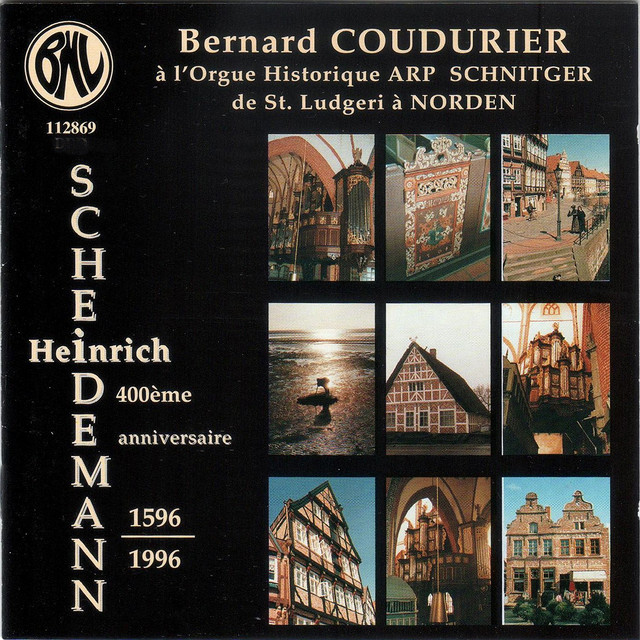
Bernard Coudurier