Data may be outdated
Last updated: 9 months ago — Click refresh to get the latest statistics.
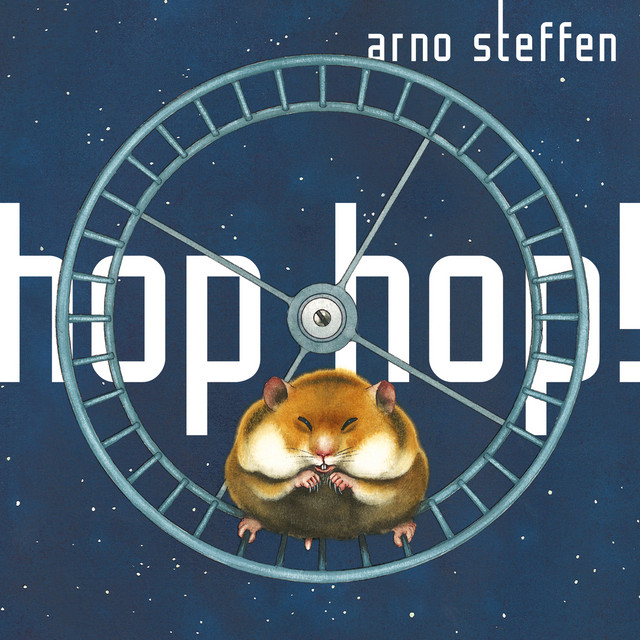
Arno Steffen is a Cologne based musician whose musical interests have oscillated between punk rock, experimental avant-garde music, and humorous pop songs. His 1984 single "Supergut (ne)?!" became a minor hit, but Steffen is best known for his association with the punk rock group <a href="spotify:artist:0j3Hwyq1smKOd9mVxy4HEi">Zeltinger</a> and his fun trio <a href="spotify:artist:2JwekkMrhlL5zuOzcXHSyi">L.S.E.</a>.
Steffen was born on August 28, 1953, in Cologne, Germany. While still in high school, the self-taught musician founded the <a href="spotify:artist:0k17h0D3J5VfsdmQ1iZtE9">Pink Floyd</a>-influenced group Interstellar Overdrive (with writer Roland Kaehlbrandt), which existed from 1970 to 1975. After a short break, he continued making music, first with a band called Jennifer in 1977, then Suiciyde Ampheta (or Suicidyd Ampheta). After playing in an acoustic trio with his friend Juergen Zeltinger, he talked his Suiciyde Ampheta bandmates into forming a band with <a href="spotify:artist:0j3Hwyq1smKOd9mVxy4HEi">Zeltinger</a> as a frontman. They became <a href="spotify:artist:0j3Hwyq1smKOd9mVxy4HEi">Zeltinger</a>, playing their first concert in 1979 and quickly gathering attention for their street-based punk music combined with the Koelsch lyrics (a German dialect spoken in Cologne). Steffen first worked as a songwriter for <a href="spotify:artist:0j3Hwyq1smKOd9mVxy4HEi">Zeltinger</a> -- he created a German version of a <a href="spotify:artist:1co4F2pPNH8JjTutZkmgSm">Ramones</a> song for which he wrote new Koelsch lyrics ("Müngersdorfer Stadion") and then played guitar in the group for a while. During this time, he also briefly became the lead singer of Jürgen Fritz's band <a href="spotify:artist:3lnV6khgTreN8QiqtSAAgW">Triumvirat</a> and recorded the album Russian Roulette (1980) with them, also contributing several songs to the album as a songwriter.
In 1984, Steffen released a solo album, Schlager, which was a collaboration with Krautrock producer/engineer Conny Planck, whom he had met when Planck engineered <a href="spotify:artist:0j3Hwyq1smKOd9mVxy4HEi">Zeltinger</a>'s first album. Schlager was a rather experimental affair, using found sounds and primitive samples but eschewing normal instrumentation -- every sound on the album was either created by voice, or pre-recorded and then partly processed. Despite the atonal nature of Schlager, the album featured a minor hit single in "Supergut (ne)?!," which fit into the New German Wave sound well enough to ensure its inclusion on '80s samplers for years to follow. In 1985, Steffen released a solo 12" EP called 4 Liebeslieder.
Steffen's interest in avant-garde music continued, as he staged a number of art and music performances, including projects for the Goethe Institute. He also resumed his collaboration with Conny Planck, travelling through South America with the music projects "Around the Globe" and "Westworld," together with Cluster's Dieter Moebius. After Planck's death in 1987, Steffen worked with photographer Jürgen Klauke, began scoring TV shows and movies, and produced a number of compilations called Köln-Sampler, which were dedicated to showcasing new bands from Cologne.
In 1990, Steffen formed a new group called L.S.E. together with pianist Rolf Lammers and <a href="spotify:artist:3M7ei5iWVXuxJruRncAxUX">de Bläck Fööss</a> vocalist <a href="spotify:artist:5hxB8g6rWeeMv4ELe7bLCT">Tommy Engel</a> (the titular initials stand for the three bandmembers' last names). With several guest musicians, the group created an absurd musical tapestry that included humorous Koelsch stories, <a href="spotify:artist:6ra4GIOgCZQZMOaUECftGN">Zappa</a>-esque jazz, and boogie-woogie. L.S.E. released three albums during the '90s: Fuer et Haetz un Jaejen d'Kopp (1992) (the title is Koelsch for "For the Heart and Against the Head"), Ruhm Kennt Keine Gnade (1994) ("Fame Knows No Mercy"), and Aua (1996) ("Ouch"). In 1996, the band went on hiatus without actually disbanding. 2004 then saw the release of a best-of compilation, Das Beste von L.S.E..
In recent years, Steffen has concentrated on scoring TV movies. He has composed music for eight episodes of Tatort, one of Germany's most successful TV crime series, and also for the TV movie Das Wunder von Lengede. ~ Christian Genzel, Rovi
Steffen was born on August 28, 1953, in Cologne, Germany. While still in high school, the self-taught musician founded the <a href="spotify:artist:0k17h0D3J5VfsdmQ1iZtE9">Pink Floyd</a>-influenced group Interstellar Overdrive (with writer Roland Kaehlbrandt), which existed from 1970 to 1975. After a short break, he continued making music, first with a band called Jennifer in 1977, then Suiciyde Ampheta (or Suicidyd Ampheta). After playing in an acoustic trio with his friend Juergen Zeltinger, he talked his Suiciyde Ampheta bandmates into forming a band with <a href="spotify:artist:0j3Hwyq1smKOd9mVxy4HEi">Zeltinger</a> as a frontman. They became <a href="spotify:artist:0j3Hwyq1smKOd9mVxy4HEi">Zeltinger</a>, playing their first concert in 1979 and quickly gathering attention for their street-based punk music combined with the Koelsch lyrics (a German dialect spoken in Cologne). Steffen first worked as a songwriter for <a href="spotify:artist:0j3Hwyq1smKOd9mVxy4HEi">Zeltinger</a> -- he created a German version of a <a href="spotify:artist:1co4F2pPNH8JjTutZkmgSm">Ramones</a> song for which he wrote new Koelsch lyrics ("Müngersdorfer Stadion") and then played guitar in the group for a while. During this time, he also briefly became the lead singer of Jürgen Fritz's band <a href="spotify:artist:3lnV6khgTreN8QiqtSAAgW">Triumvirat</a> and recorded the album Russian Roulette (1980) with them, also contributing several songs to the album as a songwriter.
In 1984, Steffen released a solo album, Schlager, which was a collaboration with Krautrock producer/engineer Conny Planck, whom he had met when Planck engineered <a href="spotify:artist:0j3Hwyq1smKOd9mVxy4HEi">Zeltinger</a>'s first album. Schlager was a rather experimental affair, using found sounds and primitive samples but eschewing normal instrumentation -- every sound on the album was either created by voice, or pre-recorded and then partly processed. Despite the atonal nature of Schlager, the album featured a minor hit single in "Supergut (ne)?!," which fit into the New German Wave sound well enough to ensure its inclusion on '80s samplers for years to follow. In 1985, Steffen released a solo 12" EP called 4 Liebeslieder.
Steffen's interest in avant-garde music continued, as he staged a number of art and music performances, including projects for the Goethe Institute. He also resumed his collaboration with Conny Planck, travelling through South America with the music projects "Around the Globe" and "Westworld," together with Cluster's Dieter Moebius. After Planck's death in 1987, Steffen worked with photographer Jürgen Klauke, began scoring TV shows and movies, and produced a number of compilations called Köln-Sampler, which were dedicated to showcasing new bands from Cologne.
In 1990, Steffen formed a new group called L.S.E. together with pianist Rolf Lammers and <a href="spotify:artist:3M7ei5iWVXuxJruRncAxUX">de Bläck Fööss</a> vocalist <a href="spotify:artist:5hxB8g6rWeeMv4ELe7bLCT">Tommy Engel</a> (the titular initials stand for the three bandmembers' last names). With several guest musicians, the group created an absurd musical tapestry that included humorous Koelsch stories, <a href="spotify:artist:6ra4GIOgCZQZMOaUECftGN">Zappa</a>-esque jazz, and boogie-woogie. L.S.E. released three albums during the '90s: Fuer et Haetz un Jaejen d'Kopp (1992) (the title is Koelsch for "For the Heart and Against the Head"), Ruhm Kennt Keine Gnade (1994) ("Fame Knows No Mercy"), and Aua (1996) ("Ouch"). In 1996, the band went on hiatus without actually disbanding. 2004 then saw the release of a best-of compilation, Das Beste von L.S.E..
In recent years, Steffen has concentrated on scoring TV movies. He has composed music for eight episodes of Tatort, one of Germany's most successful TV crime series, and also for the TV movie Das Wunder von Lengede. ~ Christian Genzel, Rovi
Monthly Listeners
165
Monthly Listeners History
Track the evolution of monthly listeners over the last 28 days.
Followers
113
Followers History
Track the evolution of followers over the last 28 days.
Top Cities
35 listeners

12 listeners
7 listeners
7 listeners
5 listeners
Related Artists
Stipsits, Bäer & Dr. Ganster
Effjot Krüger


Wolfgang Verocai
Nikitakis & Fründe

Köster & Hocker

Brungers

Bahpro

KERK und BAEND

Amtsbladt

Zornige Alte Männer

Matrose Schönfeldt und die Schwimmwesten


Mal and the long Breath of Dole

Frankorigines

Schuminga

JONOI

Leopold.Wien
