Data may be outdated
Last updated: 9 months ago — Click refresh to get the latest statistics.
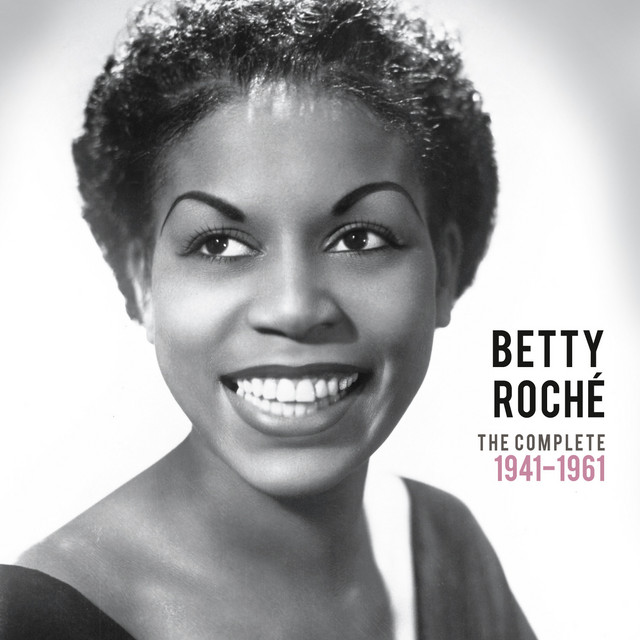
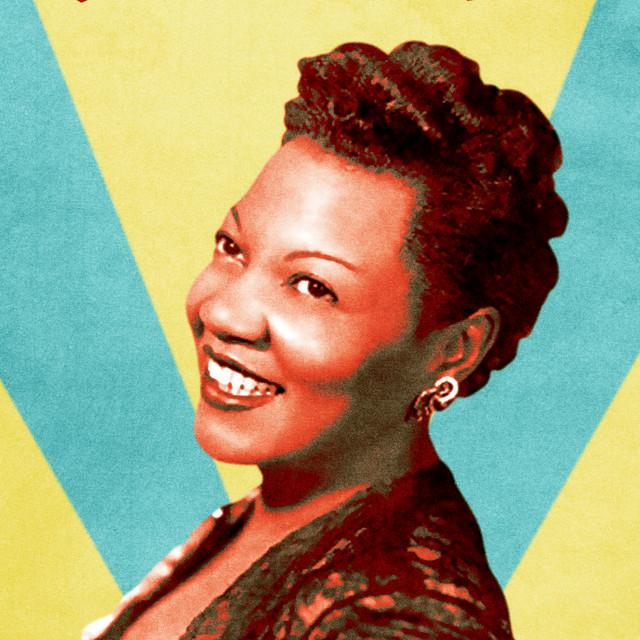
A singer who performed with <a href="spotify:artist:4F7Q5NV6h5TSwCainz8S5A">Duke Ellington</a> in both the '40s and '50s, Betty Roché was famous for her strong, dramatic way of putting across blues material, a talent that not every vocalist with this big band had. <a href="spotify:artist:4F7Q5NV6h5TSwCainz8S5A">Ellington</a>, who was sometimes prone to hire vocalists with stilted, nearly classical delivery, described Roché with typical grace: "She had a soul inflection in a bop state of intrigue and every word was understandable despite the sophisticated hip and jive connotations." She was born Mary Elizabeth Roché and began her career by triumphing at an amateur contest at The Apollo Theater in Harlem. In 1941, she sang with <a href="spotify:artist:4E0GU2t4SVaQ7EaQ76wOYB">the Savoy Sultans</a>, then joined <a href="spotify:artist:4F7Q5NV6h5TSwCainz8S5A">Ellington</a> two years later. It was a tough assignment, replacing one of the bandleader's most popular vocalists, <a href="spotify:artist:1jEpOIhjQCQlOEzLdGS4bA">Ivie Anderson</a>, just days before <a href="spotify:artist:4F7Q5NV6h5TSwCainz8S5A">Ellington</a>'s first concert at Carnegie Hall. She rose to the occasion, scoring highly with both the critics and audience in her featured section of the <a href="spotify:artist:4F7Q5NV6h5TSwCainz8S5A">Ellington</a> suite "Black, Brown and Beige." Her vocal on this number comes up during the blues sequence, and embodied the composer's interpretation of the feelings of urban Black Americans at the start of the 20th century. It became one of <a href="spotify:artist:4F7Q5NV6h5TSwCainz8S5A">Ellington</a>'s greatest pieces for a singer, an ambitious slab of scoring that showed the skill with which the composer was able to make use of the basic feeling of the blues as part of a sophisticated, advanced musical structure. To give credit where credit is due, there were many vocalists who worked with <a href="spotify:artist:4F7Q5NV6h5TSwCainz8S5A">Ellington</a> who would not have been able to pull this number off as effectively as Roché did. Nonetheless, her concert recording rendition was not released until the '70s. <a href="spotify:artist:4F7Q5NV6h5TSwCainz8S5A">Ellington</a> could not make a studio recording of the suite until 1944, by which time Roché had already been replaced by <a href="spotify:artist:5IdHwplgi7IPfkYXb75WHW">Joya Sherrill</a>. In a similar bit of bad career luck, Roché sang the <a href="spotify:artist:4F7Q5NV6h5TSwCainz8S5A">Ellington</a> signature tune "Take the 'A' Train" in the 1943 film Reveille with Beverly -- the entire band was packed into a film backlot version of a train car. Again, a studio version wasn't to be had until nearly a decade later on the bebop-flavored album Ellington Uptown. One can blame these misfortunes on the second World War and the subsequent ban on all recording activity, which kept <a href="spotify:artist:4F7Q5NV6h5TSwCainz8S5A">Ellington</a> from documenting much of anything in 1943. Roché also performed and recorded with pianist <a href="spotify:artist:2mY5u4CceAPrpBnse1WpFr">Earl Hines</a>, trumpeter <a href="spotify:artist:62xdwGEOLoGQxKUqoJusyU">Clark Terry</a>, and funky singer/pianist <a href="spotify:artist:3trsSEaKM3UM2R9RBJwdtJ">Charles Brown</a>. In a strange coincidence, the latter performer died only one week after Roché.
She cut three sides under her name for the <a href="spotify:search:label%3A%22Bethlehem%22">Bethlehem</a> and <a href="spotify:search:label%3A%22Prestige%22">Prestige</a> labels in the late '50s and early '60s. In the mid-'50s, she was part of the studio cast recording of <a href="spotify:artist:1YuknfkSYTTbolRpwZBOv4">George Gershwin</a>'s Porgy and Bess, singing alongside greats such as <a href="spotify:artist:4X8QFzZ1HqwPfwDfyjtwXC">Mel Tormé</a>. The impression she made on the jazz scene is actually larger than many may think: she's credited as a major influence on both bebop singers, and the public's ability to deal with that kind of musical adventure. Again, the lack of easily available documentation of some of her activities has hindered a full understanding of her career. She sang for the house band at Minton's for almost three years, working with such stalwarts of the new bop scene such as <a href="spotify:artist:4PDpGtF16XpqvXxsrFwQnN">Thelonious Monk</a> on piano and <a href="spotify:artist:7xwlN7fhoOwNgDmRTwYZOa">Kenny Clarke</a> on drums. ~ Eugene Chadbourne, Rovi
She cut three sides under her name for the <a href="spotify:search:label%3A%22Bethlehem%22">Bethlehem</a> and <a href="spotify:search:label%3A%22Prestige%22">Prestige</a> labels in the late '50s and early '60s. In the mid-'50s, she was part of the studio cast recording of <a href="spotify:artist:1YuknfkSYTTbolRpwZBOv4">George Gershwin</a>'s Porgy and Bess, singing alongside greats such as <a href="spotify:artist:4X8QFzZ1HqwPfwDfyjtwXC">Mel Tormé</a>. The impression she made on the jazz scene is actually larger than many may think: she's credited as a major influence on both bebop singers, and the public's ability to deal with that kind of musical adventure. Again, the lack of easily available documentation of some of her activities has hindered a full understanding of her career. She sang for the house band at Minton's for almost three years, working with such stalwarts of the new bop scene such as <a href="spotify:artist:4PDpGtF16XpqvXxsrFwQnN">Thelonious Monk</a> on piano and <a href="spotify:artist:7xwlN7fhoOwNgDmRTwYZOa">Kenny Clarke</a> on drums. ~ Eugene Chadbourne, Rovi
Monthly Listeners
1,987
Monthly Listeners History
Track the evolution of monthly listeners over the last 28 days.
Followers
1,121
Followers History
Track the evolution of followers over the last 28 days.
Top Cities



Related Artists

Capitol Jazzmen
Barney Bigard & Orchestra
Gene Krupa Big Band


George Wein
Lambert, Hendricks & Bavan

Hoagy Carmichael & His Orchestra


Bunny Berigan and His Orchestra
Shorty Rogers And His Giants

Jelly Roll Morton's New Orleans Jazzmen
Illinois Jacquet & His Orchestra
Ida Lupino



The Bobcats


Johnny Hodges

Doug Aiton

Clifford Brown All Stars

Chick Webb & His Orchestra