Last updated: 5 hours ago
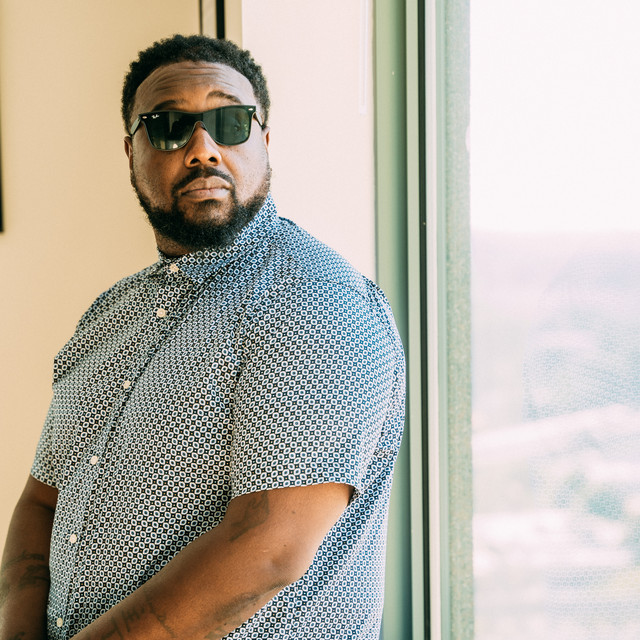
Progressive R&B singer, songwriter, multi-instrumentalist, and producer Bilal is the artist for whom the neo-soul categorization is most misleading. None of the Philadelphia native's recordings is beholden to any particular soul legend who thrived in the 1960 or '70s, and it isn't just because his voice -- classically trained and uncommonly versatile, capable of singing opera in seven languages -- is so unique. Although his Top Ten R&B/hip-hop debut, 1st Born Second (2001), is among the exemplary albums of the neo-soul era, he defied classification from the beginning, using his voice as a true instrument on his breakthrough love ballad "Soul Sista" and its cautionary G-funk follow-up "Fast Lane." On one hand, Bilal is under-recorded. Nine years passed before he released Airtight's Revenge (2010), a nervy follow-up containing the Grammy-nominated "Little One." He was behind only two more LPs, the sensual A Love Surreal (2013) and the headier In Another Life (2015), during his second full decade of activity. However, he's been a prolific collaborator throughout his career, picking up another Grammy nomination for his performance on <a href="spotify:artist:5cM1PvItlR21WUyBnsdMcn">Robert Glasper</a>'s "All Matter," winning a Grammy for <a href="spotify:artist:2YZyLoL8N0Wb9xBt1NhZWg">Kendrick Lamar</a>'s "These Walls," and counting <a href="spotify:artist:6vWDO969PvNqNYHIOW5v0m">Beyoncé</a>, <a href="spotify:artist:3nFkdlSjzX9mRTtwJOzDYB">Jay-Z</a>, <a href="spotify:artist:2GHclqNVjqGuiE5mA7BEoc">Common</a>, and <a href="spotify:artist:78xUyw6FkVZrRAtziFdtdu">the Roots</a> among the dozens of artists who have sought his voice (and often his pen). <a href="spotify:artist:5cM1PvItlR21WUyBnsdMcn">Glasper</a>, <a href="spotify:artist:2GHclqNVjqGuiE5mA7BEoc">Common</a>, and <a href="spotify:artist:78xUyw6FkVZrRAtziFdtdu">the Roots</a>' <a href="spotify:artist:1h2OVSKRdJHnVqyCKqCLkf">Questlove</a> responded in kind by backing Bilal on the celebratory Live at Glasshaus (2024). The singer's first solo live recording was followed months later by the lysergic and intimate Adjust Brightness.
Bilal Sayeed Oliver came up in the Germantown neighborhood in northwest Philadelphia. He started singing in his mother's church at the age of three, and eventually became its choir director. A deep interest in jazz was fostered by his father, who took him to see live music at the city's night clubs. Singing eventually became more than an interest. Bilal attended the Philadelphia High School for the Creative and Performing Arts, and after graduation continued at New York's Mannes Music Conservatory and the New School for Jazz and Contemporary Music, where he received voice training, as well as training in jazz and big-band arrangements. While at the New School, he performed with a group that included keyboardist <a href="spotify:artist:5cM1PvItlR21WUyBnsdMcn">Robert Glasper</a> and <a href="spotify:artist:2PSiyldxmJze7xiqbz658m">Spin Doctors</a> drummer <a href="spotify:artist:3KIrw7tKmaIeba0eNnETDU">Aaron Comess</a>, and recorded a solo demo at <a href="spotify:artist:3KIrw7tKmaIeba0eNnETDU">Comess</a>' home studio. The demo reached <a href="spotify:artist:78xUyw6FkVZrRAtziFdtdu">the Roots</a>' <a href="spotify:artist:1h2OVSKRdJHnVqyCKqCLkf">Questlove</a>, led to an affiliation with the Soulquarians collective -- starting with background vocal work for <a href="spotify:artist:336vr2M3Va0FjyvB55lJEd">D'Angelo</a> -- and also caught the attention of <a href="spotify:search:label%3A%22Interscope%22">Interscope</a> co-founder Jimmy Iovine, which brought about a solo contract. Bilal first appeared on <a href="spotify:artist:0ImTdXnOSgQhktOHba7N9S">Grenique</a>'s 1999 <a href="spotify:search:label%3A%22Motown%22">Motown</a> album Black Butterfly, and the next year contributed to <a href="spotify:artist:2GHclqNVjqGuiE5mA7BEoc">Common</a>'s Like Water for Chocolate, most notably as the featured artist and co-writer of lead single "The 6th Sense," and the third volume of <a href="spotify:artist:6xyaria4AcxjRuJZLkWvMW">Guru</a>'s Jazzmatazz series. <a href="spotify:artist:2GHclqNVjqGuiE5mA7BEoc">Common</a> would continue to enlist Bilal for most of his subsequent studio albums.
The <a href="spotify:search:label%3A%22Interscope%22">Interscope</a> deal yielded Bilal's debut album. Forward-looking though it tended to be classified as neo-soul, 1st Born Second was made with a deep cast that included <a href="spotify:artist:5cM1PvItlR21WUyBnsdMcn">Robert Glasper</a>, <a href="spotify:artist:3KIrw7tKmaIeba0eNnETDU">Aaron Comess</a>, and <a href="spotify:artist:1h2OVSKRdJHnVqyCKqCLkf">Questlove</a>, as well as the likes of <a href="spotify:artist:6DPYiyq5kWVQS4RGwxzPC7">Dr. Dre</a>, <a href="spotify:artist:6g0Wah2YFtb1rFgKhUktlo">Raphael Saadiq</a>, <a href="spotify:artist:16L1SS4OancaZUTu3qWqHb">Jay Dee</a> (aka <a href="spotify:artist:0IVcLMMbm05VIjnzPkGCyp">J Dilla</a>), and <a href="spotify:artist:4b8jP3BNzAfeaKqd4Whlvd">Mike City</a>. It was issued in July 2001 and reached the Top Ten of Billboard's R&B/hip-hop albums chart (number 31 on the Billboard 200). One of its three singles, the <a href="spotify:artist:6g0Wah2YFtb1rFgKhUktlo">Saadiq</a> and <a href="spotify:artist:70BKzzU2tSfJIJiUE0h9UW">James Mtume</a> collaboration "Soul Sista," peaked at number 18 on the R&B/hip-hop singles chart, while "Fast Lane," produced by <a href="spotify:artist:6DPYiyq5kWVQS4RGwxzPC7">Dre</a> and written with then-managers Damu and Faulu Mtume (the sons of <a href="spotify:artist:70BKzzU2tSfJIJiUE0h9UW">James Mtume</a>), reached number 41. At that point, the closest points of comparison were <a href="spotify:artist:336vr2M3Va0FjyvB55lJEd">D'Angelo</a> and <a href="spotify:artist:2AOt5htsbtyaHd5Eq3kl3j">Maxwell</a>, yet Bilal was more dynamic than the former and less mannered than the latter.
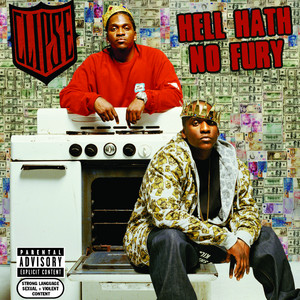
Bilal recorded a second album, Love for Sale, and handled much of the songwriting and production duties, while <a href="spotify:artist:6DPYiyq5kWVQS4RGwxzPC7">Dr. Dre</a>, <a href="spotify:artist:16L1SS4OancaZUTu3qWqHb">Jay Dee</a>, <a href="spotify:artist:1iGcDQbhw4Slu7bygkuV2T">Nottz</a>, and Sa-Ra assisted in limited capacities. The music was leaked and bootlegged, prompting <a href="spotify:search:label%3A%22Interscope%22">Interscope</a> to put it on ice. Bilal's following nonetheless increased significantly, as he discovered when he performed the material to appreciative crowds who knew it inside out. Bilal and <a href="spotify:search:label%3A%22Interscope%22">Interscope</a> parted ways, and though a total of nine years passed without a commercially released follow-up to 1st Born Second, the singer was active and in-demand as a collaborator. He was featured on songs by vocal fan <a href="spotify:artist:6vWDO969PvNqNYHIOW5v0m">Beyoncé</a> ("Everything I Do"), <a href="spotify:artist:3UVRliakQfa1pMWIsNuiZ8">Musiq Soulchild</a> ("Dontstop/Her"), <a href="spotify:artist:2J257euzcjnDLipsyJH3F2">Clipse</a> ("Nightmares"), Sa-Ra ("Sweet Sour You"), and <a href="spotify:artist:3nFkdlSjzX9mRTtwJOzDYB">Jay-Z</a> ("Fallin'"). That only scratches the surface of the high-profile rap and R&B artists with whom he worked. Jazz-wise, he also continued his long-term association with <a href="spotify:artist:5cM1PvItlR21WUyBnsdMcn">Robert Glasper</a>. The keyboardist's Double Booked was highlighted by "All Matter," a Bilal collaboration nominated for a Grammy in the category of Best Urban/Alternative Performance. Shortly thereafter, <a href="spotify:artist:7IbO8NvxclKsk7WTOZ42bv">Terence Blanchard</a>, one of the musicians Bilal had seen with his father, featured the singer on Choices. Additionally, Bilal was showcased beside <a href="spotify:artist:6zDBeei6hHRiZdAJ6zoTCo">Tweet</a>, <a href="spotify:artist:7u6LfVyYpEzMpHLL7jTyvU">Dwele</a>, and <a href="spotify:artist:5vP3nmsaGrondXXS5BvrSH">Joy Denalane</a> on The Dresden Soul Symphony, a live recording for which he sang numerous classics backed by the Leipzig-based MDR Symphony Orchestra.
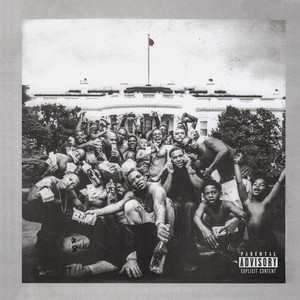
In September 2010, supported by the independent <a href="spotify:search:label%3A%22Plug+Research%22">Plug Research</a> label, Bilal issued his second official full-length, Airtight's Revenge. Bilal worked extensively with Steve McKie, along with <a href="spotify:artist:1iGcDQbhw4Slu7bygkuV2T">Nottz</a>, Conley "Tone" Whitfield, <a href="spotify:artist:6RedK3o51NbUJuJxXlT4kj">88-Keys</a>, and Sa-Ra's <a href="spotify:artist:0XzVyZOZF7FIsQ7VbBZ9Yy">Shafiq Husayn</a>, whose own <a href="spotify:search:label%3A%22Plug+Research%22">Plug Research</a> album, Shafiq En' A-Free-Ka, had featured him. Several additional studio musicians helped give the set a loose if urgent feel on a mix of vulnerable love songs and harrowing third-person narratives that entered the R&B/hip-hop chart at number 21. Its "Little One," a ballad addressing his autistic son, earned Bilal his second consecutive Grammy nomination for Best Urban/Alternative Performance. In February 2013, after appearing on <a href="spotify:artist:78xUyw6FkVZrRAtziFdtdu">the Roots</a>' Grammy-nominated Undun ("The OtherSide") and <a href="spotify:artist:5cM1PvItlR21WUyBnsdMcn">Glasper</a>'s Grammy-winning Black Radio ("Always Shine," "Letter to Hermione"), among other LPs, Bilal returned with A Love Surreal. Lighter and steamier compared to his second album, the <a href="spotify:search:label%3A%22eOne%22">eOne</a>-issued set -- a number 19 hit on the R&B/hip-hop chart -- was made with a combination of familiar and new collaborators ranging from McKie, Whitfield, and <a href="spotify:artist:0XzVyZOZF7FIsQ7VbBZ9Yy">Husayn</a> to Paris Strother of <a href="spotify:artist:0FPWyyf6MD4QZTj3aypD3O">We Are King</a>. Between albums, Bilal contributed to a typically diverse assortment of recordings by the likes of <a href="spotify:artist:5UHkoH1nz7GhjjiuUeSgAC">Otis Brown III</a> ("The Thought of You"), <a href="spotify:artist:6hk7Yq1DU9QcCCrz9uc0Ti">Kimbra</a> ("Everlovin' Ya"), and <a href="spotify:artist:1020a42xVklY6c56imNcaa">Slum Village</a> ("Love Is"). Most prominently, he was featured on "Institutionalized" and "These Walls," back-to-back tracks on <a href="spotify:artist:2YZyLoL8N0Wb9xBt1NhZWg">Kendrick Lamar</a>'s To Pimp a Butterfly. The latter song went on to earn Bilal his first Grammy (in the category of Best Rap/Sung Collaboration).
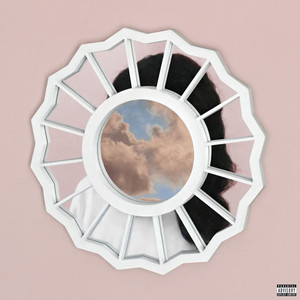
Bilal's fourth album, In Another Life, arrived in June 2015, mere months after the release of To Pimp a Butterfly. Unlike his previous full-lengths, the number 13 R&B/hip-hop album was produced entirely by multi-instrumentalist <a href="spotify:artist:4aMeIY7MkJoZg7O91cmDDd">Adrian Younge</a>, and as a consequence blended psychedelic soul and boom-bap hip-hop with some other stylistic diversions. <a href="spotify:artist:6hk7Yq1DU9QcCCrz9uc0Ti">Kimbra</a> and <a href="spotify:artist:2YZyLoL8N0Wb9xBt1NhZWg">Kendrick Lamar</a> were featured respectively on the tracks "Holding It Back" and "Money Over Love," while <a href="spotify:artist:0CKa42Jqrc9fSFbDjePaXP">Big K.R.I.T.</a> appeared on "Pleasure Toy." Nearly another decade passed before Bilal's next LP. In 2016 alone, the singer popped up on <a href="spotify:artist:2YZyLoL8N0Wb9xBt1NhZWg">Kendrick Lamar</a>'s untitled unmastered., <a href="spotify:artist:0IVcLMMbm05VIjnzPkGCyp">J Dilla</a>'s long-shelved The Diary of J Dilla, and <a href="spotify:artist:4LLpKhyESsyAXpc4laK94U">Mac Miller</a>'s The Divine Feminine, and he was also on <a href="spotify:artist:2GHclqNVjqGuiE5mA7BEoc">Common</a>'s "Letter to the Free," the rapper's Emmy-winning song for Ava DuVernay's 13th. The next year, Bilal teamed with <a href="spotify:artist:78xUyw6FkVZrRAtziFdtdu">the Roots</a> for "It Ain't Fair," written and recorded for the soundtrack of Detroit, and was featured on releases by <a href="spotify:artist:0CKa42Jqrc9fSFbDjePaXP">K.R.I.T.</a>, <a href="spotify:artist:0lEssBAxQl2In4RpaB1C2Y">Talib Kweli</a>, and <a href="spotify:artist:4JG781pl96pL2h0AoERgOA">Keyon Harrold</a>. Over the next few years, his secondary discography continued to expand with Chris Dave, <a href="spotify:artist:6de0V6wLyRKp3I2LDMrXCr">Marcus Strickland</a>, <a href="spotify:artist:5cM1PvItlR21WUyBnsdMcn">Robert Glasper</a>, <a href="spotify:artist:2GHclqNVjqGuiE5mA7BEoc">Common</a>, and <a href="spotify:artist:6ZNeppgfBLPUyugks9Yn1u">Philip Bailey</a> a mere fraction of the artists who sought his voice. A highly energized December 2023 performance at Brooklyn's Glasshaus -- for which he was supported instrumentally by the trio of <a href="spotify:artist:1h2OVSKRdJHnVqyCKqCLkf">Questlove</a>, <a href="spotify:artist:5cM1PvItlR21WUyBnsdMcn">Glasper</a>, and bassist Burniss Travis, and joined by <a href="spotify:artist:2GHclqNVjqGuiE5mA7BEoc">Common</a> -- was documented with Live at Glasshaus, released seven months later. The set list drew from most of Bilal's albums and premiered a new song titled "Humility." Adjust Brightness, the singer's fifth album -- a densely layered set created with a team that included longtime collaborator Conley "Tone" Whitfield, along with Simon "Flanafi" Martinez and Ben Kane -- landed only three months after that. ~ Andy Kellman, Rovi
Bilal Sayeed Oliver came up in the Germantown neighborhood in northwest Philadelphia. He started singing in his mother's church at the age of three, and eventually became its choir director. A deep interest in jazz was fostered by his father, who took him to see live music at the city's night clubs. Singing eventually became more than an interest. Bilal attended the Philadelphia High School for the Creative and Performing Arts, and after graduation continued at New York's Mannes Music Conservatory and the New School for Jazz and Contemporary Music, where he received voice training, as well as training in jazz and big-band arrangements. While at the New School, he performed with a group that included keyboardist <a href="spotify:artist:5cM1PvItlR21WUyBnsdMcn">Robert Glasper</a> and <a href="spotify:artist:2PSiyldxmJze7xiqbz658m">Spin Doctors</a> drummer <a href="spotify:artist:3KIrw7tKmaIeba0eNnETDU">Aaron Comess</a>, and recorded a solo demo at <a href="spotify:artist:3KIrw7tKmaIeba0eNnETDU">Comess</a>' home studio. The demo reached <a href="spotify:artist:78xUyw6FkVZrRAtziFdtdu">the Roots</a>' <a href="spotify:artist:1h2OVSKRdJHnVqyCKqCLkf">Questlove</a>, led to an affiliation with the Soulquarians collective -- starting with background vocal work for <a href="spotify:artist:336vr2M3Va0FjyvB55lJEd">D'Angelo</a> -- and also caught the attention of <a href="spotify:search:label%3A%22Interscope%22">Interscope</a> co-founder Jimmy Iovine, which brought about a solo contract. Bilal first appeared on <a href="spotify:artist:0ImTdXnOSgQhktOHba7N9S">Grenique</a>'s 1999 <a href="spotify:search:label%3A%22Motown%22">Motown</a> album Black Butterfly, and the next year contributed to <a href="spotify:artist:2GHclqNVjqGuiE5mA7BEoc">Common</a>'s Like Water for Chocolate, most notably as the featured artist and co-writer of lead single "The 6th Sense," and the third volume of <a href="spotify:artist:6xyaria4AcxjRuJZLkWvMW">Guru</a>'s Jazzmatazz series. <a href="spotify:artist:2GHclqNVjqGuiE5mA7BEoc">Common</a> would continue to enlist Bilal for most of his subsequent studio albums.
The <a href="spotify:search:label%3A%22Interscope%22">Interscope</a> deal yielded Bilal's debut album. Forward-looking though it tended to be classified as neo-soul, 1st Born Second was made with a deep cast that included <a href="spotify:artist:5cM1PvItlR21WUyBnsdMcn">Robert Glasper</a>, <a href="spotify:artist:3KIrw7tKmaIeba0eNnETDU">Aaron Comess</a>, and <a href="spotify:artist:1h2OVSKRdJHnVqyCKqCLkf">Questlove</a>, as well as the likes of <a href="spotify:artist:6DPYiyq5kWVQS4RGwxzPC7">Dr. Dre</a>, <a href="spotify:artist:6g0Wah2YFtb1rFgKhUktlo">Raphael Saadiq</a>, <a href="spotify:artist:16L1SS4OancaZUTu3qWqHb">Jay Dee</a> (aka <a href="spotify:artist:0IVcLMMbm05VIjnzPkGCyp">J Dilla</a>), and <a href="spotify:artist:4b8jP3BNzAfeaKqd4Whlvd">Mike City</a>. It was issued in July 2001 and reached the Top Ten of Billboard's R&B/hip-hop albums chart (number 31 on the Billboard 200). One of its three singles, the <a href="spotify:artist:6g0Wah2YFtb1rFgKhUktlo">Saadiq</a> and <a href="spotify:artist:70BKzzU2tSfJIJiUE0h9UW">James Mtume</a> collaboration "Soul Sista," peaked at number 18 on the R&B/hip-hop singles chart, while "Fast Lane," produced by <a href="spotify:artist:6DPYiyq5kWVQS4RGwxzPC7">Dre</a> and written with then-managers Damu and Faulu Mtume (the sons of <a href="spotify:artist:70BKzzU2tSfJIJiUE0h9UW">James Mtume</a>), reached number 41. At that point, the closest points of comparison were <a href="spotify:artist:336vr2M3Va0FjyvB55lJEd">D'Angelo</a> and <a href="spotify:artist:2AOt5htsbtyaHd5Eq3kl3j">Maxwell</a>, yet Bilal was more dynamic than the former and less mannered than the latter.
Bilal recorded a second album, Love for Sale, and handled much of the songwriting and production duties, while <a href="spotify:artist:6DPYiyq5kWVQS4RGwxzPC7">Dr. Dre</a>, <a href="spotify:artist:16L1SS4OancaZUTu3qWqHb">Jay Dee</a>, <a href="spotify:artist:1iGcDQbhw4Slu7bygkuV2T">Nottz</a>, and Sa-Ra assisted in limited capacities. The music was leaked and bootlegged, prompting <a href="spotify:search:label%3A%22Interscope%22">Interscope</a> to put it on ice. Bilal's following nonetheless increased significantly, as he discovered when he performed the material to appreciative crowds who knew it inside out. Bilal and <a href="spotify:search:label%3A%22Interscope%22">Interscope</a> parted ways, and though a total of nine years passed without a commercially released follow-up to 1st Born Second, the singer was active and in-demand as a collaborator. He was featured on songs by vocal fan <a href="spotify:artist:6vWDO969PvNqNYHIOW5v0m">Beyoncé</a> ("Everything I Do"), <a href="spotify:artist:3UVRliakQfa1pMWIsNuiZ8">Musiq Soulchild</a> ("Dontstop/Her"), <a href="spotify:artist:2J257euzcjnDLipsyJH3F2">Clipse</a> ("Nightmares"), Sa-Ra ("Sweet Sour You"), and <a href="spotify:artist:3nFkdlSjzX9mRTtwJOzDYB">Jay-Z</a> ("Fallin'"). That only scratches the surface of the high-profile rap and R&B artists with whom he worked. Jazz-wise, he also continued his long-term association with <a href="spotify:artist:5cM1PvItlR21WUyBnsdMcn">Robert Glasper</a>. The keyboardist's Double Booked was highlighted by "All Matter," a Bilal collaboration nominated for a Grammy in the category of Best Urban/Alternative Performance. Shortly thereafter, <a href="spotify:artist:7IbO8NvxclKsk7WTOZ42bv">Terence Blanchard</a>, one of the musicians Bilal had seen with his father, featured the singer on Choices. Additionally, Bilal was showcased beside <a href="spotify:artist:6zDBeei6hHRiZdAJ6zoTCo">Tweet</a>, <a href="spotify:artist:7u6LfVyYpEzMpHLL7jTyvU">Dwele</a>, and <a href="spotify:artist:5vP3nmsaGrondXXS5BvrSH">Joy Denalane</a> on The Dresden Soul Symphony, a live recording for which he sang numerous classics backed by the Leipzig-based MDR Symphony Orchestra.
In September 2010, supported by the independent <a href="spotify:search:label%3A%22Plug+Research%22">Plug Research</a> label, Bilal issued his second official full-length, Airtight's Revenge. Bilal worked extensively with Steve McKie, along with <a href="spotify:artist:1iGcDQbhw4Slu7bygkuV2T">Nottz</a>, Conley "Tone" Whitfield, <a href="spotify:artist:6RedK3o51NbUJuJxXlT4kj">88-Keys</a>, and Sa-Ra's <a href="spotify:artist:0XzVyZOZF7FIsQ7VbBZ9Yy">Shafiq Husayn</a>, whose own <a href="spotify:search:label%3A%22Plug+Research%22">Plug Research</a> album, Shafiq En' A-Free-Ka, had featured him. Several additional studio musicians helped give the set a loose if urgent feel on a mix of vulnerable love songs and harrowing third-person narratives that entered the R&B/hip-hop chart at number 21. Its "Little One," a ballad addressing his autistic son, earned Bilal his second consecutive Grammy nomination for Best Urban/Alternative Performance. In February 2013, after appearing on <a href="spotify:artist:78xUyw6FkVZrRAtziFdtdu">the Roots</a>' Grammy-nominated Undun ("The OtherSide") and <a href="spotify:artist:5cM1PvItlR21WUyBnsdMcn">Glasper</a>'s Grammy-winning Black Radio ("Always Shine," "Letter to Hermione"), among other LPs, Bilal returned with A Love Surreal. Lighter and steamier compared to his second album, the <a href="spotify:search:label%3A%22eOne%22">eOne</a>-issued set -- a number 19 hit on the R&B/hip-hop chart -- was made with a combination of familiar and new collaborators ranging from McKie, Whitfield, and <a href="spotify:artist:0XzVyZOZF7FIsQ7VbBZ9Yy">Husayn</a> to Paris Strother of <a href="spotify:artist:0FPWyyf6MD4QZTj3aypD3O">We Are King</a>. Between albums, Bilal contributed to a typically diverse assortment of recordings by the likes of <a href="spotify:artist:5UHkoH1nz7GhjjiuUeSgAC">Otis Brown III</a> ("The Thought of You"), <a href="spotify:artist:6hk7Yq1DU9QcCCrz9uc0Ti">Kimbra</a> ("Everlovin' Ya"), and <a href="spotify:artist:1020a42xVklY6c56imNcaa">Slum Village</a> ("Love Is"). Most prominently, he was featured on "Institutionalized" and "These Walls," back-to-back tracks on <a href="spotify:artist:2YZyLoL8N0Wb9xBt1NhZWg">Kendrick Lamar</a>'s To Pimp a Butterfly. The latter song went on to earn Bilal his first Grammy (in the category of Best Rap/Sung Collaboration).
Bilal's fourth album, In Another Life, arrived in June 2015, mere months after the release of To Pimp a Butterfly. Unlike his previous full-lengths, the number 13 R&B/hip-hop album was produced entirely by multi-instrumentalist <a href="spotify:artist:4aMeIY7MkJoZg7O91cmDDd">Adrian Younge</a>, and as a consequence blended psychedelic soul and boom-bap hip-hop with some other stylistic diversions. <a href="spotify:artist:6hk7Yq1DU9QcCCrz9uc0Ti">Kimbra</a> and <a href="spotify:artist:2YZyLoL8N0Wb9xBt1NhZWg">Kendrick Lamar</a> were featured respectively on the tracks "Holding It Back" and "Money Over Love," while <a href="spotify:artist:0CKa42Jqrc9fSFbDjePaXP">Big K.R.I.T.</a> appeared on "Pleasure Toy." Nearly another decade passed before Bilal's next LP. In 2016 alone, the singer popped up on <a href="spotify:artist:2YZyLoL8N0Wb9xBt1NhZWg">Kendrick Lamar</a>'s untitled unmastered., <a href="spotify:artist:0IVcLMMbm05VIjnzPkGCyp">J Dilla</a>'s long-shelved The Diary of J Dilla, and <a href="spotify:artist:4LLpKhyESsyAXpc4laK94U">Mac Miller</a>'s The Divine Feminine, and he was also on <a href="spotify:artist:2GHclqNVjqGuiE5mA7BEoc">Common</a>'s "Letter to the Free," the rapper's Emmy-winning song for Ava DuVernay's 13th. The next year, Bilal teamed with <a href="spotify:artist:78xUyw6FkVZrRAtziFdtdu">the Roots</a> for "It Ain't Fair," written and recorded for the soundtrack of Detroit, and was featured on releases by <a href="spotify:artist:0CKa42Jqrc9fSFbDjePaXP">K.R.I.T.</a>, <a href="spotify:artist:0lEssBAxQl2In4RpaB1C2Y">Talib Kweli</a>, and <a href="spotify:artist:4JG781pl96pL2h0AoERgOA">Keyon Harrold</a>. Over the next few years, his secondary discography continued to expand with Chris Dave, <a href="spotify:artist:6de0V6wLyRKp3I2LDMrXCr">Marcus Strickland</a>, <a href="spotify:artist:5cM1PvItlR21WUyBnsdMcn">Robert Glasper</a>, <a href="spotify:artist:2GHclqNVjqGuiE5mA7BEoc">Common</a>, and <a href="spotify:artist:6ZNeppgfBLPUyugks9Yn1u">Philip Bailey</a> a mere fraction of the artists who sought his voice. A highly energized December 2023 performance at Brooklyn's Glasshaus -- for which he was supported instrumentally by the trio of <a href="spotify:artist:1h2OVSKRdJHnVqyCKqCLkf">Questlove</a>, <a href="spotify:artist:5cM1PvItlR21WUyBnsdMcn">Glasper</a>, and bassist Burniss Travis, and joined by <a href="spotify:artist:2GHclqNVjqGuiE5mA7BEoc">Common</a> -- was documented with Live at Glasshaus, released seven months later. The set list drew from most of Bilal's albums and premiered a new song titled "Humility." Adjust Brightness, the singer's fifth album -- a densely layered set created with a team that included longtime collaborator Conley "Tone" Whitfield, along with Simon "Flanafi" Martinez and Ben Kane -- landed only three months after that. ~ Andy Kellman, Rovi
Monthly Listeners
293,904
Monthly Listeners History
Track the evolution of monthly listeners over the last 28 days.
Followers
317,628
Followers History
Track the evolution of followers over the last 28 days.
Total Streams
991.9 million
Total Streams History
Track the evolution of total streams over the last 28 days. This data is calculated from all tracks listed in the artist's discography.
Top Cities
10,305 listeners
6,008 listeners
5,297 listeners
5,293 listeners
4,280 listeners