Data may be outdated
Last updated: 8 months ago — Click refresh to get the latest statistics.
Composer and pianist Cipriani Potter was a key figure in English musical life in the early and middle 19th century. As a pianist, he was a prominent British champion of <a href="spotify:artist:4NJhFmfw43RLBLjQvxDuRS">Mozart</a> and Beethoven, and later <a href="spotify:artist:2UqjDAXnDxejEyE0CzfUrZ">Schumann</a> and <a href="spotify:artist:5wTAi7QkpP6kp8a54lmTOq">Brahms</a>, and he wrote symphonies and a good deal of piano music during the first part of his career. Potter was also an important educator. Largely forgotten for many decades, his works have seen renewed interest in the 21st century; the <a href="spotify:artist:1fhEh9FpKs42GFeqerlBUf">BBC National Orchestra of Wales</a> issued a complete cycle of his symphonies in the 2020s, the second volume of which appeared in 2024.
Potter was born in London on October 3, 1792, and was named after the Italian artist Giovanni Battista Cipriani, said to have been the brother of his godmother. Potter's family was musical, and he had various teachers from childhood, including the Austrian émigré <a href="spotify:artist:19W37BfT6FDSoTzVFvotIg">Joseph Wölfl</a>, a student of <a href="spotify:artist:4NJhFmfw43RLBLjQvxDuRS">Mozart</a>. He studied both composition and piano and soon found opportunities in both fields. In 1817, Potter traveled to Vienna and met Beethoven -- who encouraged him despite his usual highly critical attitude -- and heard <a href="spotify:artist:0roWUeP7Ac4yK4VN6L2gF4">Rossini</a>'s operas in Italy. Back in London in 1819, he began a successful career as a concert pianist. There had been few performances of <a href="spotify:artist:4NJhFmfw43RLBLjQvxDuRS">Mozart</a>'s piano concertos in London up to that point, but Potter programmed them frequently. He gave the British premieres of Beethoven's Piano Concerto No. 3 in C minor, Op. 37, and Piano Concerto No. 4 in G major, Op. 58.
Potter continued to compose and was quite prolific in the 1820s and 1830s, writing nine (or ten) symphonies, many short piano pieces, and various chamber and concertante works. In 1822, he began teaching at the new Royal Academy of Music in London, and in 1832, he became its principal, remaining in that position for 27 years. After that time, he cut back sharply on his composing but continued to perform and to introduce continental European music in England. Among Potter's students were prominent English composers and musicians from later in the 19th century, including composers <a href="spotify:artist:7DieDOyD7i2Hb1vtrIr2Ya">William Sterndale Bennett</a> and Laura Wilson Barker. Potter died in London on September 26, 1871. His music saw few performances for most of the 20th century, but by the mid-2020s, more than a dozen of his works were available on recordings, and a complete cycle of his symphonies by the <a href="spotify:artist:1fhEh9FpKs42GFeqerlBUf">BBC National Orchestra of Wales</a> and conductor <a href="spotify:artist:6htlEU4z5WGJCDAkOFGGDq">Howard Griffiths</a> was underway. The album Cipriani Potter: Complete Symphonies: Vol. 2 appeared in 2024 on the <a href="spotify:search:label%3A%22CPO%22">CPO</a> label. ~ James Manheim, Rovi
Potter was born in London on October 3, 1792, and was named after the Italian artist Giovanni Battista Cipriani, said to have been the brother of his godmother. Potter's family was musical, and he had various teachers from childhood, including the Austrian émigré <a href="spotify:artist:19W37BfT6FDSoTzVFvotIg">Joseph Wölfl</a>, a student of <a href="spotify:artist:4NJhFmfw43RLBLjQvxDuRS">Mozart</a>. He studied both composition and piano and soon found opportunities in both fields. In 1817, Potter traveled to Vienna and met Beethoven -- who encouraged him despite his usual highly critical attitude -- and heard <a href="spotify:artist:0roWUeP7Ac4yK4VN6L2gF4">Rossini</a>'s operas in Italy. Back in London in 1819, he began a successful career as a concert pianist. There had been few performances of <a href="spotify:artist:4NJhFmfw43RLBLjQvxDuRS">Mozart</a>'s piano concertos in London up to that point, but Potter programmed them frequently. He gave the British premieres of Beethoven's Piano Concerto No. 3 in C minor, Op. 37, and Piano Concerto No. 4 in G major, Op. 58.
Potter continued to compose and was quite prolific in the 1820s and 1830s, writing nine (or ten) symphonies, many short piano pieces, and various chamber and concertante works. In 1822, he began teaching at the new Royal Academy of Music in London, and in 1832, he became its principal, remaining in that position for 27 years. After that time, he cut back sharply on his composing but continued to perform and to introduce continental European music in England. Among Potter's students were prominent English composers and musicians from later in the 19th century, including composers <a href="spotify:artist:7DieDOyD7i2Hb1vtrIr2Ya">William Sterndale Bennett</a> and Laura Wilson Barker. Potter died in London on September 26, 1871. His music saw few performances for most of the 20th century, but by the mid-2020s, more than a dozen of his works were available on recordings, and a complete cycle of his symphonies by the <a href="spotify:artist:1fhEh9FpKs42GFeqerlBUf">BBC National Orchestra of Wales</a> and conductor <a href="spotify:artist:6htlEU4z5WGJCDAkOFGGDq">Howard Griffiths</a> was underway. The album Cipriani Potter: Complete Symphonies: Vol. 2 appeared in 2024 on the <a href="spotify:search:label%3A%22CPO%22">CPO</a> label. ~ James Manheim, Rovi
Monthly Listeners
15,404
Monthly Listeners History
Track the evolution of monthly listeners over the last 28 days.
Followers
363
Followers History
Track the evolution of followers over the last 28 days.
Top Cities
301 listeners
268 listeners

133 listeners
129 listeners

122 listeners

Related Artists

SWR Sinfonieorchester des Südwestrundfunks
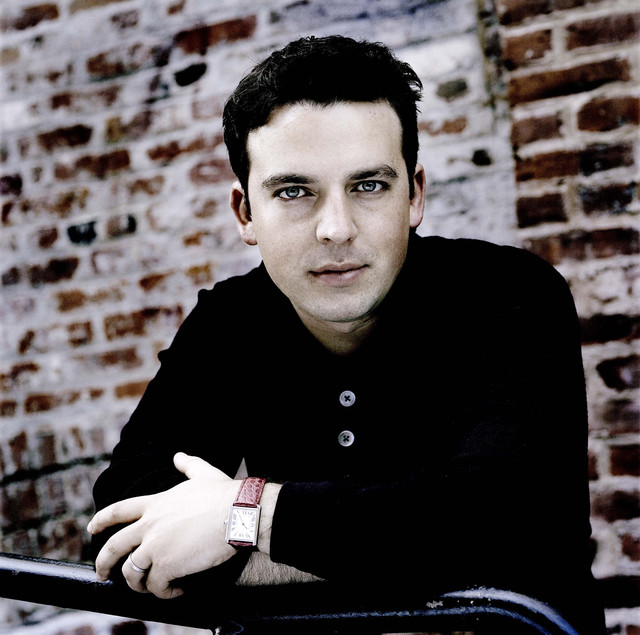


Tarmo Peltokoski
Jan Simon
Alexey Shor
Yuri Hung


Mark Fitz-Gerald

Basel Sinfonietta

Tom Myron

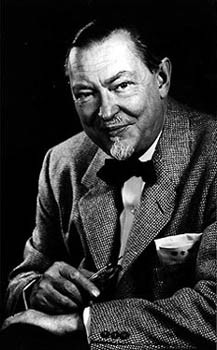
Yuri Mazurok

South Jutland Symphony Orchestra
Sofia Festival Orchestra
WDR Sinfonieorchester


Pablo Martín Melitón de Sarasate

Erick Friedman