
Data may be outdated
Last updated: 9 months ago — Click refresh to get the latest statistics.
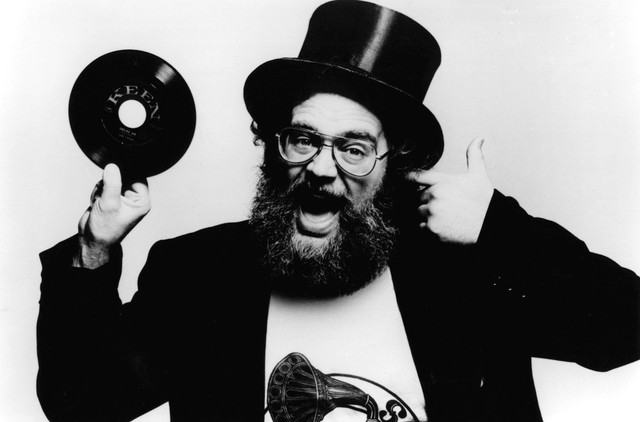
He was born Barret Hansen, being the proud owner of a Master's degree in music from UCLA under that moniker, but he's far better known to millions of radio listeners as Doctor Demento. In 1995, he celebrated his 25th anniversary of broadcasting the greatest novelty records of all time, both new and old. In that time, he's elevated the novelty record -- in all its myriad styles -- to a high trash culture art form. He's made hits out of 40-year-old records that no one had ever played, and was singularly responsible for the success of <a href="spotify:artist:1bDWGdIC2hardyt55nlQgG">"Weird Al" Yankovic</a>, whose song parodies debuted on his show. Hansen's journey from record collector to national personality is the journey of the radio everyman, but one also grounded in a solid knowledge of American music in all its glorious forms.
At the age of 19, Hansen first started broadcasting at Reed College in Portland, Oregon. He went on the air at the tiny ten-watt campus station with a half-hour weekly blues show, working his way up through the ranks to eventually become the student station manager. An early forerunner of his present-day format was exhibited on a show he hosted on the station called Music Museum. Hansen's love of music's eclectic side led him to briefly edit the Little Sandy Review. The Review had been a hardcore folk music magazine -- one of the first to write about <a href="spotify:artist:74ASZWbe4lXaubB36ztrGX">Dylan</a> -- but Hansen's tenure found him writing about eclectic electric rockers like <a href="spotify:artist:6ra4GIOgCZQZMOaUECftGN">Frank Zappa</a> instead, this literary bent leading him to do record reviews for Rolling Stone as well.
In the late '60s, Hansen found himself gainfully employed by <a href="spotify:search:label%3A%22Specialty+Records%22">Specialty Records</a> in Hollywood. This was in the days before <a href="spotify:search:label%3A%22Specialty%22">Specialty</a> had become strictly a reissue label, and Hansen's behind-the-scenes duties included compiling and annotating numerous excellent vinyl releases (among them several fine <a href="spotify:artist:4xls23Ye9WR9yy3yYMpAMm">Little Richard</a> packages and doo wop, one of the Doctor's areas of true musical expertise), producing and issuing the decidedly demented Edard Nelson single "Pale Blues," and almost signing an embryonic version of <a href="spotify:artist:69Mj3u4FTUrpyeGNSIaU6F">the J. Geils Band</a> to the label.
Sitting in as a guest on a '50s rock & roll oldies radio show on KPPC-FM in Pasadena, California in 1970 was the turning point in his broadcasting career, and where his radio character truly began in earnest. When his DJ friend Steven Siegal asked him to bring in some off-the-wall rock & roll singles for the upcoming week's show, the seeds of what would soon become the Doctor Demento Show were sown. He went from on-the-air guest to his own Sunday night shift and, as he quickly noticed, "everybody liked the obscure blues and doo wop records well enough, but every time I played 'Transfusion' by <a href="spotify:artist:0hX65ihpgehDr7ZNtSycp0">Nervous Norvus</a>, the phones lit up like crazy." Knowing a good thing when it landed in his lap, the good Doctor started experimenting with tunes from an era that was beyond the rock & roll pale. A good example of this was 1947's "Pico and Sepulveda," which would become his show's theme song. The die was cast.
After resigning from <a href="spotify:search:label%3A%22Specialty%22">Specialty</a> to make a quick U-Haul trip up to San Francisco for a summer's shift at KPPC's sister station, Hansen found himself back at the Pasadena affiliate just long enough to watch himself and the rest of the staff get fired. In December of 1971, Siegal had landed on his radio feet, this time at Los Angeles' KMET-FM. Doing it all one more time, Demento guested on Siegal's show and soon had his own show on the station, broadcasting once again on Sunday nights. While working at <a href="spotify:search:label%3A%22Warner+Bros.%22">Warner Bros.</a> -- putting sampler albums of new material together -- he invited his first special guest on the program, his "teenage hero" <a href="spotify:artist:6ra4GIOgCZQZMOaUECftGN">Frank Zappa</a>. With a solid time slot, interesting guests, the Doctor's upbeat personality, and an arsenal of audio goodies, the show became a huge success in no time flat, and Hansen stayed at KMET for the next 15 years as one of the jewels in its radio crown.
In 1973, Demento found himself with a manager who had an eye for syndicating his show for a national audience. The process was a slow one, starting in March of 1974 with a station in Seattle, but by year's end, the list of subscribers topped 100. It was the Doctor's constant programming of a 30-year-old obscurity -- "Shaving Cream" by Brooklyn, New York native <a href="spotify:artist:0qZypTHyGJLvU1YmHDgooy">Benny Bell</a> -- that caught the attention of his New York City affiliate, catapulting him to network TV appearances and national media attention, with the upshot being even more stations signing him for syndication.
In 1975, his profile was high enough that <a href="spotify:search:label%3A%22Warner+Bros.%22">Warner Bros.</a> issued the first collection of selections from his radio show, Dr. Demento's Delights, paving the way for other likeminded compilations on <a href="spotify:search:label%3A%22Rhino+Records%22">Rhino Records</a>. Hansen has stayed active with liner note and comp work on such diverse projects as <a href="spotify:search:label%3A%22Rhino%22">Rhino</a>'s <a href="spotify:artist:4js8BDiQwnHLlDmT1shPH7">John Fahey</a> and <a href="spotify:artist:117YLv0bvUKDzQgaHwTF7b">Spike Jones</a> collections and the <a href="spotify:artist:1bDWGdIC2hardyt55nlQgG">"Weird Al" Yankovic</a> box set on <a href="spotify:search:label%3A%22Capitol%22">Capitol</a>. With a new syndication company firmly in place and the 2000 release of the Dr. Demento 30th Anniversary Collection: Dementia 2000 set, he showed no sign of slowing down in his pursuit of recorded dementia. His show began streaming online in 2006, and ceased terrestrial broadcast in 2010. In 2018, he released Dr. Demento Covered in Punk, a two-hour set featuring exclusive material from <a href="spotify:artist:1bDWGdIC2hardyt55nlQgG">Yankovic</a>, <a href="spotify:artist:2fhngmJMaaKcdhXHCa4cPK">the Dead Milkmen</a>, and <a href="spotify:artist:2dPqql8xbby3nWuf98mAza">William Shatner</a>, among many others. ~ Cub Koda, Rovi
At the age of 19, Hansen first started broadcasting at Reed College in Portland, Oregon. He went on the air at the tiny ten-watt campus station with a half-hour weekly blues show, working his way up through the ranks to eventually become the student station manager. An early forerunner of his present-day format was exhibited on a show he hosted on the station called Music Museum. Hansen's love of music's eclectic side led him to briefly edit the Little Sandy Review. The Review had been a hardcore folk music magazine -- one of the first to write about <a href="spotify:artist:74ASZWbe4lXaubB36ztrGX">Dylan</a> -- but Hansen's tenure found him writing about eclectic electric rockers like <a href="spotify:artist:6ra4GIOgCZQZMOaUECftGN">Frank Zappa</a> instead, this literary bent leading him to do record reviews for Rolling Stone as well.
In the late '60s, Hansen found himself gainfully employed by <a href="spotify:search:label%3A%22Specialty+Records%22">Specialty Records</a> in Hollywood. This was in the days before <a href="spotify:search:label%3A%22Specialty%22">Specialty</a> had become strictly a reissue label, and Hansen's behind-the-scenes duties included compiling and annotating numerous excellent vinyl releases (among them several fine <a href="spotify:artist:4xls23Ye9WR9yy3yYMpAMm">Little Richard</a> packages and doo wop, one of the Doctor's areas of true musical expertise), producing and issuing the decidedly demented Edard Nelson single "Pale Blues," and almost signing an embryonic version of <a href="spotify:artist:69Mj3u4FTUrpyeGNSIaU6F">the J. Geils Band</a> to the label.
Sitting in as a guest on a '50s rock & roll oldies radio show on KPPC-FM in Pasadena, California in 1970 was the turning point in his broadcasting career, and where his radio character truly began in earnest. When his DJ friend Steven Siegal asked him to bring in some off-the-wall rock & roll singles for the upcoming week's show, the seeds of what would soon become the Doctor Demento Show were sown. He went from on-the-air guest to his own Sunday night shift and, as he quickly noticed, "everybody liked the obscure blues and doo wop records well enough, but every time I played 'Transfusion' by <a href="spotify:artist:0hX65ihpgehDr7ZNtSycp0">Nervous Norvus</a>, the phones lit up like crazy." Knowing a good thing when it landed in his lap, the good Doctor started experimenting with tunes from an era that was beyond the rock & roll pale. A good example of this was 1947's "Pico and Sepulveda," which would become his show's theme song. The die was cast.
After resigning from <a href="spotify:search:label%3A%22Specialty%22">Specialty</a> to make a quick U-Haul trip up to San Francisco for a summer's shift at KPPC's sister station, Hansen found himself back at the Pasadena affiliate just long enough to watch himself and the rest of the staff get fired. In December of 1971, Siegal had landed on his radio feet, this time at Los Angeles' KMET-FM. Doing it all one more time, Demento guested on Siegal's show and soon had his own show on the station, broadcasting once again on Sunday nights. While working at <a href="spotify:search:label%3A%22Warner+Bros.%22">Warner Bros.</a> -- putting sampler albums of new material together -- he invited his first special guest on the program, his "teenage hero" <a href="spotify:artist:6ra4GIOgCZQZMOaUECftGN">Frank Zappa</a>. With a solid time slot, interesting guests, the Doctor's upbeat personality, and an arsenal of audio goodies, the show became a huge success in no time flat, and Hansen stayed at KMET for the next 15 years as one of the jewels in its radio crown.
In 1973, Demento found himself with a manager who had an eye for syndicating his show for a national audience. The process was a slow one, starting in March of 1974 with a station in Seattle, but by year's end, the list of subscribers topped 100. It was the Doctor's constant programming of a 30-year-old obscurity -- "Shaving Cream" by Brooklyn, New York native <a href="spotify:artist:0qZypTHyGJLvU1YmHDgooy">Benny Bell</a> -- that caught the attention of his New York City affiliate, catapulting him to network TV appearances and national media attention, with the upshot being even more stations signing him for syndication.
In 1975, his profile was high enough that <a href="spotify:search:label%3A%22Warner+Bros.%22">Warner Bros.</a> issued the first collection of selections from his radio show, Dr. Demento's Delights, paving the way for other likeminded compilations on <a href="spotify:search:label%3A%22Rhino+Records%22">Rhino Records</a>. Hansen has stayed active with liner note and comp work on such diverse projects as <a href="spotify:search:label%3A%22Rhino%22">Rhino</a>'s <a href="spotify:artist:4js8BDiQwnHLlDmT1shPH7">John Fahey</a> and <a href="spotify:artist:117YLv0bvUKDzQgaHwTF7b">Spike Jones</a> collections and the <a href="spotify:artist:1bDWGdIC2hardyt55nlQgG">"Weird Al" Yankovic</a> box set on <a href="spotify:search:label%3A%22Capitol%22">Capitol</a>. With a new syndication company firmly in place and the 2000 release of the Dr. Demento 30th Anniversary Collection: Dementia 2000 set, he showed no sign of slowing down in his pursuit of recorded dementia. His show began streaming online in 2006, and ceased terrestrial broadcast in 2010. In 2018, he released Dr. Demento Covered in Punk, a two-hour set featuring exclusive material from <a href="spotify:artist:1bDWGdIC2hardyt55nlQgG">Yankovic</a>, <a href="spotify:artist:2fhngmJMaaKcdhXHCa4cPK">the Dead Milkmen</a>, and <a href="spotify:artist:2dPqql8xbby3nWuf98mAza">William Shatner</a>, among many others. ~ Cub Koda, Rovi
Monthly Listeners
1,627
Monthly Listeners History
Track the evolution of monthly listeners over the last 28 days.
Followers
12,438
Followers History
Track the evolution of followers over the last 28 days.
Top Cities
36 listeners
21 listeners
21 listeners

20 listeners
18 listeners
Related Artists


Brak
“Uncle Floyd” Vivino & Oogie

Dan Castellaneta

Bruce McCulloch


Dick Orkin
Tim Cavanagh

The Not Ready For Prime Time Players

Zilch Fletcher
Sean Parrott
Jonah Ray

John Brennan and the Bigfeet

Spider Mountain

Ed Hamell


Robby Roadsteamer

Roto Rooter Good Time Christmas Band


Proctor & Bergman

No Fun

Buster and the AK-47s
Carla Ulbrich

The Alton Brown Trio
Conan O'Brien

Mike Nichols

David Frye
