Data may be outdated
Last updated: 9 months ago — Click refresh to get the latest statistics.
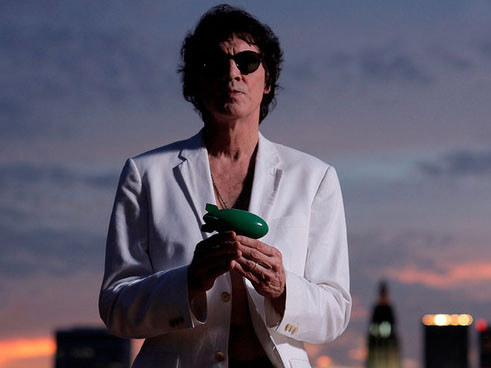
Dwight Twilley created an enduring and highly memorable brand of power pop that blended <a href="spotify:artist:3WrFJ7ztbogyGnTHbHJFl2">Beatles</a>que pop and <a href="spotify:search:label%3A%22Sun%22">Sun</a> rockabilly "slapback" echo. He teamed with <a href="spotify:artist:2ut1VNKTLERpjYf2uljNWn">Phil Seymour</a> as the <a href="spotify:artist:6IpcPRU1kV0J58kd2w8vSC">Dwight Twilley Band</a> in the mid-'70s to record a catalog of songs and albums that play like a starter pack for budding power pop lovers, including the 1975 Top 20 hit "I'm on Fire" and the Sincerely album from the following year. <a href="spotify:artist:6IpcPRU1kV0J58kd2w8vSC">The Twilley Band</a> broke up too soon, but Twilley himself carried on as solo act, hitting the charts again in 1984 with "Girls" and continuing to release albums until 2014's reliably hooky Always.
Twilley was born in Tulsa, Oklahoma in 1951, and like many American youngsters in the early '60s, he fell under the spell of <a href="spotify:artist:3WrFJ7ztbogyGnTHbHJFl2">the Beatles</a> after their 1964 Ed Sullivan Show appearance, forming a band called the Intruders while still in junior high school. Twilley and <a href="spotify:artist:2ut1VNKTLERpjYf2uljNWn">Seymour</a> met in 1967 at a theater where they had gone to see a screening of <a href="spotify:artist:3WrFJ7ztbogyGnTHbHJFl2">the Beatles</a>' A Hard Day's Night. After the film they immediately went to Twilley's house to start writing and recording. The two continued the partnership over the next several years, calling themselves Oister and recruiting another part-time member, <a href="spotify:artist:01g5GOoY8kCoZzXNju9cKc">Bill Pitcock IV</a>, on lead guitar. After developing their sound in their homemade studio "The Shop," they decided to take a stab at professional recording and headed out to Nashville, though they ended up stopping first at the legendary Sun Studios. Jerry Phillips (Sam's son) was impressed enough to team them up with former <a href="spotify:search:label%3A%22Sun%22">Sun</a> artist <a href="spotify:artist:2ISEeDfwN7xXJXmGYYsm2o">Ray Harris</a>, who introduced them to "the <a href="spotify:search:label%3A%22Sun%22">Sun</a> sound," roughing up their <a href="spotify:artist:3WrFJ7ztbogyGnTHbHJFl2">Beatles</a>-obsessed style a bit and creating a unique and endearing sound.
The two signed to <a href="spotify:search:label%3A%22Shelter+Records%22">Shelter Records</a> in 1974. Their first single, "I'm on Fire," became a national hit in 1975, peaking at number 16 with relatively no promotion. During an appearance on American Bandstand, the band previewed what was to be the follow-up single, "Shark," an equally infectious, hit-worthy rocker. The success of the film Jaws caused the label to reject the single, however, to keep the band from becoming perceived as a cash-in novelty act. This was just the beginning of bad luck that would plague the group from that point on. Their follow-up single and completed album went unreleased for 18 months due to label problems, and a second album recorded in England was left unreleased altogether, creating a myth around the band in some circles while the general public quickly lost interest. The belated follow-up single, "You Were So Warm," ended up falling short of expectations due to distribution problems. Predictably, when the album Sincerely was finally released, it didn't trouble the charts either. The duo kept trying, though, and <a href="spotify:artist:2ut1VNKTLERpjYf2uljNWn">Seymour</a> and Twilley befriended the like-minded <a href="spotify:artist:2UZMlIwnkgAEDBsw1Rejkn">Tom Petty</a>, contributing backing vocals on several tracks on his first album. <a href="spotify:artist:2UZMlIwnkgAEDBsw1Rejkn">Petty</a> repaid the favor for the <a href="spotify:artist:6IpcPRU1kV0J58kd2w8vSC">Twilly Band</a>'s second album, Twilley Don't Mind, for <a href="spotify:search:label%3A%22Arista%22">Arista</a> in 1977. Despite the once again unquestionably high quality of songs, the album missed out on garnering many sales. <a href="spotify:artist:2ut1VNKTLERpjYf2uljNWn">Seymour</a> left the band the following year to pursue a solo career.
Twilley carried on as a solo act, releasing Twilley for <a href="spotify:search:label%3A%22Arista%22">Arista</a> in 1979 and Scuba Divers for <a href="spotify:search:label%3A%22EMI+America%22">EMI America</a> in 1982; he found success again with Jungle in 1984 when he scored his second hit with "Girls." Wild Dogs went unnoticed on its 1986 release by <a href="spotify:search:label%3A%22CBS+Associated+Records%22">CBS Associated Records</a>. In addition, Twilley recorded an album in 1980, Blueprint, that was unreleased at the time and contributed one track to the 1992 Wayne's World soundtrack, "Why You Want to Break My Heart." In 1993, <a href="spotify:search:label%3A%22DCC%22">DCC</a> released The Great Lost Twilley Album, which collected a fraction of the "hundreds" of unreleased songs Twilley and <a href="spotify:artist:2ut1VNKTLERpjYf2uljNWn">Seymour</a> recorded in their early, ill-fated days. Two newly recorded songs appeared on the best-of collection XXI (on the <a href="spotify:search:label%3A%22Right+Stuff%22">Right Stuff</a> label) in 1996, and in 1999, Twilley released both another rarities collection, Between the Cracks, Vol. 1 (Not Lame Archives), and his first new album in 13 years, Tulsa (<a href="spotify:search:label%3A%22Copper%22">Copper</a>). In 2001, Twilley released The Luck (<a href="spotify:search:label%3A%22Big+Oak%22">Big Oak</a>), an album he had actually completed in 1994. The seasonal EP Have a Twilley Christmas (<a href="spotify:search:label%3A%22DMI%22">DMI</a>) appeared in 2004, followed by Twilley's ninth studio album, 47 Moons, in 2005.
In 2007 he signed to <a href="spotify:search:label%3A%22Gigatone+Records%22">Gigatone Records</a> and a deluge of Twilley releases followed, including reissues of Tulsa and 47 Moons (with bonus tracks), seven volumes of Rarities discs, and a compilation of tracks recorded after Twilley left <a href="spotify:search:label%3A%22CBS%22">CBS</a>, Northridge to Tulsa. In 2009 he released an album of <a href="spotify:artist:3WrFJ7ztbogyGnTHbHJFl2">Beatles</a> covers simply titled The Beatles and followed it with an album of originals in 2010 titled Green Blimp. After Twilley moved to the <a href="spotify:search:label%3A%22Var%C3%A8se+Sarabande%22">Varèse Sarabande</a> label, his 11th album, Soundtrack, was issued in late 2011. Still chasing his power pop dreams, he recorded his next album Always with a cast of guests that included fellow power pop legend <a href="spotify:artist:4nnvwFUhvSQ1WLcMbKJB9V">Tommy Keene</a> and original Twilley bandmember <a href="spotify:artist:01g5GOoY8kCoZzXNju9cKc">Pitcock</a>. It was released in 2014 by Good Land and proved to be the final record to come out during his lifetime. He died at the age of 72 in October of 2023. ~ Chris Woodstra, Rovi
Twilley was born in Tulsa, Oklahoma in 1951, and like many American youngsters in the early '60s, he fell under the spell of <a href="spotify:artist:3WrFJ7ztbogyGnTHbHJFl2">the Beatles</a> after their 1964 Ed Sullivan Show appearance, forming a band called the Intruders while still in junior high school. Twilley and <a href="spotify:artist:2ut1VNKTLERpjYf2uljNWn">Seymour</a> met in 1967 at a theater where they had gone to see a screening of <a href="spotify:artist:3WrFJ7ztbogyGnTHbHJFl2">the Beatles</a>' A Hard Day's Night. After the film they immediately went to Twilley's house to start writing and recording. The two continued the partnership over the next several years, calling themselves Oister and recruiting another part-time member, <a href="spotify:artist:01g5GOoY8kCoZzXNju9cKc">Bill Pitcock IV</a>, on lead guitar. After developing their sound in their homemade studio "The Shop," they decided to take a stab at professional recording and headed out to Nashville, though they ended up stopping first at the legendary Sun Studios. Jerry Phillips (Sam's son) was impressed enough to team them up with former <a href="spotify:search:label%3A%22Sun%22">Sun</a> artist <a href="spotify:artist:2ISEeDfwN7xXJXmGYYsm2o">Ray Harris</a>, who introduced them to "the <a href="spotify:search:label%3A%22Sun%22">Sun</a> sound," roughing up their <a href="spotify:artist:3WrFJ7ztbogyGnTHbHJFl2">Beatles</a>-obsessed style a bit and creating a unique and endearing sound.
The two signed to <a href="spotify:search:label%3A%22Shelter+Records%22">Shelter Records</a> in 1974. Their first single, "I'm on Fire," became a national hit in 1975, peaking at number 16 with relatively no promotion. During an appearance on American Bandstand, the band previewed what was to be the follow-up single, "Shark," an equally infectious, hit-worthy rocker. The success of the film Jaws caused the label to reject the single, however, to keep the band from becoming perceived as a cash-in novelty act. This was just the beginning of bad luck that would plague the group from that point on. Their follow-up single and completed album went unreleased for 18 months due to label problems, and a second album recorded in England was left unreleased altogether, creating a myth around the band in some circles while the general public quickly lost interest. The belated follow-up single, "You Were So Warm," ended up falling short of expectations due to distribution problems. Predictably, when the album Sincerely was finally released, it didn't trouble the charts either. The duo kept trying, though, and <a href="spotify:artist:2ut1VNKTLERpjYf2uljNWn">Seymour</a> and Twilley befriended the like-minded <a href="spotify:artist:2UZMlIwnkgAEDBsw1Rejkn">Tom Petty</a>, contributing backing vocals on several tracks on his first album. <a href="spotify:artist:2UZMlIwnkgAEDBsw1Rejkn">Petty</a> repaid the favor for the <a href="spotify:artist:6IpcPRU1kV0J58kd2w8vSC">Twilly Band</a>'s second album, Twilley Don't Mind, for <a href="spotify:search:label%3A%22Arista%22">Arista</a> in 1977. Despite the once again unquestionably high quality of songs, the album missed out on garnering many sales. <a href="spotify:artist:2ut1VNKTLERpjYf2uljNWn">Seymour</a> left the band the following year to pursue a solo career.
Twilley carried on as a solo act, releasing Twilley for <a href="spotify:search:label%3A%22Arista%22">Arista</a> in 1979 and Scuba Divers for <a href="spotify:search:label%3A%22EMI+America%22">EMI America</a> in 1982; he found success again with Jungle in 1984 when he scored his second hit with "Girls." Wild Dogs went unnoticed on its 1986 release by <a href="spotify:search:label%3A%22CBS+Associated+Records%22">CBS Associated Records</a>. In addition, Twilley recorded an album in 1980, Blueprint, that was unreleased at the time and contributed one track to the 1992 Wayne's World soundtrack, "Why You Want to Break My Heart." In 1993, <a href="spotify:search:label%3A%22DCC%22">DCC</a> released The Great Lost Twilley Album, which collected a fraction of the "hundreds" of unreleased songs Twilley and <a href="spotify:artist:2ut1VNKTLERpjYf2uljNWn">Seymour</a> recorded in their early, ill-fated days. Two newly recorded songs appeared on the best-of collection XXI (on the <a href="spotify:search:label%3A%22Right+Stuff%22">Right Stuff</a> label) in 1996, and in 1999, Twilley released both another rarities collection, Between the Cracks, Vol. 1 (Not Lame Archives), and his first new album in 13 years, Tulsa (<a href="spotify:search:label%3A%22Copper%22">Copper</a>). In 2001, Twilley released The Luck (<a href="spotify:search:label%3A%22Big+Oak%22">Big Oak</a>), an album he had actually completed in 1994. The seasonal EP Have a Twilley Christmas (<a href="spotify:search:label%3A%22DMI%22">DMI</a>) appeared in 2004, followed by Twilley's ninth studio album, 47 Moons, in 2005.
In 2007 he signed to <a href="spotify:search:label%3A%22Gigatone+Records%22">Gigatone Records</a> and a deluge of Twilley releases followed, including reissues of Tulsa and 47 Moons (with bonus tracks), seven volumes of Rarities discs, and a compilation of tracks recorded after Twilley left <a href="spotify:search:label%3A%22CBS%22">CBS</a>, Northridge to Tulsa. In 2009 he released an album of <a href="spotify:artist:3WrFJ7ztbogyGnTHbHJFl2">Beatles</a> covers simply titled The Beatles and followed it with an album of originals in 2010 titled Green Blimp. After Twilley moved to the <a href="spotify:search:label%3A%22Var%C3%A8se+Sarabande%22">Varèse Sarabande</a> label, his 11th album, Soundtrack, was issued in late 2011. Still chasing his power pop dreams, he recorded his next album Always with a cast of guests that included fellow power pop legend <a href="spotify:artist:4nnvwFUhvSQ1WLcMbKJB9V">Tommy Keene</a> and original Twilley bandmember <a href="spotify:artist:01g5GOoY8kCoZzXNju9cKc">Pitcock</a>. It was released in 2014 by Good Land and proved to be the final record to come out during his lifetime. He died at the age of 72 in October of 2023. ~ Chris Woodstra, Rovi
Monthly Listeners
6,796
Monthly Listeners History
Track the evolution of monthly listeners over the last 28 days.
Followers
2,879
Followers History
Track the evolution of followers over the last 28 days.
Top Cities

Related Artists
The Fools




The New Cars

The Jukes
Southside Johnny

Beru Revue


Brian Connolly's Sweet



The Stompers



Robbin Thompson

Unforgiven