Data may be outdated
Last updated: 9 months ago — Click refresh to get the latest statistics.
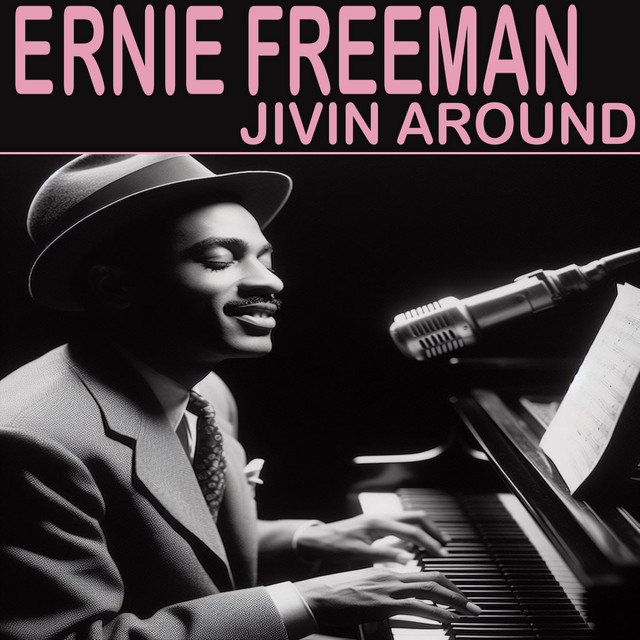
One of so many interesting behind-the-scenes figures of early rock & roll, pianist and arranger Ernie Freeman played on numerous early rock and R&B sessions in the '50s. He worked on dates for the L.A. indies <a href="spotify:search:label%3A%22Specialty%22">Specialty</a>, <a href="spotify:search:label%3A%22Modern%22">Modern</a>, and <a href="spotify:search:label%3A%22Aladdin%22">Aladdin</a>, as well as white artists such as <a href="spotify:artist:1I5Cu7bqjkRg85idwYsD91">Duane Eddy</a>, <a href="spotify:artist:3PrFCybHMqrcPls31JxoIl">Johnny Burnette</a>, <a href="spotify:artist:4r7JUeiYy24L7BuzCq9EjR">the Crickets</a>, <a href="spotify:artist:5MX2l6ewjOaeWn1lYNhzlO">Bobby Vee</a>, and <a href="spotify:artist:0b5Tz3szM4KK8esFKV2Zsb">Buddy Knox</a>; his most memorable session appearance was probably on <a href="spotify:artist:6KWcxMWVNVIYbdOQyJtsSy">the Platters</a>' "The Great Pretender," to which he contributed the stuttering piano riffs. Freeman also put out many instrumental records of his own, mostly for <a href="spotify:search:label%3A%22Imperial%22">Imperial</a>, and usually in a generic rocked-up jump R&B sort of style. "Jivin' Around" and "Lost Dreams" were R&B hits for him in 1956, but he got his sole crossover pop smash with a cover of <a href="spotify:artist:0z16OEWcUEFzMRWBOGyOcF">Bill Justis</a>' "Raunchy" in 1957, which made number four.
It was a strange situation: <a href="spotify:artist:0z16OEWcUEFzMRWBOGyOcF">Justis</a>' original hit number two, and a pop-oriented cover by <a href="spotify:artist:6ZzOIAEw7joAghyA80c6D0">Billy Vaughan</a> also made number ten, leading to an incredible happenstance in December 1957 whereby three versions of "Raunchy" were in the Top Ten at the same time. Freeman's cover copied <a href="spotify:artist:0z16OEWcUEFzMRWBOGyOcF">Justis</a>' fairly closely, and wasn't quite as good; it's almost always <a href="spotify:artist:0z16OEWcUEFzMRWBOGyOcF">Justis</a>' original that is played on oldies radio today. Freeman was unable to make the Top 40 again, although he had minor hits with "Indian Love Call," "Theme from 'The Dark at the Top of the Stairs'," and a cover of <a href="spotify:artist:7qQJQ3YtcGlqaLg5tcypN2">Chubby Checker</a>'s "The Twist"; he also recorded in the easy listening style under the pseudonym Sir Chauncey, sneaking into the bottom of the Top 100 with "Beautiful Obsession." His own career continued through the 1960s, and he worked with <a href="spotify:artist:1Mxqyy3pSjf8kZZL4QVxS0">Frank Sinatra</a>, <a href="spotify:artist:49e4v89VmlDcFCMyDv9wQ9">Dean Martin</a>, and <a href="spotify:artist:1NAWG3AngjBXyKbmPaz92D">Sammy Davis, Jr.</a> at <a href="spotify:search:label%3A%22Reprise%22">Reprise</a>, winning a Grammy Award in 1966 for the string arrangement on <a href="spotify:artist:1Mxqyy3pSjf8kZZL4QVxS0">Sinatra</a>'s "Strangers in the Night." Freeman won a second Grammy for arranging in 1970 for <a href="spotify:artist:70cRZdQywnSFp9pnc2WTCE">Simon & Garfunkel</a>'s "Bridge Over Troubled Water," and he continued working until the late '70s. He died from a heart attack at his home in Los Angeles in May 1981; Ernie Freeman was 58 years old. ~ Richie Unterberger, Rovi
It was a strange situation: <a href="spotify:artist:0z16OEWcUEFzMRWBOGyOcF">Justis</a>' original hit number two, and a pop-oriented cover by <a href="spotify:artist:6ZzOIAEw7joAghyA80c6D0">Billy Vaughan</a> also made number ten, leading to an incredible happenstance in December 1957 whereby three versions of "Raunchy" were in the Top Ten at the same time. Freeman's cover copied <a href="spotify:artist:0z16OEWcUEFzMRWBOGyOcF">Justis</a>' fairly closely, and wasn't quite as good; it's almost always <a href="spotify:artist:0z16OEWcUEFzMRWBOGyOcF">Justis</a>' original that is played on oldies radio today. Freeman was unable to make the Top 40 again, although he had minor hits with "Indian Love Call," "Theme from 'The Dark at the Top of the Stairs'," and a cover of <a href="spotify:artist:7qQJQ3YtcGlqaLg5tcypN2">Chubby Checker</a>'s "The Twist"; he also recorded in the easy listening style under the pseudonym Sir Chauncey, sneaking into the bottom of the Top 100 with "Beautiful Obsession." His own career continued through the 1960s, and he worked with <a href="spotify:artist:1Mxqyy3pSjf8kZZL4QVxS0">Frank Sinatra</a>, <a href="spotify:artist:49e4v89VmlDcFCMyDv9wQ9">Dean Martin</a>, and <a href="spotify:artist:1NAWG3AngjBXyKbmPaz92D">Sammy Davis, Jr.</a> at <a href="spotify:search:label%3A%22Reprise%22">Reprise</a>, winning a Grammy Award in 1966 for the string arrangement on <a href="spotify:artist:1Mxqyy3pSjf8kZZL4QVxS0">Sinatra</a>'s "Strangers in the Night." Freeman won a second Grammy for arranging in 1970 for <a href="spotify:artist:70cRZdQywnSFp9pnc2WTCE">Simon & Garfunkel</a>'s "Bridge Over Troubled Water," and he continued working until the late '70s. He died from a heart attack at his home in Los Angeles in May 1981; Ernie Freeman was 58 years old. ~ Richie Unterberger, Rovi
Monthly Listeners
4,011
Monthly Listeners History
Track the evolution of monthly listeners over the last 28 days.
Followers
910
Followers History
Track the evolution of followers over the last 28 days.
Top Cities
62 listeners

57 listeners

53 listeners

51 listeners
43 listeners

Related Artists



Dean Elliott And His Big Band





Les Brown, Jr.
Ernie Fields Orchestra


Richard Marino & His Orchestra


Enoch Light and The Light Brigade