Data may be outdated
Last updated: 9 months ago — Click refresh to get the latest statistics.
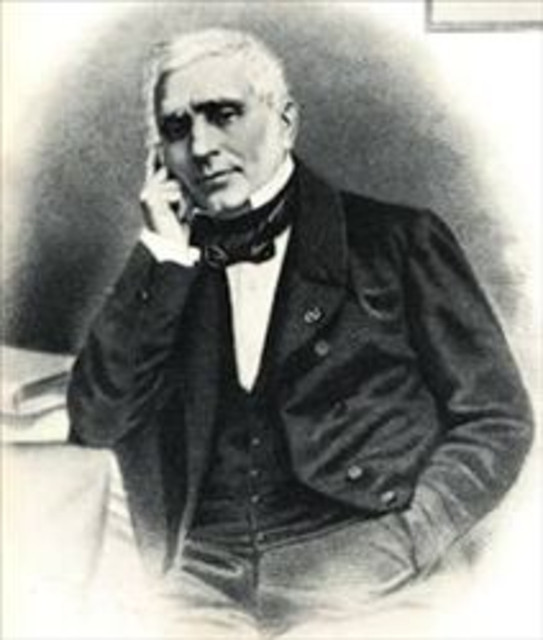
Dramatist and opera librettist Eugene Scribe is best remembered as the creator of the pièce bien faite (well-made play), a formula for stage dramas that held sway among dramatists for a century or more. Author of over 400 works, including plays, librettos, and several novels, Scribe began his career writing comedies and vaudeville sketches, but eventually turned to more serious dramas and opera librettos. He is one of the few librettists who worked with most of the major Italian and French composers from the first half of the 19th century. Among his better known plays are Une Nuit de la Garde Nationale (Another Night in the National Guard, 1815), Le Verre d'eau (The Glass of Water, 1842), and probably his most successful, Adrienne Lecouvreur (1849), written in collaboration with Ernest Legouvé. This latter play was adapted into a libretto, not by Scribe, but by Arturo Colautti, for <a href="spotify:artist:4UI5kd2hXbzrL9dH9zpK03">Cilèa</a>'s highly successful opera Adrianna Lecouvreur (1902). Many of Scribe's own operatic librettos also achieved success, including <a href="spotify:artist:41HbT7AuncIzGpJdpp9ymL">Boieldieu</a>'s Le Dame Blanche (1825), <a href="spotify:artist:44lMIc4WPA5SLDxhLjWno2">Halévy</a>'s Le Juive (1835), and <a href="spotify:artist:2jCGEMSZXMSOImpD8sqo56">Donizetti</a>'s Dom Sébastien (1843). Perhaps his most successful librettos were the 1831 pair Le philtre and La Somnambule ou L'Arrivée d'un nouveau seigneur, both of which were adapted to Italian librettos by Felice Romani for, respectively, <a href="spotify:artist:2jCGEMSZXMSOImpD8sqo56">Donizetti</a>'s L'elisir d'amore (1832) and <a href="spotify:artist:6AphpMkKDU4I3Z6XaGu1UV">Bellini</a>'s La sonnambula (1831).
Eugene Scribe was born in Paris on December 24, 1791. Well educated, he initially studied law at the behest of his mother. Upon her death in 1811, he abandoned studies and turned to writing dramas. His earliest efforts were failures, but following the aforementioned Une Nuit de la Garde Nationale, he enjoyed a nearly consistent run of success.
By the 1820s Scribe was turning out work after work, using paid assistants and often collaborating with other dramatists and librettists. Several of his most successful librettos would be collaborative efforts: <a href="spotify:artist:1vZ1dRN06p7GswsiwNtS0b">Auber</a>'s Robert le diable (written with Casimir Delavigne; 1831), <a href="spotify:artist:6aItH4tJHWc4wKwlDXkJrc">Meyerbeer</a>'s Les Huguenots (with Emile Deschamps; 1831), and <a href="spotify:artist:1JOQXgYdQV2yfrhewqx96o">Verdi</a>'s I vespri siciliani (with Charles Duveyrier; 1855).
In 1834 Scribe was admitted into the L'Académie française. By this time he was earning handsome sums for his work, but he continued to work prolifically and usually paid his collaborators well. Scribe became quite wealthy and was known to often entertain friends lavishly at his Nord-Pas-de-Calais country estate. He died in Paris on February 20, 1861. Between 1874-1885, his complete works were published in 76 volumes!
Eugene Scribe was born in Paris on December 24, 1791. Well educated, he initially studied law at the behest of his mother. Upon her death in 1811, he abandoned studies and turned to writing dramas. His earliest efforts were failures, but following the aforementioned Une Nuit de la Garde Nationale, he enjoyed a nearly consistent run of success.
By the 1820s Scribe was turning out work after work, using paid assistants and often collaborating with other dramatists and librettists. Several of his most successful librettos would be collaborative efforts: <a href="spotify:artist:1vZ1dRN06p7GswsiwNtS0b">Auber</a>'s Robert le diable (written with Casimir Delavigne; 1831), <a href="spotify:artist:6aItH4tJHWc4wKwlDXkJrc">Meyerbeer</a>'s Les Huguenots (with Emile Deschamps; 1831), and <a href="spotify:artist:1JOQXgYdQV2yfrhewqx96o">Verdi</a>'s I vespri siciliani (with Charles Duveyrier; 1855).
In 1834 Scribe was admitted into the L'Académie française. By this time he was earning handsome sums for his work, but he continued to work prolifically and usually paid his collaborators well. Scribe became quite wealthy and was known to often entertain friends lavishly at his Nord-Pas-de-Calais country estate. He died in Paris on February 20, 1861. Between 1874-1885, his complete works were published in 76 volumes!
Related Artists

Fernand Bernadi
Kenneth Shaw
Marco di Sapia
Walter Fink
Alfred Kuhn
Kurt Westi
Simon Yang
Ivo Zidek
Thomas Faulkner

Benno Schollum
Vitaly Tarashchenko

Christel Goltz

Carmen Anhorn
Cassilly


Tina Kiberg