Data may be outdated
Last updated: 2 months ago — Click refresh to get the latest statistics.
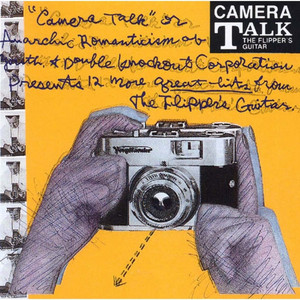
The band's 1989 debut, Three Cheers for Our Side!, was at heart a comparatively straightforward guitar pop album, albeit a musically literate one, but the following year's Camera Talk found them expanding their musical palette, and demonstrated the duo's rapidly improving skills as producers. 1991's Doctor's Head's World Tower was another leap forward, with an increased use of sampling and the obvious influence of groups like <a href="spotify:artist:3wury2nd8idV4GecUg5xze">Primal Scream</a> and <a href="spotify:artist:339DNkQkuhHKEcHw6oK8f0">the Happy Mondays</a> giving the album a tripped-out dance groove. Nevertheless, Flipper's Guitar weren't interested in the drug-fueled hedonism of their U.K. contemporaries, and the single "Dolphin Song," with its cut-and-paste construction and marriage of samples from <a href="spotify:artist:3oDbviiivRWhXwIE8hxkVV">the Beach Boys</a>' "God Only Knows" to <a href="spotify:artist:15gVFNyge3HjNyFM2uA1cR">Eyeless in Gaza</a>'s "Changing Stations," indicated that the group's musical future lay elsewhere. Flipper's Guitar was to end soon after, with the group's disbandment in 1993, and no further albums of new material released. Their influence didn't stop there, though, with Ozawa enjoying immediate success as a solo musician, and Oyamada going on to become one of Japan's hippest cultural exports with his work under the pseudonym <a href="spotify:artist:2vJObElaIZWYDLpiXiJMo9">Cornelius</a>. Flipper's Guitar's legacy also continued to influence Japanese music, inspiring a generation of musicians with similarly eclectic tastes, which would eventually be called the "Shibuya-kei" or "Shibuya style" movement, with Oyamada's Trattoria label a key gathering place for these bands.
In 2004, a second generation of musicians produced a document of their admiration for the duo in a two-volume tribute album on indie label Softly! Records, featuring such "Neo-Shibuya-kei" musicians as the Aprils, <a href="spotify:artist:2LESTRq1L9h0aLT0ZHJETg">Eel</a>, and Hazel Nuts Chocolate. ~ Ian Martin, Rovi
Monthly Listeners
52,490
Monthly Listeners History
Track the evolution of monthly listeners over the last 28 days.
Followers
93,180
Followers History
Track the evolution of followers over the last 28 days.
Total Streams
25.4 million
Total Streams History
Track the evolution of total streams over the last 28 days. This data is calculated from all tracks listed in the artist's discography.
Top Cities

Related Artists




ピチカート・ファイヴ
はっぴいえんど








古市コータロー




ティン・パン・アレー




大滝詠一




羅針盤



大瀧詠一

台風クラブ






Kimonos