Data may be outdated
Last updated: 9 months ago — Click refresh to get the latest statistics.
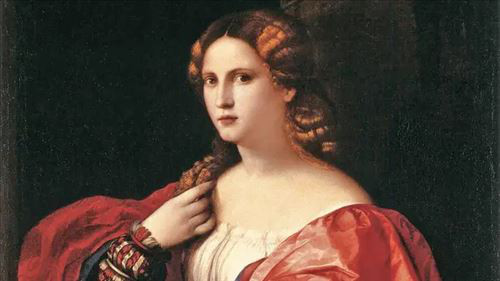
Performer and composer Francesca Caccini was the first woman to write an opera. A key figure at the court of Ferdinando de' Medici of Tuscany, she was among the most acclaimed sopranos of her time, and she was also an important teacher. Although much of her compositional output has been lost, enough has survived to establish that her music was on the cutting edge of the early 17th century Italian scene. The ongoing rediscovery of music has led to new editions and recordings of Caccini's music, including a performance of her solo cantata Così, perfida Alcina on ensemble director <a href="spotify:artist:7xB7TQUAeFWgqdkhGiArgZ">Christina Pluhar</a>'s 2024 album Wonder Women.
Caccini, sometimes known by the nickname La Cecchina, was born in Florence on September 18, 1587. She was the daughter of composer <a href="spotify:artist:3LMilbpKFGjuB4mJllE5Oo">Giulio Caccini</a>, one of the creators of opera. Her younger sister, Settimia Caccini, also became a singer and composer. Both girls were educated by their father, and both performed as part of an ensemble called Le donne di Giulio Romano. Francesca sang at the marriage of King Henri IV of France to Maria de' Medici in 1600. Henri tried to lure Caccini to his court in Paris, but Duke Ferdinand de' Medici refused to release her from his service, giving her substantial raises as her skills as a singer developed and she began to compose. She spent much of the rest of her life in the service of the Medici court. Caccini began to collaborate with the poet Michelangelo Buonarroti, grand-nephew of the famous sculptor.
In 1615, Caccini wrote an opera called Il ballo delle zigane for the Carnival season in Florence, but this has been lost. The following year, Cardinal Carlo de' Medici took Caccini and her husband, Giovanni Battista Signorini Malaspina, on an official trip to Rome. Caccini performed in Rome, impressed the movers and shakers there, and was granted a leave to embark on a concert tour of northern Italy. In 1618, she issued a collection of solo songs, Il primo libro delle musiche, from which many of her surviving compositions are drawn. Caccini's comic opera La liberazione di Ruggiero dall'isola d'Alcina (1625) was performed during a visit by the crown prince of Poland. This work is considered the earliest surviving opera by a woman. Caccini was also active as a teacher to various members of the Medici family. The later part of her life is not well documented; she left the service of the Medicis around 1640, and she may have died in that year. No further record of her activities exists after that. Even a generation ago, Caccini hardly appeared even in specialized music textbooks, but by the mid-2020s, some 30 of her compositions had been recorded, including her solo cantata Così, perfida Alcina on the 2024 album Wonder Women by <a href="spotify:artist:7xB7TQUAeFWgqdkhGiArgZ">Christina Pluhar</a>. ~ James Manheim, Rovi
Caccini, sometimes known by the nickname La Cecchina, was born in Florence on September 18, 1587. She was the daughter of composer <a href="spotify:artist:3LMilbpKFGjuB4mJllE5Oo">Giulio Caccini</a>, one of the creators of opera. Her younger sister, Settimia Caccini, also became a singer and composer. Both girls were educated by their father, and both performed as part of an ensemble called Le donne di Giulio Romano. Francesca sang at the marriage of King Henri IV of France to Maria de' Medici in 1600. Henri tried to lure Caccini to his court in Paris, but Duke Ferdinand de' Medici refused to release her from his service, giving her substantial raises as her skills as a singer developed and she began to compose. She spent much of the rest of her life in the service of the Medici court. Caccini began to collaborate with the poet Michelangelo Buonarroti, grand-nephew of the famous sculptor.
In 1615, Caccini wrote an opera called Il ballo delle zigane for the Carnival season in Florence, but this has been lost. The following year, Cardinal Carlo de' Medici took Caccini and her husband, Giovanni Battista Signorini Malaspina, on an official trip to Rome. Caccini performed in Rome, impressed the movers and shakers there, and was granted a leave to embark on a concert tour of northern Italy. In 1618, she issued a collection of solo songs, Il primo libro delle musiche, from which many of her surviving compositions are drawn. Caccini's comic opera La liberazione di Ruggiero dall'isola d'Alcina (1625) was performed during a visit by the crown prince of Poland. This work is considered the earliest surviving opera by a woman. Caccini was also active as a teacher to various members of the Medici family. The later part of her life is not well documented; she left the service of the Medicis around 1640, and she may have died in that year. No further record of her activities exists after that. Even a generation ago, Caccini hardly appeared even in specialized music textbooks, but by the mid-2020s, some 30 of her compositions had been recorded, including her solo cantata Così, perfida Alcina on the 2024 album Wonder Women by <a href="spotify:artist:7xB7TQUAeFWgqdkhGiArgZ">Christina Pluhar</a>. ~ James Manheim, Rovi
Monthly Listeners
4,278
Monthly Listeners History
Track the evolution of monthly listeners over the last 28 days.
Followers
5,530
Followers History
Track the evolution of followers over the last 28 days.
Top Cities
92 listeners

77 listeners
64 listeners
63 listeners
54 listeners

Related Artists
Giovanni Legrenzi

Michel Lambert
Giovanni Felice Sances
Benedetto Ferrari
Étienne Moulinié
Ensemble I Gemelli

Forma Antiqva
Serge Goubioud
Tarquinio Merula

Pernelle Marzorati
Maurizio Cazzati

Ruby Hughes

Diana Ramirez
Luigi Rossi

Michelangelo Falvetti



Ecco la musica
Maurizio Piantelli

Ryosuke Sakamoto
Antonio Bertali
Amanda Keesmaat


Ronald Martin Alonso
Giovanni Battista Buonamente
Robin Pharo
John Blow
Sigismondo D'India
Pierre Guédron
