
Data may be outdated
Last updated: 9 months ago — Click refresh to get the latest statistics.
Although a late bloomer, Goffredo Petrassi developed into one of Italy's most significant composers of the mid- to late twentieth century. Launching his career in the 1930s with music on par with contemporary works by <a href="spotify:artist:3u1fWmwpwPOmMelTAo0Gb8">Hindemith</a> and <a href="spotify:artist:7ie36YytMoKtPiL7tUvmoE">Stravinsky</a>, Petrassi eventually became interested in certain twelve-tone techniques without casting his lot with the serialists. His music is dynamic and colorful, although emotionally reserved by the standards of his countrymen.
Petrassi enrolled in choir school once his family moved to Rome in 1911. There, his studies revolved almost entirely around Renaissance polyphony. He quit school at 15, though, to take a job in a music shop, where he was heard practicing piano by an important teacher named Alessandro Bustini, who took the young Petrassi under his wing and tutored him until he was able to enter the Santa Cecilia Conservatory in 1928. Petrassi obtained diplomas there in composition (1932) and organ (1933). He first gained notice as a composer in 1932 with his prize-winning Partita for orchestra. He focused on orchestral music through most of the 1930s, in 1934 completing the first of his signature works, the eight Concertos for Orchestra. This first essay in the form drew on Petrassi's early study of polyphony while borrowing the rhythmic vigor and polytonal tensions of <a href="spotify:artist:7ie36YytMoKtPiL7tUvmoE">Stravinsky</a> and <a href="spotify:artist:4H4WcIy2H9hlLQpVlJcSMI">Casella</a>. Concerto for Orchestra No. 1 also displayed Petrassi's brilliant mastery of orchestration, something equaled then only by <a href="spotify:artist:7KkUirCiJZhgRN3NbgG98L">Respighi</a>.
Around this time, Petrassi also turned his attention to choral music, melding polyphony with modern harmony in such works as Salmo IX (1936) and his 1940 Magnificat. He slid from sacred subjects to philosophy in 1941 with his "dramatic madrigal" Coro dei morti, a setting of part of Leopardi's Operette morali. Here, Petrassi began to contrast tonal passages with less-tonal contrapuntal sections, generating a fairly austere sort of drama rather than indulging in the lavish, emotional effects of <a href="spotify:artist:7KkUirCiJZhgRN3NbgG98L">Respighi</a>.
Unlike most Italian composers up to that time, Petrassi had little interest in theater music. Aside from four minor incidental scores and nine film scores, he produced only four significant dramatic works, heavy with irony: the ballets La follia di Orlando (1943) and Ritratto di Don Chisciotte (1945), and the operas Il cordovano (1948/1958) and Morte dell'aria (1950). From the 1950s on Petrassi flirted with twelve-tone techniques, but used dodecaphonic patterns only to organize and vary either small motifs or longer thematic rows that broke the twelve-tone rules by repeating notes. This can be heard as early as his Concerto for Orchestra No. 3 "Récréation concertante" (1953), and in his No. 4 through No. 6 concertos (1954 - 19957), which strongly evoke the hedonistic dodecaphony of <a href="spotify:artist:60ju8DuNEmkdLw3ymddLje">Alban Berg</a>. After that point, perhaps beginning with his Serenata and String Quartet (both from 1958), Petrassi's music became increasingly athematic, concentrating on timbral effects using short patterns of intervals, particularly in a series of solo and chamber works from 1969 through 1981. Petrassi also spent much of his time teaching composition, first at the Accademia di Santa Cecilia 1934 - 1936, which he left to serve as director general of Venice's Teatro La Fenice (1937 - 1940). This gave way to long stints at the Santa Cecilia Conservatory (1939 - 1959), then back at the Accademia di Santa Cecilia (1959 - 1974).
Petrassi enrolled in choir school once his family moved to Rome in 1911. There, his studies revolved almost entirely around Renaissance polyphony. He quit school at 15, though, to take a job in a music shop, where he was heard practicing piano by an important teacher named Alessandro Bustini, who took the young Petrassi under his wing and tutored him until he was able to enter the Santa Cecilia Conservatory in 1928. Petrassi obtained diplomas there in composition (1932) and organ (1933). He first gained notice as a composer in 1932 with his prize-winning Partita for orchestra. He focused on orchestral music through most of the 1930s, in 1934 completing the first of his signature works, the eight Concertos for Orchestra. This first essay in the form drew on Petrassi's early study of polyphony while borrowing the rhythmic vigor and polytonal tensions of <a href="spotify:artist:7ie36YytMoKtPiL7tUvmoE">Stravinsky</a> and <a href="spotify:artist:4H4WcIy2H9hlLQpVlJcSMI">Casella</a>. Concerto for Orchestra No. 1 also displayed Petrassi's brilliant mastery of orchestration, something equaled then only by <a href="spotify:artist:7KkUirCiJZhgRN3NbgG98L">Respighi</a>.
Around this time, Petrassi also turned his attention to choral music, melding polyphony with modern harmony in such works as Salmo IX (1936) and his 1940 Magnificat. He slid from sacred subjects to philosophy in 1941 with his "dramatic madrigal" Coro dei morti, a setting of part of Leopardi's Operette morali. Here, Petrassi began to contrast tonal passages with less-tonal contrapuntal sections, generating a fairly austere sort of drama rather than indulging in the lavish, emotional effects of <a href="spotify:artist:7KkUirCiJZhgRN3NbgG98L">Respighi</a>.
Unlike most Italian composers up to that time, Petrassi had little interest in theater music. Aside from four minor incidental scores and nine film scores, he produced only four significant dramatic works, heavy with irony: the ballets La follia di Orlando (1943) and Ritratto di Don Chisciotte (1945), and the operas Il cordovano (1948/1958) and Morte dell'aria (1950). From the 1950s on Petrassi flirted with twelve-tone techniques, but used dodecaphonic patterns only to organize and vary either small motifs or longer thematic rows that broke the twelve-tone rules by repeating notes. This can be heard as early as his Concerto for Orchestra No. 3 "Récréation concertante" (1953), and in his No. 4 through No. 6 concertos (1954 - 19957), which strongly evoke the hedonistic dodecaphony of <a href="spotify:artist:60ju8DuNEmkdLw3ymddLje">Alban Berg</a>. After that point, perhaps beginning with his Serenata and String Quartet (both from 1958), Petrassi's music became increasingly athematic, concentrating on timbral effects using short patterns of intervals, particularly in a series of solo and chamber works from 1969 through 1981. Petrassi also spent much of his time teaching composition, first at the Accademia di Santa Cecilia 1934 - 1936, which he left to serve as director general of Venice's Teatro La Fenice (1937 - 1940). This gave way to long stints at the Santa Cecilia Conservatory (1939 - 1959), then back at the Accademia di Santa Cecilia (1959 - 1974).
Monthly Listeners
324
Monthly Listeners History
Track the evolution of monthly listeners over the last 28 days.
Followers
1,091
Followers History
Track the evolution of followers over the last 28 days.
Top Cities




Related Artists

Pascal Rophé


Poul Ruders

Boris Ivanovich Tishchenko

Alphons Diepenbrock
Detlev Glanert
Philippe Boesmans

Onuté Narbutaite
Vyacheslav Artyomov
Rutgers Symphony Orchestra
Vagn Holmboe
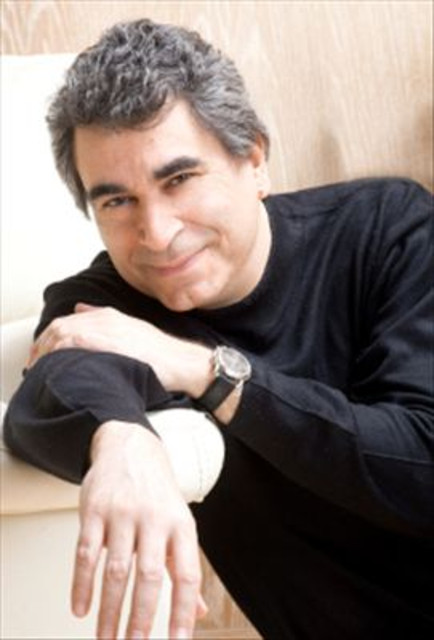
Nicolas Bacri

Manfred Trojahn
BBC Welsh Symphony Orchestra
Roberto Beltrán Zavala

Hendrik Andriessen
Matthew Aucoin
John Kinsella

Hale Smith
Charlotte Riedijk
Irving Fine
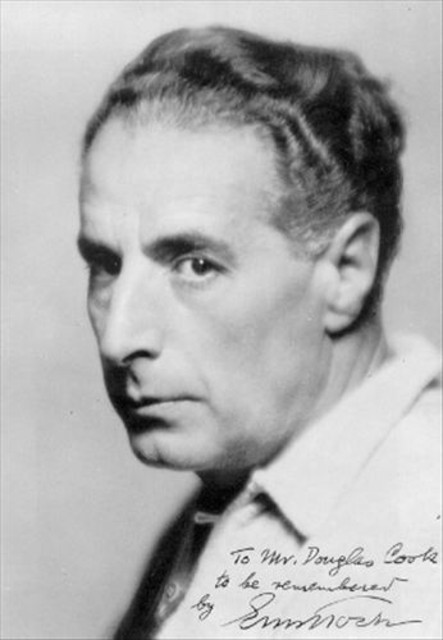
Ernst Toch
Rudolf Escher
Christian Jost
Alexander Goehr
Ståle Kleiberg
Olivier Greif
Jerzy Artysz
Gösta Nystroem
Brett Dean
Ryan Wigglesworth
André Souris
Douglas Knehans

Jacob Avshalomov
Anu Komsi
Philip Sawyers
