Data may be outdated
Last updated: 8 months ago — Click refresh to get the latest statistics.
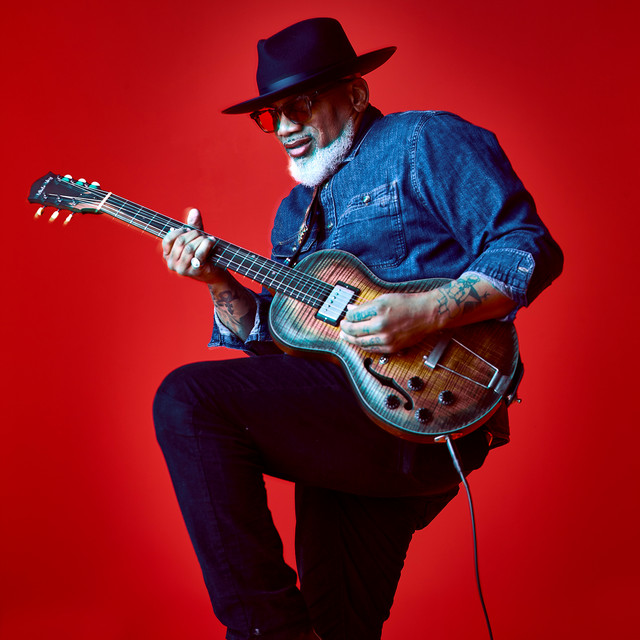
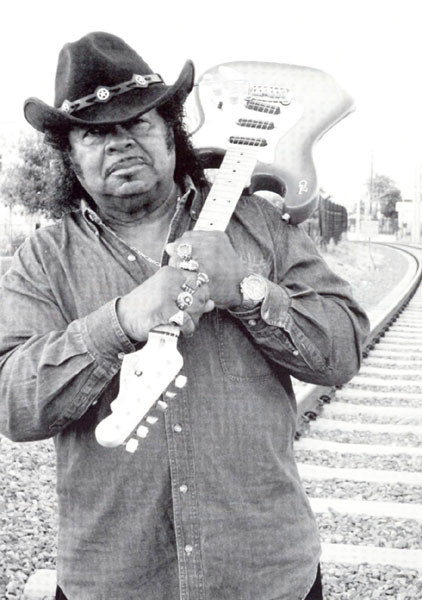
When he wasn't turning somersaults, doing backward flips, and standing on his head -- all while playing, of course -- Guitar Shorty was known to cut loose with savagely slashing licks on his instrument. After some lean years, his latter-day albums for <a href="spotify:search:label%3A%22Black+Top%22">Black Top</a>, <a href="spotify:search:label%3A%22Evidence%22">Evidence</a>, and <a href="spotify:search:label%3A%22Alligator%22">Alligator</a> proved that all that energy translated vividly onto tape.
Born David Kearney on September 8, 1939, in Houston, Texas, he started playing guitar at an early age. His early influences included fellow blues guitar slingers <a href="spotify:artist:5xLSa7l4IV1gsQfhAMvl0U">B.B. King</a>, <a href="spotify:artist:6fxCRWTrlk6wDMM4Gn421s">Guitar Slim</a>, <a href="spotify:artist:6nPKmEbQmR8jGZEm7ArOFX">T-Bone Walker</a>, and <a href="spotify:artist:3Ev1WS21x5Jav9j214A19O">Earl Hooker</a>. By the time he was 17, Kearney was already gigging steadily in Tampa, Florida. One night, he was perched on the bandstand when he learned that the mysterious "Guitar Shorty" advertised on the club's marquee was none other than him! His penchant for stage gymnastics was inspired by the flamboyant <a href="spotify:artist:6fxCRWTrlk6wDMM4Gn421s">Guitar Slim</a>, whose wild antics were legendary. In 1957, Shorty cut his debut single, "You Don't Treat Me Right," for Chicago's <a href="spotify:search:label%3A%22Cobra+Records%22">Cobra Records</a> under <a href="spotify:artist:5v8WPpMk60cqZbuZLdXjKY">Willie Dixon</a>'s astute direction. Three superb 45s in 1959 for tiny Pull Records in Los Angeles (notably "Hard Life") rounded out Shorty's discography for quite a while. During the '60s, he married <a href="spotify:artist:776Uo845nYHJpNaStv1Ds4">Jimi Hendrix</a>'s stepsister and lived in Seattle, where the rock guitar god caught Shorty's act (and presumably learned a thing or two about inciting a throng) whenever he came off the road. Shorty's career had its share of ups and downs -- at one point, he was reduced to competing on Chuck Barris' zany Gong Show, where he copped first prize for delivering "They Call Me Guitar Shorty" while balanced on his noggin.
Los Angeles had reclaimed Shorty by the time things started to blossom anew with the 1991 album My Way or the Highway for the British <a href="spotify:search:label%3A%22JSP%22">JSP</a> logo (with guitarist <a href="spotify:artist:60irGM3vd95wQu82z1UXnU">Otis Grand</a> in support). From there, <a href="spotify:search:label%3A%22Black+Top%22">Black Top</a> signed Shorty; 1993's dazzling Topsy Turvy, 1995's Get Wise to Yourself, and 1998's Roll Over, Baby were the head-over-heels results. In 2001, the appropriately titled I Go Wild was released on the <a href="spotify:search:label%3A%22Evidence%22">Evidence</a> label, proving that Guitar Shorty had no intentions of slowing down, as he clearly remained a master showman and lively blues guitarist. Watch Your Back appeared in spring 2004. A single-disc overview of his career, The Best of Guitar Shorty, appeared from <a href="spotify:search:label%3A%22Shout%21+Factory%22">Shout! Factory</a> in 2006, as well as a new studio album, We the People, from <a href="spotify:search:label%3A%22Alligator+Records%22">Alligator Records</a>. A second <a href="spotify:search:label%3A%22Alligator%22">Alligator</a> release, Bare Knuckle, appeared early in 2010. Guitar Shorty died on April 20, 2022 in Los Angeles at the age of 87. ~ Bill Dahl & Al Campbell, Rovi
Born David Kearney on September 8, 1939, in Houston, Texas, he started playing guitar at an early age. His early influences included fellow blues guitar slingers <a href="spotify:artist:5xLSa7l4IV1gsQfhAMvl0U">B.B. King</a>, <a href="spotify:artist:6fxCRWTrlk6wDMM4Gn421s">Guitar Slim</a>, <a href="spotify:artist:6nPKmEbQmR8jGZEm7ArOFX">T-Bone Walker</a>, and <a href="spotify:artist:3Ev1WS21x5Jav9j214A19O">Earl Hooker</a>. By the time he was 17, Kearney was already gigging steadily in Tampa, Florida. One night, he was perched on the bandstand when he learned that the mysterious "Guitar Shorty" advertised on the club's marquee was none other than him! His penchant for stage gymnastics was inspired by the flamboyant <a href="spotify:artist:6fxCRWTrlk6wDMM4Gn421s">Guitar Slim</a>, whose wild antics were legendary. In 1957, Shorty cut his debut single, "You Don't Treat Me Right," for Chicago's <a href="spotify:search:label%3A%22Cobra+Records%22">Cobra Records</a> under <a href="spotify:artist:5v8WPpMk60cqZbuZLdXjKY">Willie Dixon</a>'s astute direction. Three superb 45s in 1959 for tiny Pull Records in Los Angeles (notably "Hard Life") rounded out Shorty's discography for quite a while. During the '60s, he married <a href="spotify:artist:776Uo845nYHJpNaStv1Ds4">Jimi Hendrix</a>'s stepsister and lived in Seattle, where the rock guitar god caught Shorty's act (and presumably learned a thing or two about inciting a throng) whenever he came off the road. Shorty's career had its share of ups and downs -- at one point, he was reduced to competing on Chuck Barris' zany Gong Show, where he copped first prize for delivering "They Call Me Guitar Shorty" while balanced on his noggin.
Los Angeles had reclaimed Shorty by the time things started to blossom anew with the 1991 album My Way or the Highway for the British <a href="spotify:search:label%3A%22JSP%22">JSP</a> logo (with guitarist <a href="spotify:artist:60irGM3vd95wQu82z1UXnU">Otis Grand</a> in support). From there, <a href="spotify:search:label%3A%22Black+Top%22">Black Top</a> signed Shorty; 1993's dazzling Topsy Turvy, 1995's Get Wise to Yourself, and 1998's Roll Over, Baby were the head-over-heels results. In 2001, the appropriately titled I Go Wild was released on the <a href="spotify:search:label%3A%22Evidence%22">Evidence</a> label, proving that Guitar Shorty had no intentions of slowing down, as he clearly remained a master showman and lively blues guitarist. Watch Your Back appeared in spring 2004. A single-disc overview of his career, The Best of Guitar Shorty, appeared from <a href="spotify:search:label%3A%22Shout%21+Factory%22">Shout! Factory</a> in 2006, as well as a new studio album, We the People, from <a href="spotify:search:label%3A%22Alligator+Records%22">Alligator Records</a>. A second <a href="spotify:search:label%3A%22Alligator%22">Alligator</a> release, Bare Knuckle, appeared early in 2010. Guitar Shorty died on April 20, 2022 in Los Angeles at the age of 87. ~ Bill Dahl & Al Campbell, Rovi
Monthly Listeners
59,963
Monthly Listeners History
Track the evolution of monthly listeners over the last 28 days.
Followers
32,925
Followers History
Track the evolution of followers over the last 28 days.
Top Cities
Related Artists


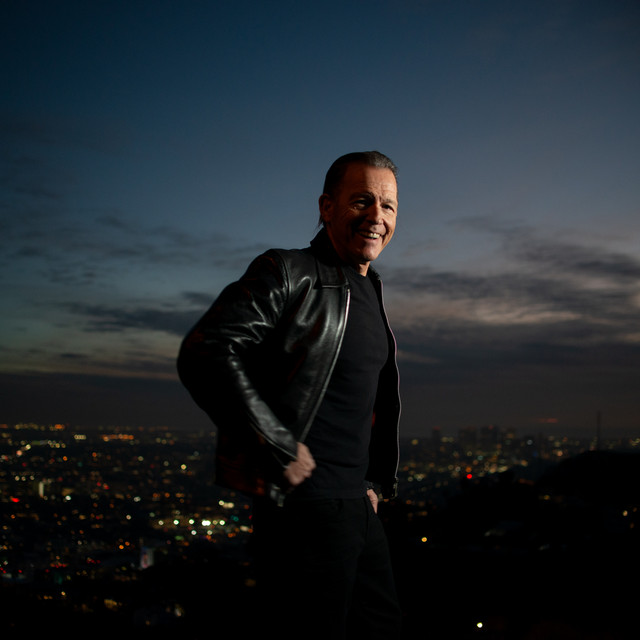


Jimmie Vaughan
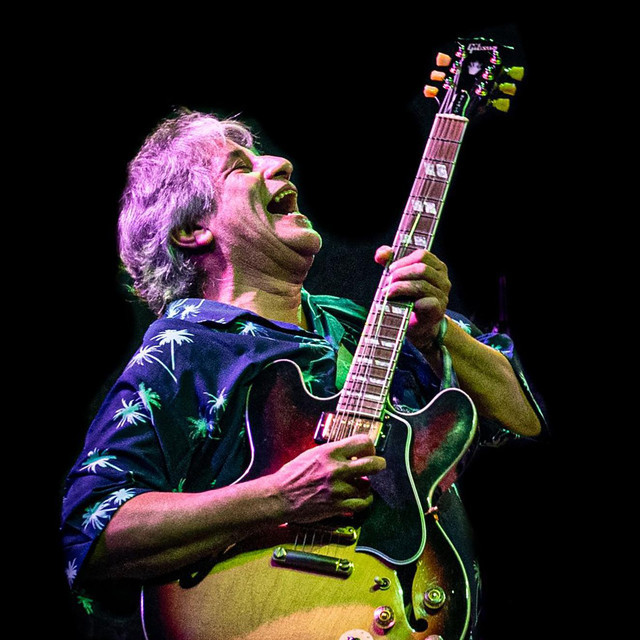


Chris Duarte