Data may be outdated
Last updated: 9 months ago — Click refresh to get the latest statistics.
Keyboardist, arranger, and composer Rivera was one of the more renowned performers of the long-neglected '60s sub-genre of Latin soul. Like the more famed <a href="spotify:artist:4c9LXZNAvx4XQlKcUyL15w">Pucho & the Latin Soul Brothers</a>, Rivera blended Latin dance-pop with contemporary soul-funk and jazz, although the jazzy elements were more muted in Rivera's mix than they were in <a href="spotify:artist:4c9LXZNAvx4XQlKcUyL15w">Pucho</a>'s. Rivera's fame was not strictly limited to New York Latin dance audiences; in 1967, his single "At the Party" actually made the Top 40 of the national R&B charts.
By that time, Rivera had already been playing for over a decade, beginning in the early '50s, when he joined the band of Elmo Garcia as a teenager. Hector Rivera made his recorded debut as a bandleader in 1957 under odd circumstances -- when Garcia didn't have enough material prepared for a planned album, Mercury Records asked if Rivera had anything up his sleeve. The keyboardist did, although he intended on saving it for a solo album; Mercury offered to record him as a solo artist, issuing his debut, Let's Cha Cha Cha. Still, over the next few years, Rivera would be known mostly as a sideman to bandleaders <a href="spotify:artist:5MlfccEEOw6kihsT8eQtbh">Joe Cuba</a> and <a href="spotify:artist:09947uhj2ZwU9mFXK5v50o">Pacheco</a>, and vocalist <a href="spotify:artist:6yQZkZC0BnKuZzuO1DAf3J">Vincento Valdez</a>.
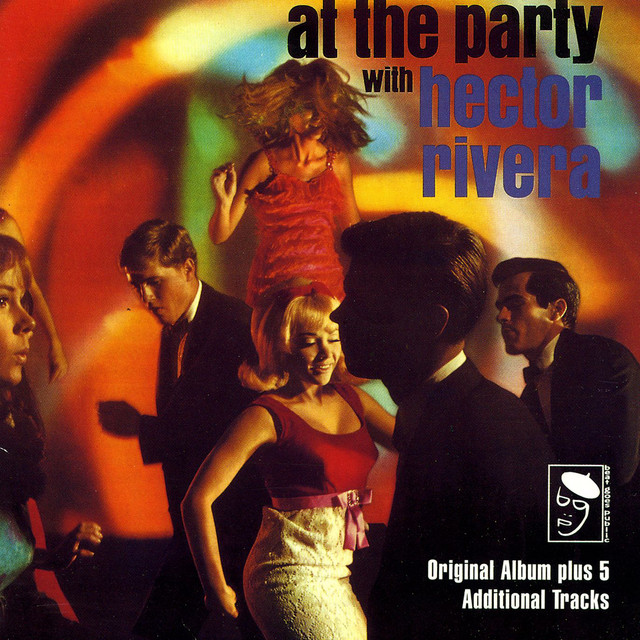
Rivera made his biggest splash as a bandleader with the 1966 album At the Party, with a large band featuring several trumpet players and percussionists (as well as <a href="spotify:artist:1Qa5p9ajnRIvq7bfsdtzqQ">Cachao</a> on bass). If this was not as deep as <a href="spotify:artist:3mdrgtEX1xhiauu3Pn06LL">Machito</a> or as accomplished as <a href="spotify:artist:4c9LXZNAvx4XQlKcUyL15w">Pucho and the Latin Soul Brothers</a>, it was still damn spirited party music, with equal foots in cha cha and soul. Rivera divided his approach between instrumentals and vocals (he employed several singers, but David Coleman is the one heard most often on the At the Party album). The success of the title cut of At the Party enabled Rivera to cut several more albums; he also continued to write and arrange, and participated in projects for such top Latin performers as <a href="spotify:artist:2h4ndKS2vRWeFLpq8ARu0D">Ray Barretto</a>, <a href="spotify:artist:3mdrgtEX1xhiauu3Pn06LL">Machito</a>, and <a href="spotify:artist:6SPpCqM8gOzrtICAxN5NuX">Tito Puente</a>. ~ Richie Unterberger, Rovi
By that time, Rivera had already been playing for over a decade, beginning in the early '50s, when he joined the band of Elmo Garcia as a teenager. Hector Rivera made his recorded debut as a bandleader in 1957 under odd circumstances -- when Garcia didn't have enough material prepared for a planned album, Mercury Records asked if Rivera had anything up his sleeve. The keyboardist did, although he intended on saving it for a solo album; Mercury offered to record him as a solo artist, issuing his debut, Let's Cha Cha Cha. Still, over the next few years, Rivera would be known mostly as a sideman to bandleaders <a href="spotify:artist:5MlfccEEOw6kihsT8eQtbh">Joe Cuba</a> and <a href="spotify:artist:09947uhj2ZwU9mFXK5v50o">Pacheco</a>, and vocalist <a href="spotify:artist:6yQZkZC0BnKuZzuO1DAf3J">Vincento Valdez</a>.
Rivera made his biggest splash as a bandleader with the 1966 album At the Party, with a large band featuring several trumpet players and percussionists (as well as <a href="spotify:artist:1Qa5p9ajnRIvq7bfsdtzqQ">Cachao</a> on bass). If this was not as deep as <a href="spotify:artist:3mdrgtEX1xhiauu3Pn06LL">Machito</a> or as accomplished as <a href="spotify:artist:4c9LXZNAvx4XQlKcUyL15w">Pucho and the Latin Soul Brothers</a>, it was still damn spirited party music, with equal foots in cha cha and soul. Rivera divided his approach between instrumentals and vocals (he employed several singers, but David Coleman is the one heard most often on the At the Party album). The success of the title cut of At the Party enabled Rivera to cut several more albums; he also continued to write and arrange, and participated in projects for such top Latin performers as <a href="spotify:artist:2h4ndKS2vRWeFLpq8ARu0D">Ray Barretto</a>, <a href="spotify:artist:3mdrgtEX1xhiauu3Pn06LL">Machito</a>, and <a href="spotify:artist:6SPpCqM8gOzrtICAxN5NuX">Tito Puente</a>. ~ Richie Unterberger, Rovi
Monthly Listeners
5,388
Monthly Listeners History
Track the evolution of monthly listeners over the last 28 days.
Followers
2,247
Followers History
Track the evolution of followers over the last 28 days.
Top Cities
222 listeners

192 listeners
151 listeners
145 listeners
143 listeners

Related Artists





The Nitty Gritty Sextet

Vladimir and his orchestra
Joe Quijano & His Conjunto Cachana



Charlie Palomares y Su Yuboney