Data may be outdated
Last updated: 7 months ago — Click refresh to get the latest statistics.
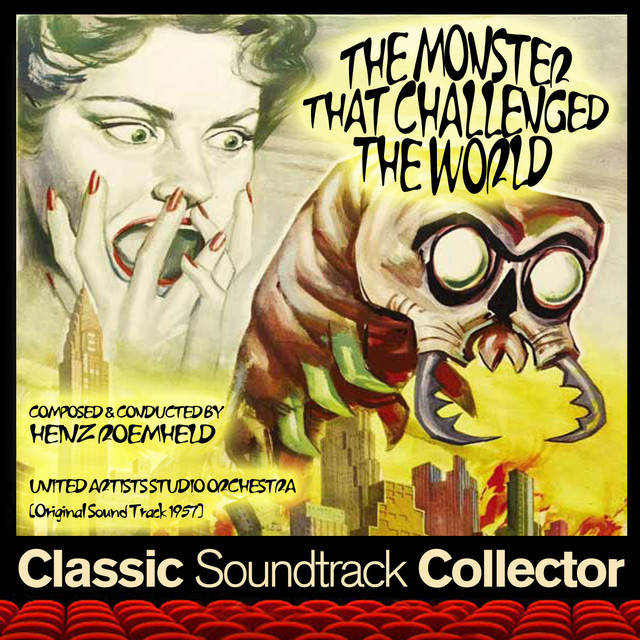
Milwaukee-born Heinz Roemheld followed a circuitous route to a career as a film composer. At age four he was identified as a piano prodigy; he later studied with <a href="spotify:artist:7xH3VOMwOjnqGu7NERNUx1">Ferruccio Busoni</a> and <a href="spotify:artist:6sJQ72Uhc9CmqavMpkkWpM">Egon Petri</a> in Berlin, and performed as a guest soloist with the <a href="spotify:artist:6uRJnvQ3f8whVnmeoecv5Z">Berlin Philharmonic</a> at 23. On returning to America, Roemheld became a movie theater pianist and conductor; during a showing of Universal's 1925 horror thriller The Phantom of the Opera, he was seen by Carl Laemmle Sr., the president and founder of the studio, and was hired as an executive. With the arrival of talking pictures, he joined Universal's music department as a composer, arranger, and conductor, and he contributed to the scoring of such films as All Quiet on the Western Front (1930), The White Hell of Pitz-Palu (1930) (a German-made silent adventure movie whose U.S. release as a talkie featured Roemheld's score, parts of which turned up in Universal features for years after), The Invisible Man (1933), The Black Cat (1934), and The Werewolf of London (1935). The Invisible Man was one of his most memorable works, filled with striking heroic parts and misteriosos, and was good enough to be re-used in the serial Flash Gordon (1936). Roemheld shared an Academy Award with <a href="spotify:artist:4VgdIlBAUIg1Ixg32a4Abd">Ray Heindorf</a> for Yankee Doodle Dandy (1942), the music of which was largely adapted from the work of its biographical subject, <a href="spotify:artist:26eyicFbNmtSfj40NzRpkE">George M. Cohan</a>. His postwar work included the scores for the musical/fantasy Down to Earth and for Orson Welles' thriller The Lady From Shanghai, and contributions to the Dr. Seuss-authored fantasy film The 5,000 Fingers of Dr. T, among numerous other movies. Roemheld enjoyed a pop hit with "Ruby," derived from his music for Ruby Gentry (1952), and later scored several fondly remembered horror movies, including The Mole People and The Monster That Challenged the World. He retired from movies in 1964 and returned to Milwaukee, where he conducted the city's symphony orchestra and composed orchestral works and chamber pieces, though he spent his final years in California. Later scholarship has identified the presence of his music in numerous movies for which he wasn't acknowledged, expanding his credits to nearly 400 films.
Monthly Listeners
403
Monthly Listeners History
Track the evolution of monthly listeners over the last 28 days.
Followers
117
Followers History
Track the evolution of followers over the last 28 days.
Top Cities
6 listeners

4 listeners

4 listeners
4 listeners
4 listeners
Related Artists
Raoul Lothar Ewler

Max Saunders
Cyril J. Mockridge
Radio Symphony Orchestra of Slovakia
Moscow Symphony Orchestra conducted by William Stromberg

Joseph Mullendore
Radio Symphony Orchestra of Cracow

Richard LaSalle
Original Hollywood orchestra

Amit Poznansky
Rudy Schrager
Austin Rayner

Paul Brian Hart
Max Steiner, William Stromberg & The Moscow Symphony Orchestra
Mort Glickman

David Harper

Stephen Douglas Burton
Rostislaw Boiko
Orchestra of the Royal Opera, Covent Garden & Benjamin Britten
Jacques Mathias Oliveira

Frank H. Smith

Roy Webb
Aleksandr Dmitriyev

Royal Philharmonic Orchestra, Malcolm Arnold (conductor)

Alex North & His Orchestra

The Warner Bros Studio Orchestra, Max Steiner (conductor)

Walter Greene
Franz Reinsestein
Joseph Cotten
Kevin Kaska
Ivan Burlak
Benjamin Graves
Nikolai Peiko
