Data may be outdated
Last updated: 9 months ago — Click refresh to get the latest statistics.
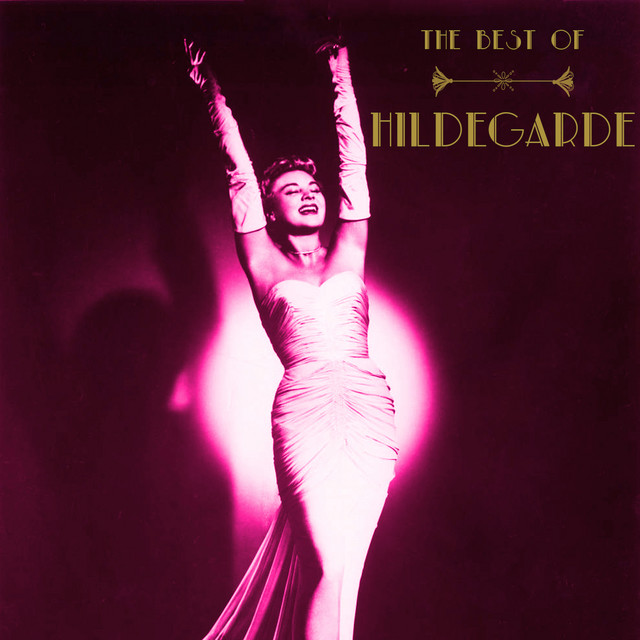
Dubbed "the most famous supper-club performer who ever lived" by no less than <a href="spotify:artist:695gNCDVviH3s5ZYVs2VNK">Liberace</a>, cabaret icon Hildegarde headlined nightclubs across the globe for close to seven decades, along the way igniting the now-common vogue for single-named celebrity. She was born Hildegarde Loretta Sell in Adell, WI, on February 1, 1906 -- her mother was an organist and the director of the church choir -- and raised from the age of 12 in Milwaukee, beginning her professional music career four years later as the house pianist at a local cinema. After studying music at Marquette University, Hildegarde spent two years as a member of a vaudeville troupe, followed by a stint as an accompanist-for-hire behind a series of singers. While living in Camden, NJ, she befriended budding songwriter Anna Sosenko, and agreed to sing Sosenko's compositions during meetings with publishers. Eventually, Hildegarde landed work as a song plugger for <a href="spotify:artist:32zXZpxwb2bq7oGzAhe1Ii">Irving Berlin</a> as well, but Sosenko would prove the primary architect of her career, and the two women lived and worked together for close to a quarter century.
Following an audition for his "Stars on Parade" revue, impresario Guy Edwards convinced Hildegarde to drop her surname for performances -- he also helped the singer land her first major headlining appearance at London's Café du Paris. The performance was not a success, but it nevertheless inspired Hildegarde and Sosenko to travel to the real Paris to study cabaret. They spent much of the early '30s in France, and by the end of their three-year stay Hildegarde learned to sing in French, Italian, Russian, and Swedish -- moreover, her studies of diction helped eliminate the remaining vestiges of her German accent. But most of all, in Paris she created the image that would become her signature -- clad in haute couture gowns, dazzling jewels, and trademark long white gloves, she cut a regal figure that exemplified elegance and sophistication, and was headlining upper-crust clubs immediately upon her return to New York City. So popular was Hildegarde among tastemakers on both sides of the Atlantic that in 1934 she sang at London's Ritz Hotel during the Duke of Kent's wedding celebration -- a year later, she returned for King George V's jubilee, and in 1937 came back yet again for King George VI's coronation.
Further buoyed by the success of Sosenko-penned showstoppers like "Darling, Je Vous Aime Beaucoup" -- her signature song -- Hildegarde reached the apex of her popularity during the years in and around World War II. She spent about 45 weeks of the year on tour, earning an astounding $17,500 per week and 50 percent of the gross during one extended 1946 engagement. She was also a staple of best-dressed lists, spending at least $10,000 per year on clothes even in wartime. So emulated was her look that Revlon produced a Hildegarde shade of lipstick and nail polish, one horticulturist named a rose in her honor, and a linen company even manufactured handkerchiefs inspired by her "Bless You" autograph. Typically billed as the Incomparable Hildegarde -- a moniker bestowed by radio legend Walter Winchell -- she also reached mainstream audiences via the popular NBC radio program Raleigh Room, but during the 1950s her star waned as interest in cabaret gave way to jazz and later rock & roll. In 1955, she and Sosenko also dissolved their partnership amid bitter and very public acrimony, and they did not speak again for two decades.
Hildegarde nevertheless remained a top draw on the supper-club circuit, and her records continued to sell as well. She also toured with the national company of <a href="spotify:artist:4TbtUt49IMXEIMmNdifHb1">Stephen Sondheim</a>'s Follies, and headlined numerous television specials. In 1961 she was the guest of honor at a gala hosted by former First Lady Eleanor Roosevelt, who presented Hildegarde with an award proclaiming her "The First Lady of the Supper Clubs." That same year, the singer published her autobiography, Over 50...So What! In 1980, Hildegarde headlined a revival of the 1927 musical The Five O'Clock Girl in addition to touring as a featured performer with "The Big Broadcast of 1944," a revue that re-created radio programs of the year in question. She also toured the lecture circuit as well as nightclubs, celebrating her sixth decade in show business with a sellout 1986 date at Carnegie Hall and making her final London appearance in the autumn of 1992 with a two-week engagement at Pizza on the Park. Hildegarde remained a staple of New York society throughout the 1990s. She died at the age of 99 on July 29, 2005. ~ Jason Ankeny, Rovi
Following an audition for his "Stars on Parade" revue, impresario Guy Edwards convinced Hildegarde to drop her surname for performances -- he also helped the singer land her first major headlining appearance at London's Café du Paris. The performance was not a success, but it nevertheless inspired Hildegarde and Sosenko to travel to the real Paris to study cabaret. They spent much of the early '30s in France, and by the end of their three-year stay Hildegarde learned to sing in French, Italian, Russian, and Swedish -- moreover, her studies of diction helped eliminate the remaining vestiges of her German accent. But most of all, in Paris she created the image that would become her signature -- clad in haute couture gowns, dazzling jewels, and trademark long white gloves, she cut a regal figure that exemplified elegance and sophistication, and was headlining upper-crust clubs immediately upon her return to New York City. So popular was Hildegarde among tastemakers on both sides of the Atlantic that in 1934 she sang at London's Ritz Hotel during the Duke of Kent's wedding celebration -- a year later, she returned for King George V's jubilee, and in 1937 came back yet again for King George VI's coronation.
Further buoyed by the success of Sosenko-penned showstoppers like "Darling, Je Vous Aime Beaucoup" -- her signature song -- Hildegarde reached the apex of her popularity during the years in and around World War II. She spent about 45 weeks of the year on tour, earning an astounding $17,500 per week and 50 percent of the gross during one extended 1946 engagement. She was also a staple of best-dressed lists, spending at least $10,000 per year on clothes even in wartime. So emulated was her look that Revlon produced a Hildegarde shade of lipstick and nail polish, one horticulturist named a rose in her honor, and a linen company even manufactured handkerchiefs inspired by her "Bless You" autograph. Typically billed as the Incomparable Hildegarde -- a moniker bestowed by radio legend Walter Winchell -- she also reached mainstream audiences via the popular NBC radio program Raleigh Room, but during the 1950s her star waned as interest in cabaret gave way to jazz and later rock & roll. In 1955, she and Sosenko also dissolved their partnership amid bitter and very public acrimony, and they did not speak again for two decades.
Hildegarde nevertheless remained a top draw on the supper-club circuit, and her records continued to sell as well. She also toured with the national company of <a href="spotify:artist:4TbtUt49IMXEIMmNdifHb1">Stephen Sondheim</a>'s Follies, and headlined numerous television specials. In 1961 she was the guest of honor at a gala hosted by former First Lady Eleanor Roosevelt, who presented Hildegarde with an award proclaiming her "The First Lady of the Supper Clubs." That same year, the singer published her autobiography, Over 50...So What! In 1980, Hildegarde headlined a revival of the 1927 musical The Five O'Clock Girl in addition to touring as a featured performer with "The Big Broadcast of 1944," a revue that re-created radio programs of the year in question. She also toured the lecture circuit as well as nightclubs, celebrating her sixth decade in show business with a sellout 1986 date at Carnegie Hall and making her final London appearance in the autumn of 1992 with a two-week engagement at Pizza on the Park. Hildegarde remained a staple of New York society throughout the 1990s. She died at the age of 99 on July 29, 2005. ~ Jason Ankeny, Rovi
Monthly Listeners
1,734
Monthly Listeners History
Track the evolution of monthly listeners over the last 28 days.
Followers
560
Followers History
Track the evolution of followers over the last 28 days.
Top Cities
31 listeners

30 listeners

24 listeners
22 listeners
22 listeners
Related Artists


Frank Munn

Carroll Gibbons & His Boyfriends
Jack Buchanan

Ronnie Munro


Gus Arnheim Coconut Grove Orchestra

Harry Roy

Richard Himber Orchestra
Irene Dunne

Anne Lenner


Carroll Gibbons And The Savoy Hotel Orpheans

Vincent Lopez and his Orchestra
Victor Young And His Orchestra

Brian Lawrence
Leslie Hutchinson
Vincent Lopez

Henry Hall
Jan Garber

Alice Faye
Harriet Hilliard
Anona Winn

Leo Reisman and His Orchestra
Ozzie Nelson & His Orchestra

Frances Day
Dick Jurgens & His Orchestra
