Data may be outdated
Last updated: 9 months ago — Click refresh to get the latest statistics.
Singer-actress Jeanette MacDonald is a perfect example of what, decades after her death, became known as a "classical crossover" artist. In her films, radio, television appearances, concerts, and recordings, she sang opera, operetta, art songs, and show tunes, often with an eye toward popularizing classical music for the masses. This was a delicate balancing act that worked for most of her career, during which she enjoyed high-grossing films, gold records, and sold-out concerts. But even during that period, like all classical crossover artists, she suffered criticism from both sides of the breach she was attempting to cross. Pop critics sometimes found her soprano singing too highfalutin and pretentious, while classical critics demeaned her for diluting the purity of classical art by performing in popular media. And she was not served well by the cultural trends and fashions in the performing arts that followed her heyday, as rock & roll took over pop music, classical music became ever more removed from mainstream culture, and the movies were swamped by realism. All of that could make it hard to remember that at the height of her career, MacDonald was the leading female musical star at the most prestigious film studio in Hollywood, uplifting audiences with her thrilling performances of classical and semi-classical themes while moving them with her acting in unabashedly romantic stories. While critics of later generations dismissed her most popular films as "high camp," legions of loyal fans worldwide continued to admire her for the same qualities that sympathetic viewers and listeners had identified in her prime.
She was born Jeannette Anna McDonald in West Philadelphia on June 18, 1903. (As early as her first performances as a child, she and her parents were experimenting with different spellings of her name, an experimentation that continued -- along with simple misspellings -- until the mid-'20s, when she settled on removing an "n" from her first name and adding an "a" to her last name.) During her career, attempting to make herself seem younger, she claimed to have been born as late as 1907, and early biographers retaliated by claiming she was born as early as 1901, but Edward Baron Turk (Hollywood Diva: A Biography of Jeanette MacDonald, University of California Press, 1998) conclusively determined the correct year by consulting baptismal and census records in the absence of a missing birth certificate. She was the third and youngest daughter of <a href="spotify:artist:1VffPWbThLtUnv0wkvjHus">Daniel McDonald</a>, a salesman for a woodworks company, and Anna May (Wright) McDonald. Her older sister Edith McDonald (born in 1895) also became an actress under various names including Marie Blake and Blossom Rock.
MacDonald demonstrated an early interest in performing, and was earning money as a singer as early as the age of five. In February, 1909, she appeared in a "children's opera" called Charity at the Academy of Music in Philadelphia. She studied piano and took voice lessons, and at the age of nine, joined a vaudeville troupe, Six Sunny Song Birds. She worked in vaudeville for a couple of years, stopping only when she was caught by the Gerry Society, which helped enforce child labor laws, and sent back to school. Aged 16, she was in high school in November 1919 when she visited her sister Elsie in New York and auditioned for Ned Wayburn's Demmi Tasse Revue, the prologue show at the Capitol Theatre, a movie house, and was hired as a chorus girl. She transferred to a New York high school, but dropped out after one semester as she continued to find work in the theater. She appeared in the chorus of the Broadway musical The Night Boat (February 2, 1920), remaining with the show through August and then joining a national tour of the musical Irene in a featured role, which took her through December 1920.
Returning to New York and between shows, MacDonald worked as a model while studying voice, dance, and French. (She would later study other foreign languages, which came in handy when she dubbed her own voice for overseas versions of her films.) She returned to Broadway in September 1921 as a replacement cast member in the musical Tangerine, staying with the show until April 1922. During the summer, she went back to modeling, then in October joined the cast of the recently opened Off-Broadway revue A Fantastic Fricassee. She made her debut on Broadway originating a featured role in The Magic Ring (October 1, 1923), "A Fantastic Comedy with Music," which ran 96 performances, closing on December 22, but then went on a two-year national tour; she remained in it through May 1925. She returned to Broadway in the musical Tip-Toes (December 8, 1925), which had songs by George & Ira Gershwin; it ran 192 performances, until June 12, 1926. She had the title role in the musical Yes, Yes, Yvette, which toured extensively in 1926 and 1927 before landing on Broadway on October 3, 1927, where it played a mere 40 performances. Two days after its November 5 closing, she signed an exclusive contract with the Shubert organization that assured her of star status on Broadway.
The contract also restricted her from taking advantage of other opportunities, however. She next starred in the musical Sunny Days (February 8, 1928), which ran 101 performances, closing on May 5, 1928. Meanwhile, she received an offer to sing opera in Europe, and she was given a successful screen test by Paramount Pictures (which, like the other Hollywood studios, was scouring Broadway for singing actors in the wake of the arrival of talkies). But her Shubert contract precluded her from accepting either offer. With options, the contract ran through the end of May 1929, and MacDonald honored it, starring in two more Shubert musicals, Angela (December 3, 1928), which ran 40 performances, closing on January 5, 1929, and Boom-Boom (January 28, 1929), which ran 72 performances, closing March 30, 1929, followed by a national tour. (Although MacDonald rose to stardom during her nearly ten-year stage career, it is striking that, for a performer who became closely identified with operettas, she never appeared in one on Broadway. While she was in New York, the original productions of The Vagabond King, Rose-Marie, The New Moon, and Bitter Sweet all opened on Broadway, along with revivals of The Merry Widow, Naughty Marietta, and Sweethearts. MacDonald would star in the movie versions of all of them. Yet despite having garnered enough recognition for her voice to be offered opera roles in Europe, she appeared in none of them on-stage.)
Within days of leaving the road tour of Boom-Boom at the conclusion of her Shubert contract, MacDonald met with director Ernst Lubitsch, who had seen her Paramount screen test and wanted her for his next film, The Love Parade, featuring <a href="spotify:artist:3QXjI80udwDSEfxK5BjUXc">Maurice Chevalier</a>. She signed to Paramount and moved to Hollywood. The Love Parade opened in November 1929 and was a considerable success. "It can be said that this is the first true screen musical," wrote Variety of the film, which earned six Academy Award nominations, including one for Best Picture. In connection with its release, MacDonald made two other media debuts. On November 8, she appeared on radio for the first time, promoting the film on the Paramount-Publix Radio Hour. And she signed a contract with <a href="spotify:search:label%3A%22Victor+Records%22">Victor Records</a>. This was right around the time <a href="spotify:search:label%3A%22Victor%22">Victor</a> was acquired by the Radio Corporation of America (RCA) and became RCA Victor. She would record exclusively for the label for nearly three decades, her entire recording career. Her first session came on December 11, 1929, and found her cutting studio recordings of two songs she also sang in The Love Parade, "Dream Lover" and "March of the Grenadiers." They were released on either side of the <a href="spotify:search:label%3A%22Victor%22">Victor</a> 78 rpm (disc #22247), her first record. (Although original soundtrack albums did not come into vogue until the mid-'40s, stars of movie musicals often made such independent recordings of songs from their films, and the bulk of MacDonald's recordings consisted of such material.)
MacDonald quickly followed The Love Parade with a movie version of the 1925 Rudolf Friml operetta The Vagabond King, co-starring Dennis King, which opened in February 1930. It was the first of five films in which she appeared during the year, followed by the anthology Paramount on Parade (though her scenes were cut from domestic prints; April), Monte Carlo (August 27), Let's Go Native (August 29), The Lottery Bride (United Artists; October), and Oh, for a Man! (Fox; November). Of these, the most notable was Monte Carlo, directed by Lubitsch and co-starring <a href="spotify:artist:5rLXOYqozyD8yKDqhDJatD">Jack Buchanan</a>, which gave her the chance to sing "Always in All Ways" and "Beyond the Blue Horizon," both of which she recorded for her second single. According to chart researcher Joel Whitburn in the book Pop Memories (Record Research, Inc., 1986), which approximates chart statistics for a pre-chart era, "Beyond the Blue Horizon" was a Top Ten hit; it became MacDonald's first signature song.
MacDonald had moved to the Fox film studio in 1930 as Hollywood temporarily lost interest in movie musicals. She made two more films for Fox, Don't Bet on Women (March 1931) and Annabelle's Affairs (June 1931), in which she did not sing. Then she left for Europe so she could sing on-stage. In September and October 1931, she appeared for two weeks each in theaters in Paris and London. While in London, she recorded for <a href="spotify:search:label%3A%22Victor%22">Victor</a>'s sister label, <a href="spotify:search:label%3A%22HMV%22">HMV</a>. Returning to the U.S., she was re-signed by Paramount and reunited with Chevalier and Lubitsch (who co-directed with George Cukor) for the movie musical One Hour with You. Concurrently, she and Chevalier shot a French-language version, Une Heure Près de Toi, with a French cast, and she made studio recordings of the title song and "We Will Always Be Sweethearts" in English and French. Released in March 1932, One Hour with You was nominated for the Academy Award for Best Picture.
MacDonald and Chevalier were quickly re-teamed, with director Rouben Mamoulian and Broadway songwriters <a href="spotify:artist:4IbAZwt75dpehMOgcC3GnP">Richard Rodgers</a> and <a href="spotify:artist:0cbeImgBvjk8dtBiGln2UC">Lorenz Hart</a>, for Love Me Tonight (August 1932). Although this film was not made simultaneously in French, MacDonald did record its title song and the standard "Isn't It Romantic?" in both English and French. She also had the chance to introduce what became another Rodgers & Hart standard, "Lover." She addressed her French fans directly by returning to France and launching an European tour in Paris in February 1933. (The same month, she recorded in Paris for Disque Gramophone.) Meanwhile, having completed her commitment to Paramount, and with the movie musical enjoying a revival in the wake of the success of 42nd Street (March 1933), she began negotiating with MGM and signed to the studio upon her return to the U.S.
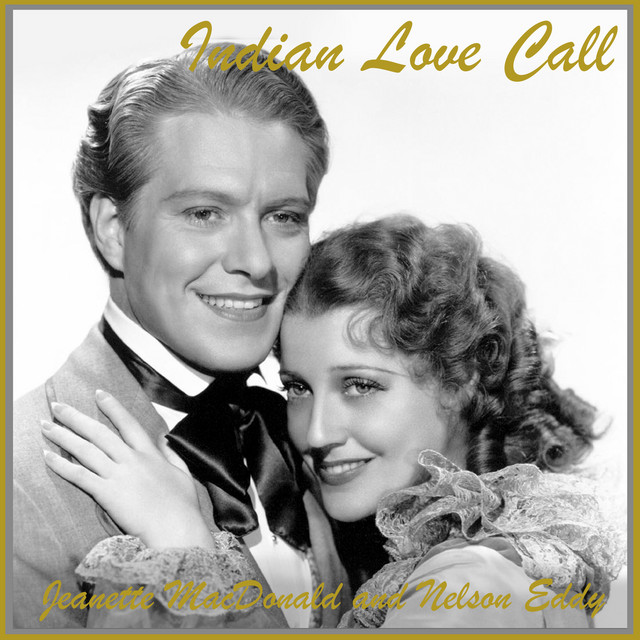
MacDonald's first project at MGM was an adaptation of the recent <a href="spotify:artist:09E7wcrEyqU2n1rnhzVT0h">Jerome Kern</a> operetta The Cat and the Fiddle, costarring Ramon Novarro, that opened in February 1934. She then re-teamed with Chevalier and Lubitsch one last time for a version of <a href="spotify:artist:3O3SOoPYtUSjajTdIag0nT">Franz Lehár</a>'s 1905 operetta The Merry Widow (October 1934). (Like One Hour with You, The Merry Widow was also shot in French, as La Veuve Joyeuse.) Neither film was a hit, but MGM next proposed pairing MacDonald with up-and-coming singer-actor <a href="spotify:artist:3kZW8LhFGcxLfPsERFwEBL">Nelson Eddy</a> in a screen version of <a href="spotify:artist:4KKrqNQzDsogR5DCD9a9fv">Victor Herbert</a>'s 1910 operetta Naughty Marietta. Released in March 1935, it was a major success, with audiences delighting to MacDonald and <a href="spotify:artist:3kZW8LhFGcxLfPsERFwEBL">Eddy</a>'s duets on "Ah! Sweet Mystery of Life" and "Italian Street Song," and earned a Best Picture Oscar nomination. MacDonald and <a href="spotify:artist:3kZW8LhFGcxLfPsERFwEBL">Eddy</a> were quickly re-teamed for a version of <a href="spotify:artist:07vo9sp7aOyeHvklmUpzef">Friml</a>'s 1921 musical Rose-Marie. Rose Marie (the film title dispensed with the hyphen) opened in January 1936 and was an even bigger hit than Naughty Marietta, giving the principals another memorable duet in "Indian Love Call." But MacDonald's most successful film of 1936 was San Francisco, which re-created the San Francisco earthquake of 1906, and in which she co-starred with Clark Gable and Spencer Tracy. Between them, Rose Marie and San Francisco accounted for 25-percent of MGM's revenues for the year.
On September 19 and 21, 1936, MacDonald and <a href="spotify:artist:3kZW8LhFGcxLfPsERFwEBL">Eddy</a> participated in recording sessions for RCA that produced studio versions of "Indian Love Call," "Ah! Sweet Mystery of Life," "Farewell to Dreams," and "Will You Remember?," the last two from their next pairing, in a version of the 1917 <a href="spotify:artist:04aXJJTCmpNfMOTSUf3Whr">Sigmund Romberg</a> operetta Maytime. (Also recorded was "Song of Love," which would not be released until the '60s.) Issued soon after, a single combining "Indian Love Call" and "Ah! Sweet Mystery of Life" reportedly sold over a million copies. But since <a href="spotify:artist:3kZW8LhFGcxLfPsERFwEBL">Eddy</a> subsequently signed to Columbia Records, the two singers were unable to record together again for more than 20 years. These were also MacDonald's last recording sessions for three years.
Maytime opened in March 1937 and was another hit, with both fans and critics. "It establishes Jeanette MacDonald as the possessor of the cinema's loveliest voice," wrote Frank S. Nugent in The New York Times of what became the highest-grossing film of the year, worldwide (four million). Meanwhile, although millions of movie fans thought of them as the perfect couple, MacDonald and <a href="spotify:artist:3kZW8LhFGcxLfPsERFwEBL">Eddy</a> had other ideas in their personal lives. MacDonald married movie actor Gene Raymond on June 16, 1937. Soon, however, she was back to work, and The Firefly, based on <a href="spotify:artist:07vo9sp7aOyeHvklmUpzef">Friml</a>'s 1912 operetta but featuring <a href="spotify:artist:1GmKu166ee6KtY083uzyVe">Allan Jones</a> instead of <a href="spotify:artist:3kZW8LhFGcxLfPsERFwEBL">Eddy</a>, opened in September. It was successful, but not as successful as the MacDonald-<a href="spotify:artist:3kZW8LhFGcxLfPsERFwEBL">Eddy</a> films.
MacDonald had made occasional appearances on radio, but in September 1937 she became the regular singer on the weekly CBS series Vick's Open House, performing as her schedule and health permitted, through March 1938. Not surprisingly, MGM quickly put her back in front of the cameras in her fourth teaming with <a href="spotify:artist:3kZW8LhFGcxLfPsERFwEBL">Eddy</a> in The Girl of the Golden West, based on a play but featuring songs by Romberg. Released in March 1938, it grossed more than $2.8 million. The team's fifth picture, Sweethearts, based on Herbert's 1913 operetta and released in December, did even better, grossing more than $3.2 million.
MacDonald undertook her first U.S. recital tour in March 1939, playing 20 cities around the country. Broadway Serenade (April 1939), in which she appeared with Lew Ayres, was considered a disappointment. Meanwhile, however, she was negotiating a new contract with MGM, which accounted for a slow down in her filming schedule during this period. The contract was signed during the summer. In September, she returned to the RCA studios for the first time in three years and cut an extensive series of sessions of classical and semi-classical works. She undertook another recital tour of 30 cities in the spring of 1940, then returned to MGM for her sixth film with <a href="spotify:artist:3kZW8LhFGcxLfPsERFwEBL">Eddy</a>, a version of Romberg's 1928 operetta The New Moon. With its definite article deleted, New Moon opened in July 1940 and grossed more than $2.5 million. It was quickly followed by a MacDonald-<a href="spotify:artist:3kZW8LhFGcxLfPsERFwEBL">Eddy</a> treatment of <a href="spotify:artist:0qsb6mnN5e7ut4axY4wofX">Noël Coward</a>'s 1929 musical Bitter Sweet, which opened in November and grossed over $2.2 million.
MacDonald toured 13 cities in the winter of 1941, then co-starred with her husband in Smilin' Through, which opened in December and grossed $2.4 million. To promote it, she recorded six of the songs on September 22, 1941, for a three-disc album of 78s. She also performed a radio version of the film on Lux Radio Theatre in January 1942. I Married an Angel, based on the 1938 Rodgers & Hart musical, was her eighth and last film with <a href="spotify:artist:3kZW8LhFGcxLfPsERFwEBL">Eddy</a>; it was released in July 1942. Grossing over $1.2 million, but having cost nearly $1.5 million to make (plus advertising and distribution expenses), it was the only one of their movies to lose money, a factor no doubt taken into consideration when MGM decided to let its contract option on the high-priced 39-year-old actress lapse. She made one more film for MGM, Cairo, co-starring Robert Young, which appeared in November 1942. That fall, she toured 14 American cities to raise money for the Army Emergency Relief Fund, only a part of her extensive charity activities during World War II.
Free of her MGM contract, MacDonald aspired to join <a href="spotify:artist:14AbeD1op5phNiIVzzRVWr">the Metropolitan Opera</a> in New York. Turk, her biographer, working from her unpublished memoir, details negotiations with the Met that reveal the institution's snobbery about associating with a film star and what amounted to a virtual demand for a bribe to secure her appointment with the company. Instead, MacDonald determined to demonstrate her worth by working with other companies, and she made her opera debut in Charles Gounod's Roméo et Juliette in Montreal on May 8, 1943, followed by a Canadian tour. Her notices were good, as they were when she performed <a href="spotify:artist:42Vmza0WYHdhsgxFmf9Tui">Gounod</a>'s Faust with the Chicago Opera in November 1944, but the Met never relented, and she grew tired of the struggle, turning instead to concert work (though she occasionally performed Roméo et Juliette and Faust again) . As a result, the myth developed in classical circles that her voice was "too small" for opera.
MacDonald debuted as a concert soloist performing with symphony orchestras with a performance in Milwaukee on August 10, 1943. She performed extensively around the country for the next two years. In April 1944, she returned to the movies, appearing as herself in the all-star Universal feature Follow the Boys. She reprised her performances of Naughty Marietta and Maytime with <a href="spotify:artist:3kZW8LhFGcxLfPsERFwEBL">Eddy</a> for Lux Radio Theatre in June and September. In February 1945, she and opera singer Robert Merrill recorded an album of songs from Romberg's new Broadway musical Up in Central Park. It peaked at number two in the charts. She toured the British Isles in the summer of 1946. In 1947, she interrupted her concert work to return to MGM for Three Daring Daughters, released in February 1948, which grossed over $4 million. Her final film was The Sun Comes Up, which MGM released in May 1949.
MacDonald had continued to record for RCA, resulting in such albums as Religious Songs (1945) and Operetta Favorites (1946), and in 1950 she recorded her first album in the LP format, Romantic Moments. She also continued to make radio appearances, pairing again with <a href="spotify:artist:3kZW8LhFGcxLfPsERFwEBL">Eddy</a> in audio versions of Sweethearts and Rose Marie in 1946 and 1947, and in a series of operettas with <a href="spotify:artist:3dvIPsJH7o9xnBwFxowzof">Gordon MacRae</a> in 1949. In the 1950s, she combined concert work with occasional television appearances, stage work, and nightclub performing. In 1951, she and her husband starred in a touring version of the Ferenc Molnar comedy The Guardsman that they hoped to take to Broadway. In 1953, she debuted her nightclub act at the Sahara Hotel in Las Vegas. In 1954 and 1955, she toured in summer stock with Bitter Sweet, and in 1956 with The King and I. She suffered a mild heart attack during the run of the latter and was forced to slow down. She gave her last major concert in July 1957. That September, she and <a href="spotify:artist:3kZW8LhFGcxLfPsERFwEBL">Eddy</a> reunited in the recording studio to re-record their old hits, and after she cut a few more solo tracks in June 1958, RCA released the duo album Favorites in Hi-Fi (along with a stereo version called Favorites in Stereo), which hit the Top 40 and eventually went gold. By the early ‘60s, she was largely retired due to her heart ailment, which finally killed her on January 14, 1965, at the age of 61.
Although MacDonald's relationship with <a href="spotify:artist:3kZW8LhFGcxLfPsERFwEBL">Eddy</a> was, by all reputable accounts, cordial and professional but no more, many of her fans have persisted in the fantasy that the couple's onscreen chemistry must have suggested offscreen romance. Taking the opposite tack, and equally without supporting evidence, songwriter Jerry Herman, in the 1980 Broadway musical A Day in Hollywood/A Night in the Ukraine, presented a song called "Nelson," in which a MacDonald-like character describes her intense dislike of her costar. Both extremes are suggestive of the public's continued fascination with the MacDonald/<a href="spotify:artist:3kZW8LhFGcxLfPsERFwEBL">Eddy</a> screen partnership, which has long-since attained icon status to the point that most people's immediate image of MacDonald has her trilling, "When I'm calling you" to <a href="spotify:artist:3kZW8LhFGcxLfPsERFwEBL">Eddy</a> in his Royal Canadian Mounties uniform in Rose Marie. While RCA Victor has not endeavored to keep significant portions of MacDonald's catalog in print, less well-established labels (including the fan club Mac/Eddy imprint) have taken up the slack, at various times printing up albums containing her studio recordings, soundtracks, and airchecks. While the pressings of such unlicensed discs have tended to be small, with the 50-year limit on copyright for recordings in Europe, European labels have been able to reprint MacDonald's recordings with impunity. A disproportionate number of such recordings are co-credited to <a href="spotify:artist:3kZW8LhFGcxLfPsERFwEBL">Eddy</a>, although upon examination, the albums tend to include only a few actual duets between the two, mixed in with solo tracks. ~ William Ruhlmann, Rovi
She was born Jeannette Anna McDonald in West Philadelphia on June 18, 1903. (As early as her first performances as a child, she and her parents were experimenting with different spellings of her name, an experimentation that continued -- along with simple misspellings -- until the mid-'20s, when she settled on removing an "n" from her first name and adding an "a" to her last name.) During her career, attempting to make herself seem younger, she claimed to have been born as late as 1907, and early biographers retaliated by claiming she was born as early as 1901, but Edward Baron Turk (Hollywood Diva: A Biography of Jeanette MacDonald, University of California Press, 1998) conclusively determined the correct year by consulting baptismal and census records in the absence of a missing birth certificate. She was the third and youngest daughter of <a href="spotify:artist:1VffPWbThLtUnv0wkvjHus">Daniel McDonald</a>, a salesman for a woodworks company, and Anna May (Wright) McDonald. Her older sister Edith McDonald (born in 1895) also became an actress under various names including Marie Blake and Blossom Rock.
MacDonald demonstrated an early interest in performing, and was earning money as a singer as early as the age of five. In February, 1909, she appeared in a "children's opera" called Charity at the Academy of Music in Philadelphia. She studied piano and took voice lessons, and at the age of nine, joined a vaudeville troupe, Six Sunny Song Birds. She worked in vaudeville for a couple of years, stopping only when she was caught by the Gerry Society, which helped enforce child labor laws, and sent back to school. Aged 16, she was in high school in November 1919 when she visited her sister Elsie in New York and auditioned for Ned Wayburn's Demmi Tasse Revue, the prologue show at the Capitol Theatre, a movie house, and was hired as a chorus girl. She transferred to a New York high school, but dropped out after one semester as she continued to find work in the theater. She appeared in the chorus of the Broadway musical The Night Boat (February 2, 1920), remaining with the show through August and then joining a national tour of the musical Irene in a featured role, which took her through December 1920.
Returning to New York and between shows, MacDonald worked as a model while studying voice, dance, and French. (She would later study other foreign languages, which came in handy when she dubbed her own voice for overseas versions of her films.) She returned to Broadway in September 1921 as a replacement cast member in the musical Tangerine, staying with the show until April 1922. During the summer, she went back to modeling, then in October joined the cast of the recently opened Off-Broadway revue A Fantastic Fricassee. She made her debut on Broadway originating a featured role in The Magic Ring (October 1, 1923), "A Fantastic Comedy with Music," which ran 96 performances, closing on December 22, but then went on a two-year national tour; she remained in it through May 1925. She returned to Broadway in the musical Tip-Toes (December 8, 1925), which had songs by George & Ira Gershwin; it ran 192 performances, until June 12, 1926. She had the title role in the musical Yes, Yes, Yvette, which toured extensively in 1926 and 1927 before landing on Broadway on October 3, 1927, where it played a mere 40 performances. Two days after its November 5 closing, she signed an exclusive contract with the Shubert organization that assured her of star status on Broadway.
The contract also restricted her from taking advantage of other opportunities, however. She next starred in the musical Sunny Days (February 8, 1928), which ran 101 performances, closing on May 5, 1928. Meanwhile, she received an offer to sing opera in Europe, and she was given a successful screen test by Paramount Pictures (which, like the other Hollywood studios, was scouring Broadway for singing actors in the wake of the arrival of talkies). But her Shubert contract precluded her from accepting either offer. With options, the contract ran through the end of May 1929, and MacDonald honored it, starring in two more Shubert musicals, Angela (December 3, 1928), which ran 40 performances, closing on January 5, 1929, and Boom-Boom (January 28, 1929), which ran 72 performances, closing March 30, 1929, followed by a national tour. (Although MacDonald rose to stardom during her nearly ten-year stage career, it is striking that, for a performer who became closely identified with operettas, she never appeared in one on Broadway. While she was in New York, the original productions of The Vagabond King, Rose-Marie, The New Moon, and Bitter Sweet all opened on Broadway, along with revivals of The Merry Widow, Naughty Marietta, and Sweethearts. MacDonald would star in the movie versions of all of them. Yet despite having garnered enough recognition for her voice to be offered opera roles in Europe, she appeared in none of them on-stage.)
Within days of leaving the road tour of Boom-Boom at the conclusion of her Shubert contract, MacDonald met with director Ernst Lubitsch, who had seen her Paramount screen test and wanted her for his next film, The Love Parade, featuring <a href="spotify:artist:3QXjI80udwDSEfxK5BjUXc">Maurice Chevalier</a>. She signed to Paramount and moved to Hollywood. The Love Parade opened in November 1929 and was a considerable success. "It can be said that this is the first true screen musical," wrote Variety of the film, which earned six Academy Award nominations, including one for Best Picture. In connection with its release, MacDonald made two other media debuts. On November 8, she appeared on radio for the first time, promoting the film on the Paramount-Publix Radio Hour. And she signed a contract with <a href="spotify:search:label%3A%22Victor+Records%22">Victor Records</a>. This was right around the time <a href="spotify:search:label%3A%22Victor%22">Victor</a> was acquired by the Radio Corporation of America (RCA) and became RCA Victor. She would record exclusively for the label for nearly three decades, her entire recording career. Her first session came on December 11, 1929, and found her cutting studio recordings of two songs she also sang in The Love Parade, "Dream Lover" and "March of the Grenadiers." They were released on either side of the <a href="spotify:search:label%3A%22Victor%22">Victor</a> 78 rpm (disc #22247), her first record. (Although original soundtrack albums did not come into vogue until the mid-'40s, stars of movie musicals often made such independent recordings of songs from their films, and the bulk of MacDonald's recordings consisted of such material.)
MacDonald quickly followed The Love Parade with a movie version of the 1925 Rudolf Friml operetta The Vagabond King, co-starring Dennis King, which opened in February 1930. It was the first of five films in which she appeared during the year, followed by the anthology Paramount on Parade (though her scenes were cut from domestic prints; April), Monte Carlo (August 27), Let's Go Native (August 29), The Lottery Bride (United Artists; October), and Oh, for a Man! (Fox; November). Of these, the most notable was Monte Carlo, directed by Lubitsch and co-starring <a href="spotify:artist:5rLXOYqozyD8yKDqhDJatD">Jack Buchanan</a>, which gave her the chance to sing "Always in All Ways" and "Beyond the Blue Horizon," both of which she recorded for her second single. According to chart researcher Joel Whitburn in the book Pop Memories (Record Research, Inc., 1986), which approximates chart statistics for a pre-chart era, "Beyond the Blue Horizon" was a Top Ten hit; it became MacDonald's first signature song.
MacDonald had moved to the Fox film studio in 1930 as Hollywood temporarily lost interest in movie musicals. She made two more films for Fox, Don't Bet on Women (March 1931) and Annabelle's Affairs (June 1931), in which she did not sing. Then she left for Europe so she could sing on-stage. In September and October 1931, she appeared for two weeks each in theaters in Paris and London. While in London, she recorded for <a href="spotify:search:label%3A%22Victor%22">Victor</a>'s sister label, <a href="spotify:search:label%3A%22HMV%22">HMV</a>. Returning to the U.S., she was re-signed by Paramount and reunited with Chevalier and Lubitsch (who co-directed with George Cukor) for the movie musical One Hour with You. Concurrently, she and Chevalier shot a French-language version, Une Heure Près de Toi, with a French cast, and she made studio recordings of the title song and "We Will Always Be Sweethearts" in English and French. Released in March 1932, One Hour with You was nominated for the Academy Award for Best Picture.
MacDonald and Chevalier were quickly re-teamed, with director Rouben Mamoulian and Broadway songwriters <a href="spotify:artist:4IbAZwt75dpehMOgcC3GnP">Richard Rodgers</a> and <a href="spotify:artist:0cbeImgBvjk8dtBiGln2UC">Lorenz Hart</a>, for Love Me Tonight (August 1932). Although this film was not made simultaneously in French, MacDonald did record its title song and the standard "Isn't It Romantic?" in both English and French. She also had the chance to introduce what became another Rodgers & Hart standard, "Lover." She addressed her French fans directly by returning to France and launching an European tour in Paris in February 1933. (The same month, she recorded in Paris for Disque Gramophone.) Meanwhile, having completed her commitment to Paramount, and with the movie musical enjoying a revival in the wake of the success of 42nd Street (March 1933), she began negotiating with MGM and signed to the studio upon her return to the U.S.
MacDonald's first project at MGM was an adaptation of the recent <a href="spotify:artist:09E7wcrEyqU2n1rnhzVT0h">Jerome Kern</a> operetta The Cat and the Fiddle, costarring Ramon Novarro, that opened in February 1934. She then re-teamed with Chevalier and Lubitsch one last time for a version of <a href="spotify:artist:3O3SOoPYtUSjajTdIag0nT">Franz Lehár</a>'s 1905 operetta The Merry Widow (October 1934). (Like One Hour with You, The Merry Widow was also shot in French, as La Veuve Joyeuse.) Neither film was a hit, but MGM next proposed pairing MacDonald with up-and-coming singer-actor <a href="spotify:artist:3kZW8LhFGcxLfPsERFwEBL">Nelson Eddy</a> in a screen version of <a href="spotify:artist:4KKrqNQzDsogR5DCD9a9fv">Victor Herbert</a>'s 1910 operetta Naughty Marietta. Released in March 1935, it was a major success, with audiences delighting to MacDonald and <a href="spotify:artist:3kZW8LhFGcxLfPsERFwEBL">Eddy</a>'s duets on "Ah! Sweet Mystery of Life" and "Italian Street Song," and earned a Best Picture Oscar nomination. MacDonald and <a href="spotify:artist:3kZW8LhFGcxLfPsERFwEBL">Eddy</a> were quickly re-teamed for a version of <a href="spotify:artist:07vo9sp7aOyeHvklmUpzef">Friml</a>'s 1921 musical Rose-Marie. Rose Marie (the film title dispensed with the hyphen) opened in January 1936 and was an even bigger hit than Naughty Marietta, giving the principals another memorable duet in "Indian Love Call." But MacDonald's most successful film of 1936 was San Francisco, which re-created the San Francisco earthquake of 1906, and in which she co-starred with Clark Gable and Spencer Tracy. Between them, Rose Marie and San Francisco accounted for 25-percent of MGM's revenues for the year.
On September 19 and 21, 1936, MacDonald and <a href="spotify:artist:3kZW8LhFGcxLfPsERFwEBL">Eddy</a> participated in recording sessions for RCA that produced studio versions of "Indian Love Call," "Ah! Sweet Mystery of Life," "Farewell to Dreams," and "Will You Remember?," the last two from their next pairing, in a version of the 1917 <a href="spotify:artist:04aXJJTCmpNfMOTSUf3Whr">Sigmund Romberg</a> operetta Maytime. (Also recorded was "Song of Love," which would not be released until the '60s.) Issued soon after, a single combining "Indian Love Call" and "Ah! Sweet Mystery of Life" reportedly sold over a million copies. But since <a href="spotify:artist:3kZW8LhFGcxLfPsERFwEBL">Eddy</a> subsequently signed to Columbia Records, the two singers were unable to record together again for more than 20 years. These were also MacDonald's last recording sessions for three years.
Maytime opened in March 1937 and was another hit, with both fans and critics. "It establishes Jeanette MacDonald as the possessor of the cinema's loveliest voice," wrote Frank S. Nugent in The New York Times of what became the highest-grossing film of the year, worldwide (four million). Meanwhile, although millions of movie fans thought of them as the perfect couple, MacDonald and <a href="spotify:artist:3kZW8LhFGcxLfPsERFwEBL">Eddy</a> had other ideas in their personal lives. MacDonald married movie actor Gene Raymond on June 16, 1937. Soon, however, she was back to work, and The Firefly, based on <a href="spotify:artist:07vo9sp7aOyeHvklmUpzef">Friml</a>'s 1912 operetta but featuring <a href="spotify:artist:1GmKu166ee6KtY083uzyVe">Allan Jones</a> instead of <a href="spotify:artist:3kZW8LhFGcxLfPsERFwEBL">Eddy</a>, opened in September. It was successful, but not as successful as the MacDonald-<a href="spotify:artist:3kZW8LhFGcxLfPsERFwEBL">Eddy</a> films.
MacDonald had made occasional appearances on radio, but in September 1937 she became the regular singer on the weekly CBS series Vick's Open House, performing as her schedule and health permitted, through March 1938. Not surprisingly, MGM quickly put her back in front of the cameras in her fourth teaming with <a href="spotify:artist:3kZW8LhFGcxLfPsERFwEBL">Eddy</a> in The Girl of the Golden West, based on a play but featuring songs by Romberg. Released in March 1938, it grossed more than $2.8 million. The team's fifth picture, Sweethearts, based on Herbert's 1913 operetta and released in December, did even better, grossing more than $3.2 million.
MacDonald undertook her first U.S. recital tour in March 1939, playing 20 cities around the country. Broadway Serenade (April 1939), in which she appeared with Lew Ayres, was considered a disappointment. Meanwhile, however, she was negotiating a new contract with MGM, which accounted for a slow down in her filming schedule during this period. The contract was signed during the summer. In September, she returned to the RCA studios for the first time in three years and cut an extensive series of sessions of classical and semi-classical works. She undertook another recital tour of 30 cities in the spring of 1940, then returned to MGM for her sixth film with <a href="spotify:artist:3kZW8LhFGcxLfPsERFwEBL">Eddy</a>, a version of Romberg's 1928 operetta The New Moon. With its definite article deleted, New Moon opened in July 1940 and grossed more than $2.5 million. It was quickly followed by a MacDonald-<a href="spotify:artist:3kZW8LhFGcxLfPsERFwEBL">Eddy</a> treatment of <a href="spotify:artist:0qsb6mnN5e7ut4axY4wofX">Noël Coward</a>'s 1929 musical Bitter Sweet, which opened in November and grossed over $2.2 million.
MacDonald toured 13 cities in the winter of 1941, then co-starred with her husband in Smilin' Through, which opened in December and grossed $2.4 million. To promote it, she recorded six of the songs on September 22, 1941, for a three-disc album of 78s. She also performed a radio version of the film on Lux Radio Theatre in January 1942. I Married an Angel, based on the 1938 Rodgers & Hart musical, was her eighth and last film with <a href="spotify:artist:3kZW8LhFGcxLfPsERFwEBL">Eddy</a>; it was released in July 1942. Grossing over $1.2 million, but having cost nearly $1.5 million to make (plus advertising and distribution expenses), it was the only one of their movies to lose money, a factor no doubt taken into consideration when MGM decided to let its contract option on the high-priced 39-year-old actress lapse. She made one more film for MGM, Cairo, co-starring Robert Young, which appeared in November 1942. That fall, she toured 14 American cities to raise money for the Army Emergency Relief Fund, only a part of her extensive charity activities during World War II.
Free of her MGM contract, MacDonald aspired to join <a href="spotify:artist:14AbeD1op5phNiIVzzRVWr">the Metropolitan Opera</a> in New York. Turk, her biographer, working from her unpublished memoir, details negotiations with the Met that reveal the institution's snobbery about associating with a film star and what amounted to a virtual demand for a bribe to secure her appointment with the company. Instead, MacDonald determined to demonstrate her worth by working with other companies, and she made her opera debut in Charles Gounod's Roméo et Juliette in Montreal on May 8, 1943, followed by a Canadian tour. Her notices were good, as they were when she performed <a href="spotify:artist:42Vmza0WYHdhsgxFmf9Tui">Gounod</a>'s Faust with the Chicago Opera in November 1944, but the Met never relented, and she grew tired of the struggle, turning instead to concert work (though she occasionally performed Roméo et Juliette and Faust again) . As a result, the myth developed in classical circles that her voice was "too small" for opera.
MacDonald debuted as a concert soloist performing with symphony orchestras with a performance in Milwaukee on August 10, 1943. She performed extensively around the country for the next two years. In April 1944, she returned to the movies, appearing as herself in the all-star Universal feature Follow the Boys. She reprised her performances of Naughty Marietta and Maytime with <a href="spotify:artist:3kZW8LhFGcxLfPsERFwEBL">Eddy</a> for Lux Radio Theatre in June and September. In February 1945, she and opera singer Robert Merrill recorded an album of songs from Romberg's new Broadway musical Up in Central Park. It peaked at number two in the charts. She toured the British Isles in the summer of 1946. In 1947, she interrupted her concert work to return to MGM for Three Daring Daughters, released in February 1948, which grossed over $4 million. Her final film was The Sun Comes Up, which MGM released in May 1949.
MacDonald had continued to record for RCA, resulting in such albums as Religious Songs (1945) and Operetta Favorites (1946), and in 1950 she recorded her first album in the LP format, Romantic Moments. She also continued to make radio appearances, pairing again with <a href="spotify:artist:3kZW8LhFGcxLfPsERFwEBL">Eddy</a> in audio versions of Sweethearts and Rose Marie in 1946 and 1947, and in a series of operettas with <a href="spotify:artist:3dvIPsJH7o9xnBwFxowzof">Gordon MacRae</a> in 1949. In the 1950s, she combined concert work with occasional television appearances, stage work, and nightclub performing. In 1951, she and her husband starred in a touring version of the Ferenc Molnar comedy The Guardsman that they hoped to take to Broadway. In 1953, she debuted her nightclub act at the Sahara Hotel in Las Vegas. In 1954 and 1955, she toured in summer stock with Bitter Sweet, and in 1956 with The King and I. She suffered a mild heart attack during the run of the latter and was forced to slow down. She gave her last major concert in July 1957. That September, she and <a href="spotify:artist:3kZW8LhFGcxLfPsERFwEBL">Eddy</a> reunited in the recording studio to re-record their old hits, and after she cut a few more solo tracks in June 1958, RCA released the duo album Favorites in Hi-Fi (along with a stereo version called Favorites in Stereo), which hit the Top 40 and eventually went gold. By the early ‘60s, she was largely retired due to her heart ailment, which finally killed her on January 14, 1965, at the age of 61.
Although MacDonald's relationship with <a href="spotify:artist:3kZW8LhFGcxLfPsERFwEBL">Eddy</a> was, by all reputable accounts, cordial and professional but no more, many of her fans have persisted in the fantasy that the couple's onscreen chemistry must have suggested offscreen romance. Taking the opposite tack, and equally without supporting evidence, songwriter Jerry Herman, in the 1980 Broadway musical A Day in Hollywood/A Night in the Ukraine, presented a song called "Nelson," in which a MacDonald-like character describes her intense dislike of her costar. Both extremes are suggestive of the public's continued fascination with the MacDonald/<a href="spotify:artist:3kZW8LhFGcxLfPsERFwEBL">Eddy</a> screen partnership, which has long-since attained icon status to the point that most people's immediate image of MacDonald has her trilling, "When I'm calling you" to <a href="spotify:artist:3kZW8LhFGcxLfPsERFwEBL">Eddy</a> in his Royal Canadian Mounties uniform in Rose Marie. While RCA Victor has not endeavored to keep significant portions of MacDonald's catalog in print, less well-established labels (including the fan club Mac/Eddy imprint) have taken up the slack, at various times printing up albums containing her studio recordings, soundtracks, and airchecks. While the pressings of such unlicensed discs have tended to be small, with the 50-year limit on copyright for recordings in Europe, European labels have been able to reprint MacDonald's recordings with impunity. A disproportionate number of such recordings are co-credited to <a href="spotify:artist:3kZW8LhFGcxLfPsERFwEBL">Eddy</a>, although upon examination, the albums tend to include only a few actual duets between the two, mixed in with solo tracks. ~ William Ruhlmann, Rovi
Monthly Listeners
5,253
Monthly Listeners History
Track the evolution of monthly listeners over the last 28 days.
Followers
3,205
Followers History
Track the evolution of followers over the last 28 days.
Top Cities



Related Artists
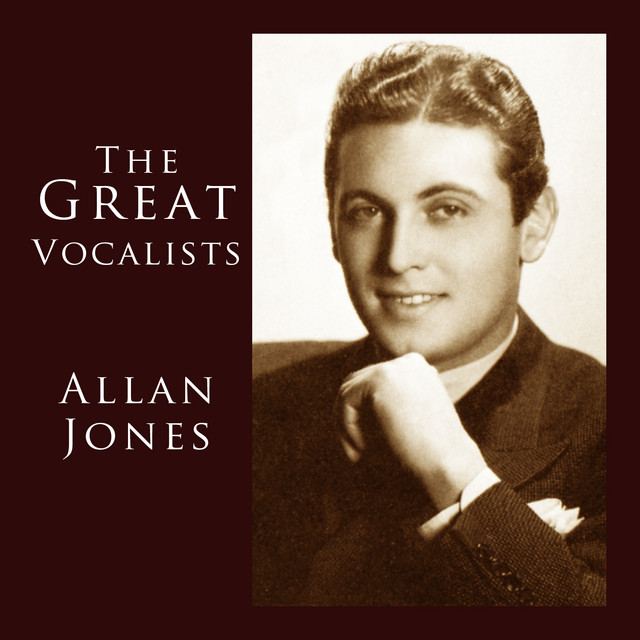
Allan Jones
Rudolf Friml
Constantine Callinicos
Irene Dunne
Jack Buchanan
Victor Young And His Orchestra
Henry Burr
Martha Mears


Todd Duncan
Bing Crosby
Lawrence Brooks
Anne Ziegler
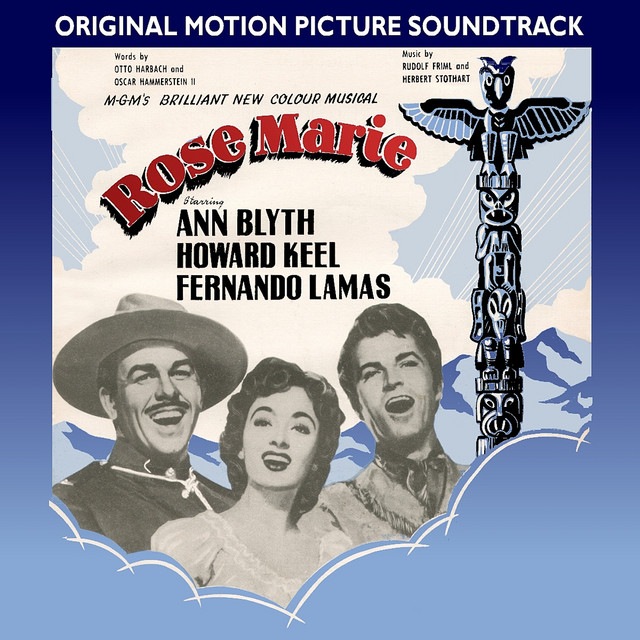
Ann Blyth
Ernest R. Ball
Peter Yorke Concert Orchestra
Eva Jessye Choir

Debroy Somers