Data may be outdated
Last updated: 8 months ago — Click refresh to get the latest statistics.
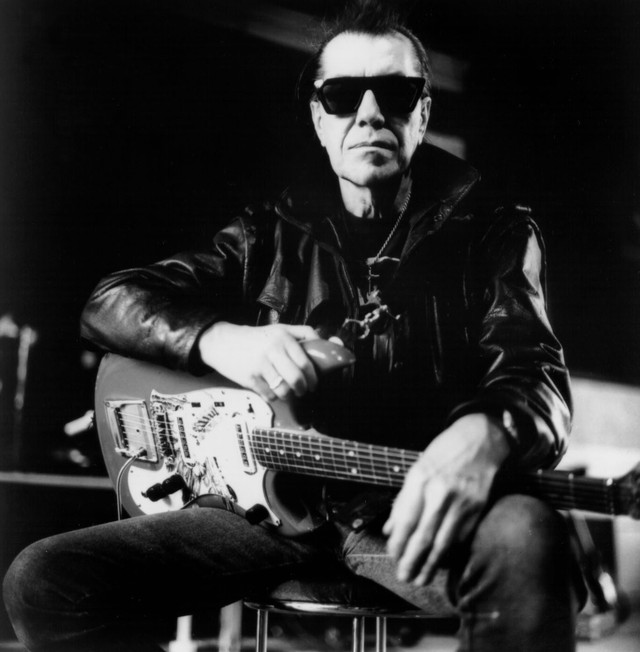
Originally from New Orleans, Jim Ford lost interest in his academic pursuits and, in 1966, drifted out to California. He was passing through L.A. on his way to the Haight-Ashbury district in San Francisco when he met two session musicians, Pat and Lolly Vegas. The Native American rockers -- who later formed the commercially successful <a href="spotify:artist:0w7HLMvZOHatWVbAKee1zF">Redbone</a> -- had worked on the Shindig television show at the time, and had already recorded their Pat and Lolly Vegas at the Haunted House album for <a href="spotify:search:label%3A%22Mercury%22">Mercury</a>. After hearing his songwriting talent firsthand, the <a href="spotify:artist:5MY5GHNXnmP9iIzLXVHAT9">Vegas</a> brothers brought Ford to the attention of <a href="spotify:search:label%3A%22Del-Fi+Records%22">Del-Fi Records</a> honcho Bob Keane, known around the L.A. music scene for his "open-door policy." Keane released a couple of Ford's singles on <a href="spotify:search:label%3A%22Del-Fi%22">Del-Fi</a>'s Mustang label, both of which sank without a trace. <a href="spotify:search:label%3A%22Del-Fi%22">Del-Fi</a>/Bronco recording artist <a href="spotify:artist:3zFfbTj9QY7pvmtjI53DB8">Viola Wills</a> also recorded one of his songs. Along with Pat and Lolly Vegas, Ford wrote the <a href="spotify:artist:3g4Os4LNZvOQUaokeSLCwG">P.J. Proby</a> hit "Niki Hoeky" (it peaked at number 23 on Billboard's pop charts in January 1967), which Ford's former girlfriend <a href="spotify:artist:4E9w0bms6HcEppFlWjeW2d">Bobbie Gentry</a> also sang on one of her later albums.
In 1969, Ford got the opportunity to record his debut album. Harlan County (released on the <a href="spotify:search:label%3A%22Sundown%22">Sundown</a> label, a small subsidiary of <a href="spotify:search:label%3A%22White+Whale%22">White Whale</a>) featured funky, midtempo country and R&B-flavored rockers with a driving Muscle Shoals-style rhythm section, with backing and arrangements by the <a href="spotify:artist:5MY5GHNXnmP9iIzLXVHAT9">Vegas</a> brothers and <a href="spotify:artist:3oiQ9TEv3AziiXYXR21NAV">Gene Page</a>. Most of Ford's original songs had a lyrical narrative recalling the hardship of growing up in the coal-mining country of Harlan County, Kentucky. Among the various highlights are his fuzz-drenched cover version of <a href="spotify:artist:5v8WPpMk60cqZbuZLdXjKY">Willie Dixon</a>'s "Spoonful," his take on <a href="spotify:artist:6dTCMsjfH2odCFlNb36SCG">Delaney & Bonnie</a>'s hip-shake boogie "Long Road Ahead," and a remake of the swampy classic "I'm Gonna Make Her Love Me ('Til the Cows Come Home)." In 1971, Ford's manager, Si Waronker (founder of <a href="spotify:search:label%3A%22Liberty+Records%22">Liberty Records</a>), flew his artist to London, where he was booked into Olympic Studios to record a follow-up album. This time he was backed by pub rockers <a href="spotify:artist:722MDCdw3Ee4SdESC4uy38">Brinsley Schwartz</a> (they later recorded "Niki Hoeky" and Ford's "Ju Ju Man"; <a href="spotify:artist:3BqaUtuQmqIHg7B5Bc7fP7">Nick Lowe</a> also recorded Ford's "36 Inches High" for his Jesus of Cool album). After three days of sessions, the band failed to keep up to the challenge of backing Ford, so Waronker brought in <a href="spotify:artist:3pFCERyEiP5xeN2EsPXhjI">Joe Cocker</a>'s <a href="spotify:artist:5Wf5WR7kvHRK36ZqIVMMLB">Grease Band</a>, but they too didn't work out. As the project never did quite meet up to everyone's expectations, it was eventually shelved. The tapes for these sessions have reportedly disappeared.
Ford returned to the U.S. and his career never really took off as expected. He wrote songs for <a href="spotify:artist:0vqkz1b2qBkoYrGMj2CUWq">Bobby Womack</a> in 1972 (including the wonderful "Harry Hippie"), and later worked with friend <a href="spotify:artist:66XuLc224VwkhDVuPMZL9c">Sly Stone</a> (he even moved into <a href="spotify:artist:66XuLc224VwkhDVuPMZL9c">Stone</a>'s Holmby Hills home for a while), but after the early '70s, Ford slipped out of sight. Harlan County was reissued on the British <a href="spotify:search:label%3A%22Edsel%22">Edsel</a> label in 1997 but it took a full decade for a true Jim Ford revival to materialize. In 2007, <a href="spotify:search:label%3A%22Bear+Family%22">Bear Family</a> reissued Harlan County and various unreleased songs and singles as the acclaimed The Sounds of Our Time compilation. It was enough of a success to spur rumors of Ford coming out of seclusion for a genuine comeback in 2008, but on November 18, 2007 he was found dead in his trailer home in Fort Bragg, California. <a href="spotify:search:label%3A%22Bear+Family%22">Bear Family</a>'s second collection, Point of No Return, was in production at the time of his death, and this collection of rarities, singles, demos, and unreleased cuts appeared in the spring of 2008. The following year, <a href="spotify:search:label%3A%22Bear+Family%22">Bear Family</a> repurposed these two compilations as Big Mouth USA: The Unissued Paramount Album and The Unissued Capitol Album. In 2011, <a href="spotify:search:label%3A%22Bear+Family%22">Bear Family</a> released Demolition Expert, a collection of unheard acoustic demos. Five years later, <a href="spotify:search:label%3A%22Bear+Family%22">Bear Family</a> once again dipped into Ford's unheard numbers for Allergic to Love, a collection of songs he recorded in the '80s. ~ Bryan Thomas, Rovi
In 1969, Ford got the opportunity to record his debut album. Harlan County (released on the <a href="spotify:search:label%3A%22Sundown%22">Sundown</a> label, a small subsidiary of <a href="spotify:search:label%3A%22White+Whale%22">White Whale</a>) featured funky, midtempo country and R&B-flavored rockers with a driving Muscle Shoals-style rhythm section, with backing and arrangements by the <a href="spotify:artist:5MY5GHNXnmP9iIzLXVHAT9">Vegas</a> brothers and <a href="spotify:artist:3oiQ9TEv3AziiXYXR21NAV">Gene Page</a>. Most of Ford's original songs had a lyrical narrative recalling the hardship of growing up in the coal-mining country of Harlan County, Kentucky. Among the various highlights are his fuzz-drenched cover version of <a href="spotify:artist:5v8WPpMk60cqZbuZLdXjKY">Willie Dixon</a>'s "Spoonful," his take on <a href="spotify:artist:6dTCMsjfH2odCFlNb36SCG">Delaney & Bonnie</a>'s hip-shake boogie "Long Road Ahead," and a remake of the swampy classic "I'm Gonna Make Her Love Me ('Til the Cows Come Home)." In 1971, Ford's manager, Si Waronker (founder of <a href="spotify:search:label%3A%22Liberty+Records%22">Liberty Records</a>), flew his artist to London, where he was booked into Olympic Studios to record a follow-up album. This time he was backed by pub rockers <a href="spotify:artist:722MDCdw3Ee4SdESC4uy38">Brinsley Schwartz</a> (they later recorded "Niki Hoeky" and Ford's "Ju Ju Man"; <a href="spotify:artist:3BqaUtuQmqIHg7B5Bc7fP7">Nick Lowe</a> also recorded Ford's "36 Inches High" for his Jesus of Cool album). After three days of sessions, the band failed to keep up to the challenge of backing Ford, so Waronker brought in <a href="spotify:artist:3pFCERyEiP5xeN2EsPXhjI">Joe Cocker</a>'s <a href="spotify:artist:5Wf5WR7kvHRK36ZqIVMMLB">Grease Band</a>, but they too didn't work out. As the project never did quite meet up to everyone's expectations, it was eventually shelved. The tapes for these sessions have reportedly disappeared.
Ford returned to the U.S. and his career never really took off as expected. He wrote songs for <a href="spotify:artist:0vqkz1b2qBkoYrGMj2CUWq">Bobby Womack</a> in 1972 (including the wonderful "Harry Hippie"), and later worked with friend <a href="spotify:artist:66XuLc224VwkhDVuPMZL9c">Sly Stone</a> (he even moved into <a href="spotify:artist:66XuLc224VwkhDVuPMZL9c">Stone</a>'s Holmby Hills home for a while), but after the early '70s, Ford slipped out of sight. Harlan County was reissued on the British <a href="spotify:search:label%3A%22Edsel%22">Edsel</a> label in 1997 but it took a full decade for a true Jim Ford revival to materialize. In 2007, <a href="spotify:search:label%3A%22Bear+Family%22">Bear Family</a> reissued Harlan County and various unreleased songs and singles as the acclaimed The Sounds of Our Time compilation. It was enough of a success to spur rumors of Ford coming out of seclusion for a genuine comeback in 2008, but on November 18, 2007 he was found dead in his trailer home in Fort Bragg, California. <a href="spotify:search:label%3A%22Bear+Family%22">Bear Family</a>'s second collection, Point of No Return, was in production at the time of his death, and this collection of rarities, singles, demos, and unreleased cuts appeared in the spring of 2008. The following year, <a href="spotify:search:label%3A%22Bear+Family%22">Bear Family</a> repurposed these two compilations as Big Mouth USA: The Unissued Paramount Album and The Unissued Capitol Album. In 2011, <a href="spotify:search:label%3A%22Bear+Family%22">Bear Family</a> released Demolition Expert, a collection of unheard acoustic demos. Five years later, <a href="spotify:search:label%3A%22Bear+Family%22">Bear Family</a> once again dipped into Ford's unheard numbers for Allergic to Love, a collection of songs he recorded in the '80s. ~ Bryan Thomas, Rovi
Monthly Listeners
77,920
Monthly Listeners History
Track the evolution of monthly listeners over the last 28 days.
Followers
14,821
Followers History
Track the evolution of followers over the last 28 days.
Top Cities
2,177 listeners
1,851 listeners

1,548 listeners
1,438 listeners
1,321 listeners
Related Artists






Robert Lester Folsom