Data may be outdated
Last updated: 8 months ago — Click refresh to get the latest statistics.
Though he is best known as the bassist and occasional vocalist for both <a href="spotify:artist:1YqGsKpdixxSVgpfaL2AEQ">the Small Faces</a> and <a href="spotify:artist:3v4feUQnU3VEUqFrjmtekL">the Faces</a>, Ronnie Lane's musical contributions as a solo artist ought not be overlooked. His songs detail small moments in life, the stories told in a tender voice and backed by a wide variety of acoustic instruments. With his band <a href="spotify:artist:0ViVShGd52uogfHPUez1cB">Slim Chance</a>, Lane released three albums (1974's Anymore for Anymore, 1975's Ronnie Lane's Slim Chance, and 1976's One for the Road) that showed off his expansive songwriting skills, abilities as a musical ringleader, and gentle soul. After these records didn't sell and an ambitious tour bankrupted him, Lane turned to his friends for help and his collaboration with <a href="spotify:artist:24Wa5wIZIo1sPkzVGP0B5p">Pete Townshend</a> on 1977's Rough Mix was a career highlight. He made a record with <a href="spotify:artist:6PAt558ZEZl0DmdXlnjMgD">Eric Clapton</a>, 1979's See Me, that proved to be his last studio record as the ravages of multiple sclerosis began to take their toll. Despite the difficulties he faced, Lane never quit playing music, and the last decade of his life found him in America, seeking a cure and playing as many shows as he could.
Lane (along with guitarist <a href="spotify:artist:7pvL2bMcPtEGYzwTcULQKj">Steve Marriott</a>) co-founded the British mod group <a href="spotify:artist:1YqGsKpdixxSVgpfaL2AEQ">the Small Faces</a> in the mid-'60s, helping to guide them to the top of British charts with his clever songwriting. After <a href="spotify:artist:7pvL2bMcPtEGYzwTcULQKj">Marriott</a> left, Lane jettisoned the group's mod reputation and, adding former <a href="spotify:artist:0AD4odMWVQ2wUSlgxOB5Rl">Jeff Beck</a> cohorts <a href="spotify:artist:5HFtQOrPHOFptM1WF9xPuK">Ron Wood</a> and <a href="spotify:artist:2y8Jo9CKhJvtfeKOsYzRdT">Rod Stewart</a>, Lane re-formed the group as <a href="spotify:artist:3v4feUQnU3VEUqFrjmtekL">the Faces</a>, a loud, boozy rock band who achieved widespread success in the States (something <a href="spotify:artist:1YqGsKpdixxSVgpfaL2AEQ">the Small Faces</a> could never do). Although Lane was the unacknowledged leader among the group members, audiences were drawn to <a href="spotify:artist:2y8Jo9CKhJvtfeKOsYzRdT">Rod Stewart</a>, and when <a href="spotify:artist:2y8Jo9CKhJvtfeKOsYzRdT">Stewart</a>'s burgeoning solo career began affecting the quality of <a href="spotify:artist:3v4feUQnU3VEUqFrjmtekL">the Faces</a>' albums, Lane jumped ship to form his own band in 1973.
Billing themselves as <a href="spotify:artist:0ViVShGd52uogfHPUez1cB">Ronnie Lane's Slim Chance</a>, the bassist organized an ambitious tour dubbed the "Passing Show" that included a traveling circus complete with jugglers, clowns, and animals in 1974. Although the tour was artistically successful, it was a financial failure from which Lane would never recover. For income, he continued leasing his mobile recording unit out to bands like <a href="spotify:artist:36QJpDe2go2KgaRleHCDTp">Led Zeppelin</a>, who used it to record their double-LP Physical Graffiti.
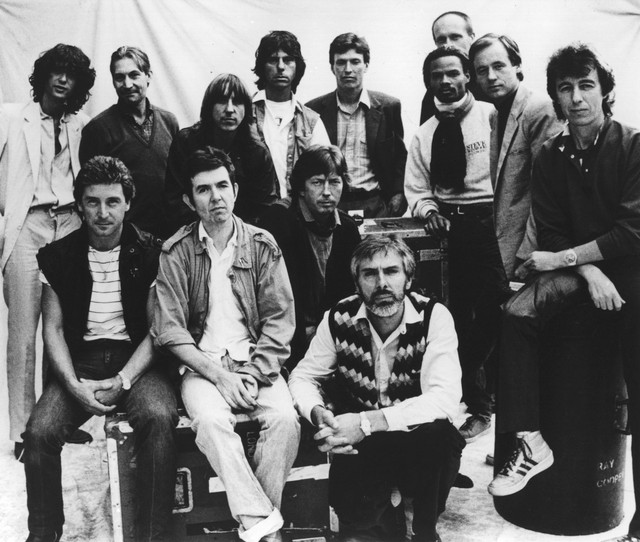
With <a href="spotify:artist:0ViVShGd52uogfHPUez1cB">Slim Chance</a>, Lane released several albums with a folk-rock flavor in the mid-'70s that spotlighted his rollicking and sweet songs and deceptively fragile voice. Never one to close off old avenues, Lane teamed up with <a href="spotify:artist:5HFtQOrPHOFptM1WF9xPuK">Ron Wood</a>, releasing the movie soundtrack album Mahoney's Last Stand in 1976. The following year, Lane again collaborated, this time with longtime friend <a href="spotify:artist:24Wa5wIZIo1sPkzVGP0B5p">Pete Townshend</a> on the album Rough Mix. Contributing songs such as the emotionally powerful "Annie" and "April Fool," Lane once again exhibited the depth of feeling in his songwriting that he had displayed so wonderfully with <a href="spotify:artist:1YqGsKpdixxSVgpfaL2AEQ">the Small Faces</a> and <a href="spotify:artist:3v4feUQnU3VEUqFrjmtekL">the Faces</a>. Around this time, Lane was diagnosed with the debilitating disease multiple sclerosis, which severely curtailed his musical output. He released the solo album See Me in 1980, and in 1983, friends such as <a href="spotify:artist:6PAt558ZEZl0DmdXlnjMgD">Eric Clapton</a>, <a href="spotify:artist:24Wa5wIZIo1sPkzVGP0B5p">Pete Townshend</a>, and <a href="spotify:artist:55bGuHb50r5c0PeqqMeNBV">Jimmy Page</a> rallied around him, organizing an ARMS foundation benefit concert and tour, and donating the proceeds to the treatment of multiple sclerosis.
In the '80s, Lane relocated to Austin, Texas, recording songs and occasionally fronting a local group called the Tremors, playing gigs around the city when he could. In 1990, the bassist went to Japan for his last major tour, and he later moved to Colorado, where the climate was better suited to the treatment of multiple sclerosis. Lane died there in June of 1997, but his music lived on. A series of reissues filled the years after his passing, culminating in a comprehensive box set, Just for a Moment: Music 1973-1997, that was released in early 2019. ~ Steve Kurutz, Rovi
Lane (along with guitarist <a href="spotify:artist:7pvL2bMcPtEGYzwTcULQKj">Steve Marriott</a>) co-founded the British mod group <a href="spotify:artist:1YqGsKpdixxSVgpfaL2AEQ">the Small Faces</a> in the mid-'60s, helping to guide them to the top of British charts with his clever songwriting. After <a href="spotify:artist:7pvL2bMcPtEGYzwTcULQKj">Marriott</a> left, Lane jettisoned the group's mod reputation and, adding former <a href="spotify:artist:0AD4odMWVQ2wUSlgxOB5Rl">Jeff Beck</a> cohorts <a href="spotify:artist:5HFtQOrPHOFptM1WF9xPuK">Ron Wood</a> and <a href="spotify:artist:2y8Jo9CKhJvtfeKOsYzRdT">Rod Stewart</a>, Lane re-formed the group as <a href="spotify:artist:3v4feUQnU3VEUqFrjmtekL">the Faces</a>, a loud, boozy rock band who achieved widespread success in the States (something <a href="spotify:artist:1YqGsKpdixxSVgpfaL2AEQ">the Small Faces</a> could never do). Although Lane was the unacknowledged leader among the group members, audiences were drawn to <a href="spotify:artist:2y8Jo9CKhJvtfeKOsYzRdT">Rod Stewart</a>, and when <a href="spotify:artist:2y8Jo9CKhJvtfeKOsYzRdT">Stewart</a>'s burgeoning solo career began affecting the quality of <a href="spotify:artist:3v4feUQnU3VEUqFrjmtekL">the Faces</a>' albums, Lane jumped ship to form his own band in 1973.
Billing themselves as <a href="spotify:artist:0ViVShGd52uogfHPUez1cB">Ronnie Lane's Slim Chance</a>, the bassist organized an ambitious tour dubbed the "Passing Show" that included a traveling circus complete with jugglers, clowns, and animals in 1974. Although the tour was artistically successful, it was a financial failure from which Lane would never recover. For income, he continued leasing his mobile recording unit out to bands like <a href="spotify:artist:36QJpDe2go2KgaRleHCDTp">Led Zeppelin</a>, who used it to record their double-LP Physical Graffiti.
With <a href="spotify:artist:0ViVShGd52uogfHPUez1cB">Slim Chance</a>, Lane released several albums with a folk-rock flavor in the mid-'70s that spotlighted his rollicking and sweet songs and deceptively fragile voice. Never one to close off old avenues, Lane teamed up with <a href="spotify:artist:5HFtQOrPHOFptM1WF9xPuK">Ron Wood</a>, releasing the movie soundtrack album Mahoney's Last Stand in 1976. The following year, Lane again collaborated, this time with longtime friend <a href="spotify:artist:24Wa5wIZIo1sPkzVGP0B5p">Pete Townshend</a> on the album Rough Mix. Contributing songs such as the emotionally powerful "Annie" and "April Fool," Lane once again exhibited the depth of feeling in his songwriting that he had displayed so wonderfully with <a href="spotify:artist:1YqGsKpdixxSVgpfaL2AEQ">the Small Faces</a> and <a href="spotify:artist:3v4feUQnU3VEUqFrjmtekL">the Faces</a>. Around this time, Lane was diagnosed with the debilitating disease multiple sclerosis, which severely curtailed his musical output. He released the solo album See Me in 1980, and in 1983, friends such as <a href="spotify:artist:6PAt558ZEZl0DmdXlnjMgD">Eric Clapton</a>, <a href="spotify:artist:24Wa5wIZIo1sPkzVGP0B5p">Pete Townshend</a>, and <a href="spotify:artist:55bGuHb50r5c0PeqqMeNBV">Jimmy Page</a> rallied around him, organizing an ARMS foundation benefit concert and tour, and donating the proceeds to the treatment of multiple sclerosis.
In the '80s, Lane relocated to Austin, Texas, recording songs and occasionally fronting a local group called the Tremors, playing gigs around the city when he could. In 1990, the bassist went to Japan for his last major tour, and he later moved to Colorado, where the climate was better suited to the treatment of multiple sclerosis. Lane died there in June of 1997, but his music lived on. A series of reissues filled the years after his passing, culminating in a comprehensive box set, Just for a Moment: Music 1973-1997, that was released in early 2019. ~ Steve Kurutz, Rovi
Monthly Listeners
67,078
Monthly Listeners History
Track the evolution of monthly listeners over the last 28 days.
Followers
17,644
Followers History
Track the evolution of followers over the last 28 days.
Top Cities
2,473 listeners

1,239 listeners
1,095 listeners
1,049 listeners
1,006 listeners

Related Artists



Ian Matthews
Jesse Ed Davis