Data may be outdated
Last updated: 8 months ago — Click refresh to get the latest statistics.
His nickname was "Bebop." According to legend, Joe Carroll was the man to call during the height of popularity for that style of jazz, especially if one was trying to locate an elusive genius such as <a href="spotify:artist:4Ww5mwS7BWYjoZTUIrMHfC">Charlie Parker</a>. To some listeners, however, Carroll is a pariah, not a messiah. He may be one of the earliest singers credited with recording jazz vocalese, a kind of sophisticated term for scat singing, but few fans of this type of performance pick him as a favorite. While the man did cut several albums under his own name beginning in the '50s, the recordings he is mostly known for were done with the extended band of trumpeter <a href="spotify:artist:5RzjqfPS0Bu4bUMkyNNDpn">Dizzy Gillespie</a> between 1949 and 1953. Novice bebop fans have been known to cower in disgust at the first introduction to one of these sides, which fall pretty far in the musical toss from the sort of serious harmonic adventure that bebop is all about.
While <a href="spotify:artist:5RzjqfPS0Bu4bUMkyNNDpn">Gillespie</a> is often considered a deity equal to <a href="spotify:artist:4Ww5mwS7BWYjoZTUIrMHfC">Parker</a> in the bebop creation myth, the type of vocal comedy and novelty song material which featured Carroll was actually more of a throwback to the repertoire of one of <a href="spotify:artist:5RzjqfPS0Bu4bUMkyNNDpn">Gillespie</a>'s former bosses, <a href="spotify:artist:03cwCzIWQ8BRmXjGPDAL04">Cab Calloway</a> -- although simply not as funny. <a href="spotify:artist:03cwCzIWQ8BRmXjGPDAL04">Calloway</a>, by the way, absolutely hated bebop, referring to it as "Chinese music." Carroll wrote some of his own material, asking essential musical questions such as "Got a Penny, Benny?." Jazz vocalists from subsequent generations, such as <a href="spotify:artist:3NSAbrtudtKqp7j0C4bqxQ">Mark Murphy</a> and <a href="spotify:artist:2Kn5swSfLmUU2WEJVlQvJY">Jon Hendricks</a>, have cited Carroll as an important influence; it was <a href="spotify:artist:2Kn5swSfLmUU2WEJVlQvJY">Hendricks</a> who reported calling Carroll upon arriving at the Greyhound bus station in New York City, simply to ask "Where is <a href="spotify:artist:4Ww5mwS7BWYjoZTUIrMHfC">Bird</a>?"
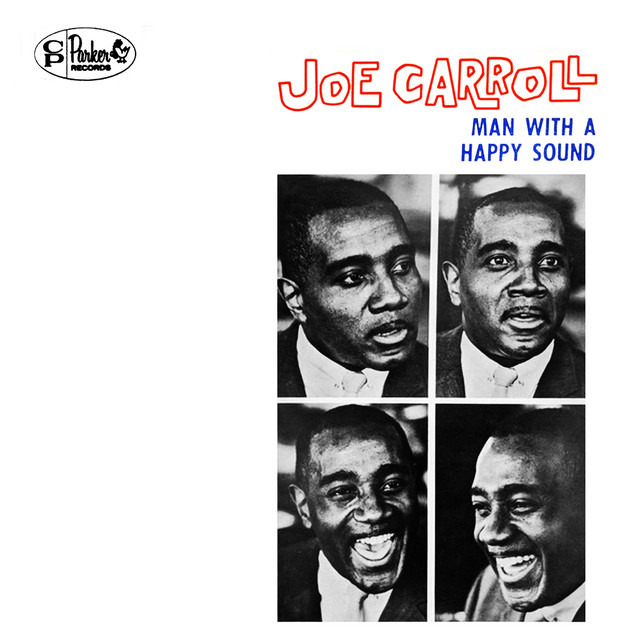
Undeniably, Carroll represents an important transition in the role of vocalists in jazz, coming from an era when they were stuck on the sidelines, stepping forward to provide variety in the form of cornball humor, overt sentimentality, or simply sex appeal. Carroll himself was influenced by one of the great novelty jazz singers, <a href="spotify:artist:4phBsW2lperhTbu4IwWh2A">Leo Watson</a>. In contrast, singers such as <a href="spotify:artist:3NSAbrtudtKqp7j0C4bqxQ">Murphy</a> or <a href="spotify:artist:2Kn5swSfLmUU2WEJVlQvJY">Hendricks</a> became bandleaders and were considered fully capable of holding center stage for the entire length of a concert. While even a Carroll booster might not want to wish for such an event, the supply of good vibes present in just five minutes of the man's singing is a pretty good remedy for the world's troubles, if only temporarily. The title of Carroll's 1962 album on the <a href="spotify:artist:4Ww5mwS7BWYjoZTUIrMHfC">Charlie Parker</a> label, The Man with a Happy Sound, sums it up best. ~ Eugene Chadbourne, Rovi
While <a href="spotify:artist:5RzjqfPS0Bu4bUMkyNNDpn">Gillespie</a> is often considered a deity equal to <a href="spotify:artist:4Ww5mwS7BWYjoZTUIrMHfC">Parker</a> in the bebop creation myth, the type of vocal comedy and novelty song material which featured Carroll was actually more of a throwback to the repertoire of one of <a href="spotify:artist:5RzjqfPS0Bu4bUMkyNNDpn">Gillespie</a>'s former bosses, <a href="spotify:artist:03cwCzIWQ8BRmXjGPDAL04">Cab Calloway</a> -- although simply not as funny. <a href="spotify:artist:03cwCzIWQ8BRmXjGPDAL04">Calloway</a>, by the way, absolutely hated bebop, referring to it as "Chinese music." Carroll wrote some of his own material, asking essential musical questions such as "Got a Penny, Benny?." Jazz vocalists from subsequent generations, such as <a href="spotify:artist:3NSAbrtudtKqp7j0C4bqxQ">Mark Murphy</a> and <a href="spotify:artist:2Kn5swSfLmUU2WEJVlQvJY">Jon Hendricks</a>, have cited Carroll as an important influence; it was <a href="spotify:artist:2Kn5swSfLmUU2WEJVlQvJY">Hendricks</a> who reported calling Carroll upon arriving at the Greyhound bus station in New York City, simply to ask "Where is <a href="spotify:artist:4Ww5mwS7BWYjoZTUIrMHfC">Bird</a>?"
Undeniably, Carroll represents an important transition in the role of vocalists in jazz, coming from an era when they were stuck on the sidelines, stepping forward to provide variety in the form of cornball humor, overt sentimentality, or simply sex appeal. Carroll himself was influenced by one of the great novelty jazz singers, <a href="spotify:artist:4phBsW2lperhTbu4IwWh2A">Leo Watson</a>. In contrast, singers such as <a href="spotify:artist:3NSAbrtudtKqp7j0C4bqxQ">Murphy</a> or <a href="spotify:artist:2Kn5swSfLmUU2WEJVlQvJY">Hendricks</a> became bandleaders and were considered fully capable of holding center stage for the entire length of a concert. While even a Carroll booster might not want to wish for such an event, the supply of good vibes present in just five minutes of the man's singing is a pretty good remedy for the world's troubles, if only temporarily. The title of Carroll's 1962 album on the <a href="spotify:artist:4Ww5mwS7BWYjoZTUIrMHfC">Charlie Parker</a> label, The Man with a Happy Sound, sums it up best. ~ Eugene Chadbourne, Rovi
Monthly Listeners
4,204
Monthly Listeners History
Track the evolution of monthly listeners over the last 28 days.
Followers
450
Followers History
Track the evolution of followers over the last 28 days.
Top Cities
127 listeners

92 listeners

80 listeners
69 listeners

63 listeners
Related Artists
Bandstand Ensemble
Bandstand
Alix Korey
Mary Callanan

Corey Cott
Troy Britton Johnson

Adrienne Walker
Donny Nova Band
James T. Lane
The Kiss Me Kate 2019 Broadway Company
The "Crazy for You" Ensemble
Five Guys Named Moe Ensemble
Jill Paice

Leanne Cope
Daniel Crossley
Georgia Engel