Data may be outdated
Last updated: 1 month ago — Click refresh to get the latest statistics.
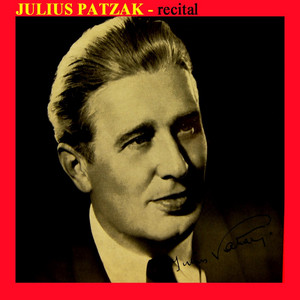
Patzak was born into a family whose heads of household had been schoolteachers for three generations. After schooling in Vienna, he served his military obligation in Serbia. Upon his return to Vienna, he entered a career as a civil servant, working for the city's Youth Council. By this means, he was able to finance his pursuit of music at the University of Vienna, undertaken to realize his dream of becoming a conductor. His studies brought him in contact with composer <a href="spotify:artist:0Fx0FF13vvAQ3gmBE5LmhH">Franz Schmidt</a>, musicologist Guido Adler, and <a href="spotify:artist:3sUgRStdSSfAYxfjpRC87B">Adler</a>'s accomplished student, composer, and musicologist <a href="spotify:artist:4hMH9qE0Y8H1wbKh5RrnON">Egon Wellesz</a>.
During an amateur concert presented by the Vienna Schubert Society, Patzak's singing attracted the attention of several individuals with contacts in the operatic world. The result was a contract with Bohemia's Reichenberg Theater and in April, 1926, he made his stage debut in the demanding role of Radames. The following season found him in Brno, after which he was engaged by Munich and spent the next 17 years at the Bayerische Staatsoper performing leading roles. Following the death of his first wife shortly after his move to Munich, Patzak married Maria Walter, granddaughter of the famous Bohemian <a href="spotify:artist:1C1x4MVkql8AiABuTw6DgE">Wagner</a> tenor, Gustav Walter.
Once WWII ended, Patzak returned to Vienna where he joined the Staatsoper, remaining there until his retirement in 1960. He became an important artist at the Salzburg Festival, taking part in several world premieres, <a href="spotify:artist:3QinUOuK9Q0aHfTKC00hG8">Gottfried von Einem</a>'s Danton's Tod and <a href="spotify:artist:0RFA6ka89RHDXV9VoxaURb">Frank Martin</a>'s Le Vin Herbé in particular.
Patzak confined himself to primarily to Germany and Austria, although he sang in London in 1938. He returned with the Vienna Staatsoper company in 1947 to perform Herod and Florestan and was engaged directly by the Royal Opera House management for 1948, repeating Florestan and adding his fervid Hoffmann to London's production of Offenbach's opera. Patzak's pre-war Tamino, alternating with <a href="spotify:artist:3i3fzCE5RlDGN5HSshHe4B">Richard Tauber</a>'s, was regarded as "manly," if slightly "reedy." In the post-war era, Patzak's London Herod was found "wonderfully characterized" and his Florestan was hailed as a great realization.
Only one engagement brought Patzak to America. He performed at the Cincinnati May Festival in 1954 when Joseph Krips was its director.
With his voice grown larger, Patzak was, in his Vienna years, able to do greater justice to roles wanting both expressive authority and sheer vocal power. Patzak became perhaps the greatest of all interpreters of <a href="spotify:artist:5fKj8IWs9IV1F2xerI6SGD">Hans Pfitzner</a>'s Palestrina. He was a superb Lohengrin, despite the absence of a truly sensuous sound. He was revered as the Evangelist in both of <a href="spotify:artist:5aIqB5nVVvmFsvSdExz408">Bach</a>'s Passions and was the most celebrated of all singers who undertook the tenor part in <a href="spotify:artist:0Fx0FF13vvAQ3gmBE5LmhH">Franz Schmidt</a>'s oratorio, Das Buch mit sieben Sielgen.
Patzak became a respected teacher at both Vienna's Music Academy and the Salzburg Mozarteum.
Monthly Listeners
1,366
Monthly Listeners History
Track the evolution of monthly listeners over the last 28 days.
Followers
375
Followers History
Track the evolution of followers over the last 28 days.
Total Streams
5.0 million
Total Streams History
Track the evolution of total streams over the last 28 days. This data is calculated from all tracks listed in the artist's discography.
Top Cities



Related Artists

Anhaltische Philharmonie Dessau
Marjan Rus

Julia Bauer
Marcel Cordes
Maria Schober
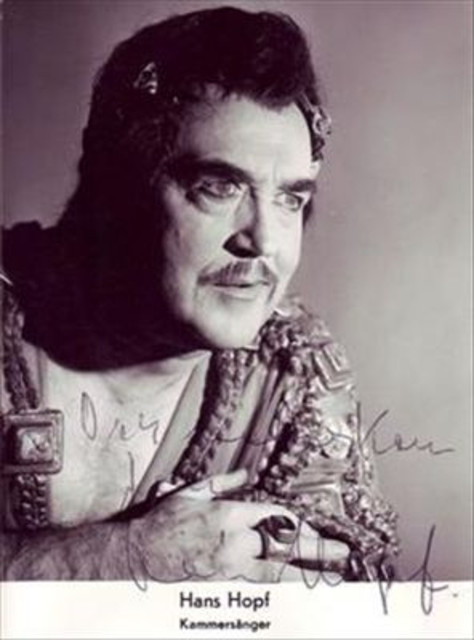
Hans Hopf

Kerstin Thorborg

Anny Schlemm
Arthur Rother
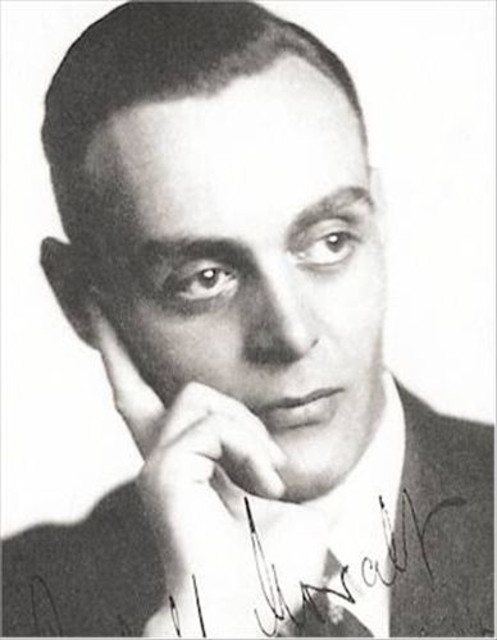
Rudolf Moralt
Robert Heger
Engelbert Humperdinck

Camilla Nylund
Carol Smith
Eric Owens

Zdeněk Chalabala

Beno Blachut
Lorenz Fehenberger

Annelies Kupper

Peter Klein
Olivera Miljakovic

Gerd Feldhoff
Charles Reid

Rosette Anday
Veriano Luchetti
Winfried Zillig
Milan Malý

José Antonio López