Data may be outdated
Last updated: 9 months ago — Click refresh to get the latest statistics.
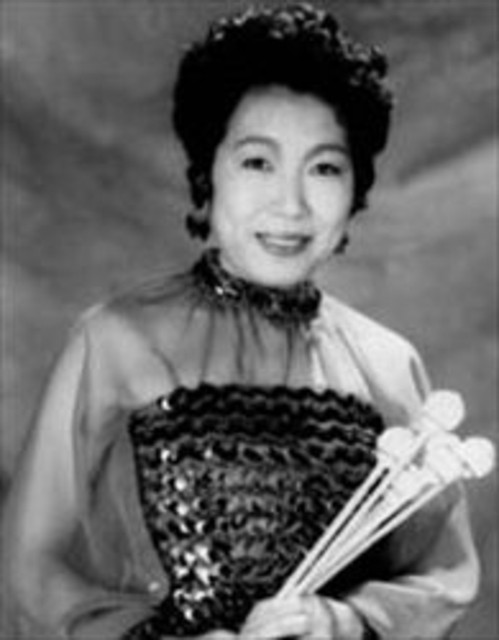
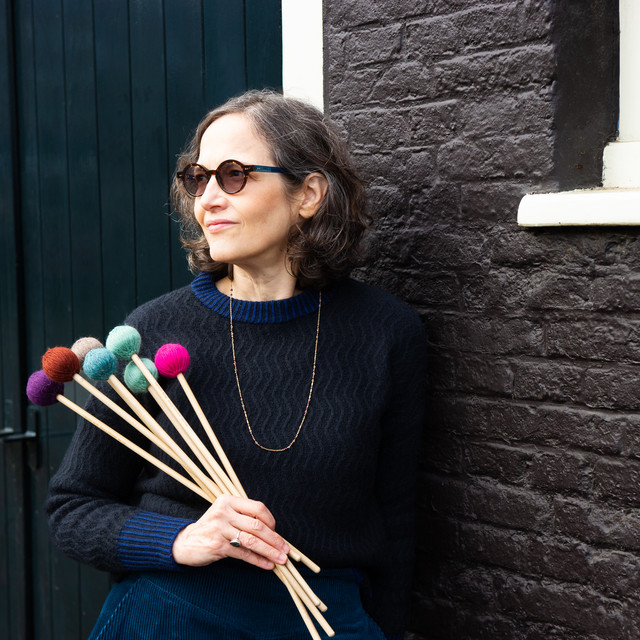
Long considered one of the finest marimbaists in the world, Keiko Abe is also a composer of note, having contributed a number of pieces to her instrument's standard repertoire. Abe was introduced to the marimba in 1950 by an American missionary group traveling in Japan. Abe attended a performance by the group, in which they played hymns arranged for marimbas; the twelve-year-old was inspired by the tonal warmth of the instrument, and undertook to play it herself. Abe attended Gakugei University in Tokyo from 1960 to 1961. She began playing pop songs in a group called the Xebec Trio; wanting to pursue her music studies, she joined the Tokyo Marimba Group in 1962. At her urging, the group began performing works by contemporary composers. The resulting music contributed to an expanding of the instrument's sparse repertoire. Abe became increasingly active, appearing regularly on television and radio. She became a member of the NHK Symphony as a mallet specialist, but the main thrust of her work was as a soloist, composer, and advocate for her instrument; in one five-year span, she recorded thirteen albums. Abe contributed greatly to an expansion of the marimba's expressive possibilities; in her hands, it became an instrument capable of great subtlety. Indeed, she endeavored to establish the marimba as a solo instrument of note along the lines of the piano. Her compositions have established a niche for an instrument that had once been considered little more than a novelty. Abe's concept of the instrument also directly determined how it would come to be configured and manufactured. The Japanese instrument maker Yamaha adopted her ideas when it began designing and building marimbas. In 1971, the company finished a four-octave marimba that Abe used in performance, and throughout the 1970s the company worked with her to refine her vision of what the instrument should be. Many of her ideas were incorporated into the newer instruments, including a wider range, adjustable resonators, and an improvement in projection. In 1984, Abe's ideas resulted in the building of a five-octave marimba, the standard design today.
Monthly Listeners
2,008
Monthly Listeners History
Track the evolution of monthly listeners over the last 28 days.
Followers
2,883
Followers History
Track the evolution of followers over the last 28 days.
Top Cities
27 listeners

24 listeners
21 listeners

20 listeners

20 listeners
Related Artists






Jasmin Kolberg
Noriko Tsukagoshi
Heng Liu

Michael Burritt

Marc Mellits

Seattle Marimba Quartet

Escape Ten

Beverley Johnston
Ney Rosauro


Manuel Leuenberger

Daniel Berg

Marco Schirripa

Adam Tan
Novosibirsk Philharmonic Chamber Orchestra
Kasia Kadłubowska

Alex Jacobowitz

Jack Van Geem

Jacob Druckman