Genre
japanese classical
Top Japanese classical Artists
Showing 25 of 862 artists




14
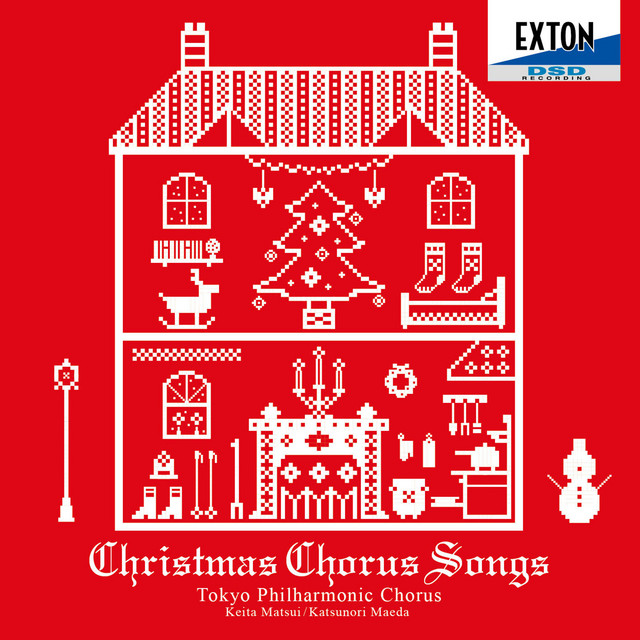
東京混声合唱団
Japan
2,472
271,987 listeners





About Japanese classical
Japanese classical is an umbrella term that encompasses both the deep, ritual sound world of traditional Japanese music and the modern, concert-hall repertoire created by Japanese composers who fuse Japanese timbres with Western orchestral technique. For enthusiasts, it reveals a spectrum from ancient court pieces to bold, contemporary works that imagine new possibilities for sound, space, and silence.
The traditional strand begins with gagaku, the ancient court music of Japan that likely took shape in the 7th–8th centuries under Chinese and Korean influences. Gagaku is characterized by refined, expansive textures and a distinctive palette of instruments, including the hichiriki (a double-reed oboe), the ryūteki (a transverse flute), and the sho (a mouth organ), along with percussion such as kakko and shōko. It is often performed in ceremonial settings and conveys an aesthetic of spaciousness, balance, and subtle coloration rather than dramatic virtuosity. Related classical forms, such as noh theater and the courtly ki-uta traditions, share a similar sensibility: a concentration on timbre, mood, and the suggestion of narrative rather than explicit display.
The modern birth of Japanese classical music—concert music written for symphony orchestras, piano, and chamber ensembles—takes hold in the Meiji era and the early 20th century, when Japan began absorbing Western musical education and performance practices. Pioneering composers such as Kosaku Yamada and others helped establish a distinctly Japanese voice within the Western orchestral idiom, blending local scales, aesthetics, and sensibilities with formal models learned abroad. This period set the stage for a generation of composers who would carry Japanese timbral ideas—quietly shattering conventional Western soundscapes—into the heart of modern concert music.
If you want iconic touchpoints, Toru Takemitsu is the central figure many listeners cite as the ambassador of Japanese classical music to the world. His works often weave natural imagery, Zen-influenced contemplation, and lush, sometimes unorthodox orchestration. A prime example is November Steps (1967), a groundbreaking collaboration for biwa and shakuhachi with full orchestra, which places traditional Japanese timbres on a Western scale and sonic plane with astonishing subtlety. Takemitsu’s sensibility—his openness to Debussy, Messiaen, and Webern—made Japanese sounds legible to international audiences without surrendering their identity.
Among other notable ambassadors are conductor Seiji Ozawa, who helped bring Japanese contemporary music to major Western stages and festivals; film composer Fumio Hayasaka, who bridged Japanese melodic and harmonic language with Hollywood and European cinema; and, in a broader sense, musicians like Ryuichi Sakamoto, whose cross-cultural projects and contemporary classical collaborations expanded the reach of Japanese music beyond traditional borders.
Geographically, Japanese classical enjoys its most passionate base in Japan, where orchestral and chamber works are regularly performed in major concert halls. It has also found devoted audiences in the United States, Europe, and parts of Asia, where festivals, premieres, and collaborations continually renew interest in the country’s musical vocabulary. For listeners, the genre offers a lifelong inquiry: the quiet drama of gagaku timbres alongside the emotional breadth and experimental edge of Takemitsu and his successors.
The traditional strand begins with gagaku, the ancient court music of Japan that likely took shape in the 7th–8th centuries under Chinese and Korean influences. Gagaku is characterized by refined, expansive textures and a distinctive palette of instruments, including the hichiriki (a double-reed oboe), the ryūteki (a transverse flute), and the sho (a mouth organ), along with percussion such as kakko and shōko. It is often performed in ceremonial settings and conveys an aesthetic of spaciousness, balance, and subtle coloration rather than dramatic virtuosity. Related classical forms, such as noh theater and the courtly ki-uta traditions, share a similar sensibility: a concentration on timbre, mood, and the suggestion of narrative rather than explicit display.
The modern birth of Japanese classical music—concert music written for symphony orchestras, piano, and chamber ensembles—takes hold in the Meiji era and the early 20th century, when Japan began absorbing Western musical education and performance practices. Pioneering composers such as Kosaku Yamada and others helped establish a distinctly Japanese voice within the Western orchestral idiom, blending local scales, aesthetics, and sensibilities with formal models learned abroad. This period set the stage for a generation of composers who would carry Japanese timbral ideas—quietly shattering conventional Western soundscapes—into the heart of modern concert music.
If you want iconic touchpoints, Toru Takemitsu is the central figure many listeners cite as the ambassador of Japanese classical music to the world. His works often weave natural imagery, Zen-influenced contemplation, and lush, sometimes unorthodox orchestration. A prime example is November Steps (1967), a groundbreaking collaboration for biwa and shakuhachi with full orchestra, which places traditional Japanese timbres on a Western scale and sonic plane with astonishing subtlety. Takemitsu’s sensibility—his openness to Debussy, Messiaen, and Webern—made Japanese sounds legible to international audiences without surrendering their identity.
Among other notable ambassadors are conductor Seiji Ozawa, who helped bring Japanese contemporary music to major Western stages and festivals; film composer Fumio Hayasaka, who bridged Japanese melodic and harmonic language with Hollywood and European cinema; and, in a broader sense, musicians like Ryuichi Sakamoto, whose cross-cultural projects and contemporary classical collaborations expanded the reach of Japanese music beyond traditional borders.
Geographically, Japanese classical enjoys its most passionate base in Japan, where orchestral and chamber works are regularly performed in major concert halls. It has also found devoted audiences in the United States, Europe, and parts of Asia, where festivals, premieres, and collaborations continually renew interest in the country’s musical vocabulary. For listeners, the genre offers a lifelong inquiry: the quiet drama of gagaku timbres alongside the emotional breadth and experimental edge of Takemitsu and his successors.