Data may be outdated
Last updated: 1 week ago — Click refresh to get the latest statistics.
Born Linda Viera Caballero on March 9, 1970, in Rio Piedras, Puerto Rico, India grew up in a section of the South Bronx known as La Candela. Her parents moved there shortly after her birth, moving in with her grandmother, a world-wise, cigar-smoking woman who was a key influence in India's life. India, who was nicknamed such because of her fine facial features, began singing as a young girl and even took opera classes briefly. She attended grade school in the Bronx, and that's where she met <a href="spotify:artist:5dncbrnveDMX9DgxcedeUg">Louie Vega</a>, someone else who would become a key figure in her life, both as her producer as well as her husband. <a href="spotify:artist:5dncbrnveDMX9DgxcedeUg">Vega</a>, the nephew of salsa icon <a href="spotify:artist:7opp16lU7VM3l2WBdGMYHP">Héctor Lavoe</a>, introduced her to the city's burgeoning hip-hop and freestyle scenes, and though only a teenager, she ended up joining the freestyle trio <a href="spotify:artist:4ihWkKDRxQFy33afJaI95y">TKA</a>. Produced by <a href="spotify:artist:7nCKI8l5GhJnjYfM4YeX1t">the Latin Rascals</a>, <a href="spotify:artist:4ihWkKDRxQFy33afJaI95y">TKA</a> ended up recording some seminal freestyle for <a href="spotify:search:label%3A%22Tommy+Boy%22">Tommy Boy</a>, and they're perhaps best known for the membership of Louis "Kayel" Sharpe (aka <a href="spotify:artist:23H1ellgs9wxOBx2V0fkao">K7</a> of "Come Baby Come" fame). India's relations with <a href="spotify:artist:4ihWkKDRxQFy33afJaI95y">TKA</a> remain sketchy, but this much is known: she performed live with the group at shows in New York and Miami; she is pictured -- front and center, dressed in red -- with the trio on the cover of the Come Get My Love 12" EP (1986); and her debut single, "Dancing on the Fire," was planned to be included on Scars of Love (1987), the group's debut album, on which she allegedly sang some uncredited background vocals.
In any event, India embarked on a solo career. She quickly aligned herself with producer <a href="spotify:artist:6ZDEifi23rP9tGuNWUqQEw">John "Jellybean" Benitez</a>, who was quite famous at the time thanks to his work with <a href="spotify:artist:6tbjWDEIzxoDsBA1FuhfPW">Madonna</a>, among many others. India signed to <a href="spotify:artist:6ZDEifi23rP9tGuNWUqQEw">Benitez</a>'s vanity label at <a href="spotify:search:label%3A%22Warner+Bros.%22">Warner Bros.</a>, <a href="spotify:search:label%3A%22Jellybean%22">Jellybean</a>, and debuted with a maxi-single, Dancing on the Fire (1988). Produced by <a href="spotify:artist:6ZDEifi23rP9tGuNWUqQEw">Benitez</a>, the title track appears there in five different mixes by <a href="spotify:artist:5dncbrnveDMX9DgxcedeUg">Vega</a>, who was now billing himself as <a href="spotify:artist:5dncbrnveDMX9DgxcedeUg">"Little" Louie Vega</a>. Next came a second maxi-single, Right from the Start (1989), this one produced by <a href="spotify:artist:6YDg64ZbQWVMSCjOmWVewB">Mantronik</a>, remixed by <a href="spotify:artist:6CwQfN34JdGHfo0A752Lts">David Morales</a>, and released by a different division of <a href="spotify:search:label%3A%22Warner%22">Warner</a>, <a href="spotify:search:label%3A%22Reprise+Records%22">Reprise Records</a>. A couple months later, India's debut full-length, Breaking Night (1990), followed, and with it came a couple further singles, "The Lover Who Rocks You (All Night)" and "You Should Be Loving Me." Out of print for years, Breaking Night is a curious album -- a snapshot in time, capturing the moment when freestyle was flickering out, giving way to the style of house music that would become synonymous with <a href="spotify:artist:5Fkj0k7EPUhIsESSIEA9f1">Masters at Work</a>. <a href="spotify:artist:6ZDEifi23rP9tGuNWUqQEw">Benitez</a> and <a href="spotify:artist:5dncbrnveDMX9DgxcedeUg">Vega</a> split the bulk of the production, and <a href="spotify:artist:2ga5ADaBpljQ3YrCh99ZMq">Jocelyn Brown</a> can be heard singing background vocals. Curious or not, Breaking Night didn't sell well; a few of the maxi-singles charted, but not the album itself. And so India's time with <a href="spotify:search:label%3A%22Warner+Bros.%22">Warner Bros.</a> came to an end just as it was starting.
Now it was <a href="spotify:artist:5dncbrnveDMX9DgxcedeUg">Vega</a>'s turn to assume the spotlight, and so India assisted him with his solo debut full-length, When the Night Is Over (1991), co-writing half the songs. Released by <a href="spotify:search:label%3A%22Atlantic%22">Atlantic</a> and likewise out of print for years, When the Night Is Over is another curiosity, for in addition to its demonstration of <a href="spotify:artist:5dncbrnveDMX9DgxcedeUg">Vega</a>'s burgeoning talent as a house producer, the album features future salsa superstar (and <a href="spotify:artist:2DlGxzQSjYe5N6G9nkYghR">J-Lo</a> hubby) <a href="spotify:artist:4wLXwxDeWQ8mtUIRPxGiD6">Marc Anthony</a> as lead vocalist. This team-up of India, <a href="spotify:artist:5dncbrnveDMX9DgxcedeUg">Vega</a>, and <a href="spotify:artist:4wLXwxDeWQ8mtUIRPxGiD6">Anthony</a> resulted in one bona fide classic, "Ride on the Rhythm"; however, as with Breaking Night, not much came of When the Night Is Over in terms of mass-market commerce, and the <a href="spotify:search:label%3A%22Atlantic%22">Atlantic</a> deal fell through in the wake of its release. India and <a href="spotify:artist:5dncbrnveDMX9DgxcedeUg">Vega</a> -- married as of 1989 -- stuck together nevertheless, and another opportunity presented itself soon enough, this time with Latin jazz pianist <a href="spotify:artist:2VviFtXYreO6Zn9n8Ibk6C">Eddie Palmieri</a>. Under his tutelage, India went about recording a straightforward salsa album, Llegó la India Via Eddie Palmieri (1992), with <a href="spotify:artist:5dncbrnveDMX9DgxcedeUg">Vega</a> co-producing and mixing it alongside the Latin jazz legend. Released by a small independent label, Soho Sounds, in partnership with <a href="spotify:search:label%3A%22Sony+Discos%22">Sony Discos</a>, which handled the manufacturing, Llegó la India Via Eddie Palmieri created quite a buzz amid the New York salsa scene, ultimately reaching the Top Five of the Tropical/Salsa album chart.
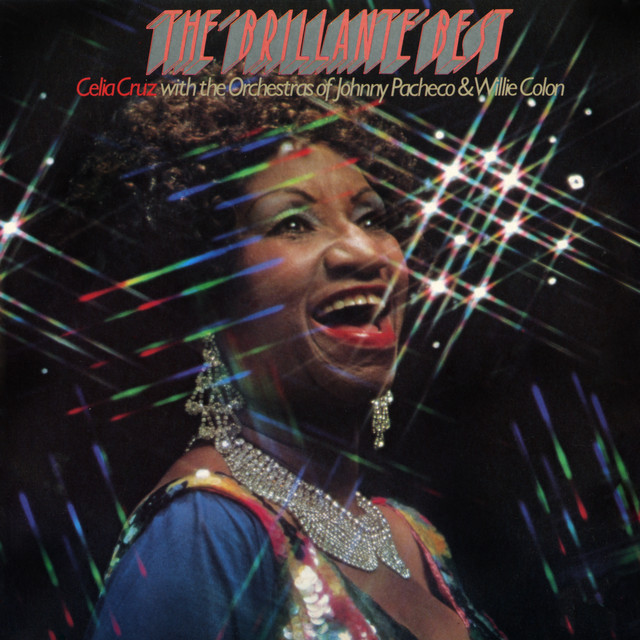
Suddenly India was a hot commodity, and she subsequently signed a recording contract with Ralph Mercado's label, <a href="spotify:search:label%3A%22RMM+Records%22">RMM Records</a>, the leading New York salsa label of the era. Her first assignment with the label was an appearance at the June 1993 <a href="spotify:search:label%3A%22RMM%22">RMM</a> all-star concert later released as Combinacion Perfecta (1996). The concert brought together many of New York salsa's living legends, such as <a href="spotify:artist:2weA6hhVqTIN2gSn9PUB9U">Celia Cruz</a> and <a href="spotify:artist:1c84wItoiAe1pEbpJMqUmQ">Oscar d'León</a>, and it took a moment to showcase <a href="spotify:search:label%3A%22RMM%22">RMM</a>'s two rising stars, <a href="spotify:artist:4wLXwxDeWQ8mtUIRPxGiD6">Marc Anthony</a> and India, who sang a duet, "Vivir Lo Nuestro." Released as a single in 1994, the song became a Top Ten hit and was subsequently included as a bonus track on India's album debut for <a href="spotify:search:label%3A%22RMM%22">RMM</a>. Meanwhile, she assisted <a href="spotify:artist:5dncbrnveDMX9DgxcedeUg">Vega</a> with a project of his, namely <a href="spotify:artist:5Fkj0k7EPUhIsESSIEA9f1">Masters at Work</a>, a house duo also featuring <a href="spotify:artist:1TrfxjXu8quyDw05p2bacX">Kenny "Dope" Gonzalez</a>. As <a href="spotify:artist:5Fkj0k7EPUhIsESSIEA9f1">Masters at Work</a>, <a href="spotify:artist:5dncbrnveDMX9DgxcedeUg">Vega</a> and <a href="spotify:artist:1TrfxjXu8quyDw05p2bacX">Gonzalez</a> were just beginning to establish themselves, largely on behalf of the aforementioned "Ride on the Rhythm." With India as their lead vocalist, <a href="spotify:artist:5dncbrnveDMX9DgxcedeUg">Vega</a> and <a href="spotify:artist:1TrfxjXu8quyDw05p2bacX">Gonzalez</a> produced a few tracks that would become classics: "I Can't Get No Sleep" and "When You Touch Me." Released as singles by <a href="spotify:search:label%3A%22Cutting+Records%22">Cutting Records</a>, as well as on The Album, <a href="spotify:artist:5Fkj0k7EPUhIsESSIEA9f1">Masters at Work</a>'s full-length debut, these songs only brightened her rising star, as did a couple other <a href="spotify:artist:5dncbrnveDMX9DgxcedeUg">Vega</a> productions that followed: "Love & Happiness (Yemaya y Ochún)" and "Beautiful People." Both released by <a href="spotify:search:label%3A%22Strictly+Rhythm+Records%22">Strictly Rhythm Records</a> in early 1994, the former was featured in various mixes on The Tribal EP, billed under the guise of <a href="spotify:artist:07cAb715kzeqA6rVa0hh58">River Ocean</a>, while the latter was a <a href="spotify:artist:6txh5tFMJyxSwT0iE7wX2w">Barbara Tucker</a> lead vocal performance arranged, co-written, and partly sung by India.
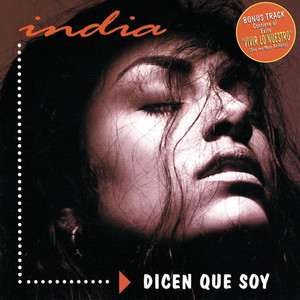
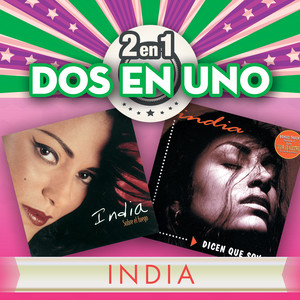
Following these classic house sessions, India made her <a href="spotify:search:label%3A%22RMM%22">RMM</a> debut with Dicen Que Soy (1994), produced by salsa maestro <a href="spotify:artist:4Ht1HigABvctq7wW4D3jAC">Sergio George</a>. In short, it was her mainstream breakthrough. Not only did Dicen Que Soy spawn five charting hit singles ("Nunca Voy a Olvidarte," "Que Ganas de No Verte Mas," "Ese Hombre," "Dicen Que Soy," and "O Ella o Yo" -- two of which topped the Latin Tropical/Salsa Airplay chart, and all of which were Top Tens), but it also broke into the Top Five of the Top Latin Albums chart and topped the Tropical/Salsa one. Dicen Que Soy was more than popular; it was a phenomenon. During 1994-1995, India was to salsa what <a href="spotify:artist:4pv1Jo4PbYI8LMADJoTWjE">Olga Tañón</a> was to merengue: her music was ubiquitous on tropical radio. Needless to say, <a href="spotify:search:label%3A%22RMM%22">RMM</a> was pleased with the reception of Dicen Que Soy, and Mercado proceeded to capitalize on his label's new superstar, teaming her once again with a Latin jazz legend, in this case <a href="spotify:artist:6SPpCqM8gOzrtICAxN5NuX">Tito Puente</a>, and upping the ante further by featuring <a href="spotify:artist:2Hn9fch2OLB5jZuEAVjTCe">the Count Basie Orchestra</a> on a few songs as well. Produced, directed, and chiefly arranged by <a href="spotify:artist:6SPpCqM8gOzrtICAxN5NuX">Puente</a>, Jazzin' (1996) is comprised of several jazz warhorses, such as "Fever," "Love for Sale," and "Wave." There's certainly nothing novel about these songs, which have been played to death over the years; however, the performances are given a strong dash of salsa flavoring, which leads to some excitement, as India is clearly spotlighted throughout. Also in 1996, <a href="spotify:search:label%3A%22RMM%22">RMM</a> licensed Llegó la India Via Eddie Palmieri for reissue and then released Mega Mix, which spliced together previously released highlights in an attempt to create something new for insatiable consumers. This was also the year India and <a href="spotify:artist:5dncbrnveDMX9DgxcedeUg">Vega</a> divorced, as their musical careers were heading in different directions and moving increasingly fast.
The following year was another big one for India, as it most notably included the release of Sobre el Fuego (1997) by <a href="spotify:search:label%3A%22RMM%22">RMM</a>. Produced by <a href="spotify:artist:6JP0KRVKNawvRfkFA4mxtD">Isidro Infante</a> and featuring collaborations with labelmates <a href="spotify:artist:2weA6hhVqTIN2gSn9PUB9U">Celia Cruz</a> and <a href="spotify:artist:6IcML1o1dzmMwBim7hyirf">Johnny Rivera</a>, Sobre el Fuego matched the massive success of Dicen Que Soy, likewise breaking into the Top Five of the Top Latin Albums chart and topping the Tropical/Salsa one. It spun off a run of hit singles, the highest-charting among them "Me Canse de Ser la Otra," "Mi Mayor Venganza," and "Costumbres," which each reached the Hot Latin Tracks Top Ten. Also in 1997, India cast a tall shadow over the house scene, with a few instant classics produced by <a href="spotify:artist:5Fkj0k7EPUhIsESSIEA9f1">Masters at Work</a>. First, there was her standout appearance on the duo's eponymous <a href="spotify:artist:2pMSfxqqpW87tzVwPQxeFw">Nuyorican Soul</a> album for Giant Step Records, "Runaway." The disco-house track was released as a single, as was "To Be in Love," an even bigger hit, on <a href="spotify:search:label%3A%22MAW+Records%22">MAW Records</a>, along with "India con Lavoe." These many hits carried over well into 1998, with one single from Sobre el Fuego after another entering the charts. And just when the <a href="spotify:artist:5Fkj0k7EPUhIsESSIEA9f1">Masters at Work</a> singles seemed to run their course, there was another <a href="spotify:artist:2pMSfxqqpW87tzVwPQxeFw">Nuyorican Soul</a> single, "I Love the Nightlife (Disco 'Round)," this one from the Last Days of Disco soundtrack.
India's career subsequently began to slow down, as she steadily receded from the big time and released albums sparingly. Sola (1999), the follow-up to Sobre el Fuego, was a fairly low-key album, influenced by <a href="spotify:artist:5YR49Hzg7h990JxfXuxm3a">La Lupe</a>. Produced again by <a href="spotify:artist:6JP0KRVKNawvRfkFA4mxtD">Infante</a> but in a much less flashy manner, it spun off only two hits, "Hielo" and "Sola," and didn't sell as well as either Dicen Que Soy or Sobre el Fuego. Still, it was far from a disappointment, and some consider it among her best. Too, it was India's final album for <a href="spotify:search:label%3A%22RMM%22">RMM</a>, for the label declared bankruptcy in 2001; a greatest-hits compilation, The Best..., was released by <a href="spotify:search:label%3A%22RMM%22">RMM</a> in partnership with <a href="spotify:search:label%3A%22Universal+Music+Latino%22">Universal Music Latino</a> at the end of the year, bringing the most successful run of India's career to a close. In the years that followed, <a href="spotify:search:label%3A%22Universal%22">Universal</a> repackaged India's <a href="spotify:search:label%3A%22RMM%22">RMM</a> recordings endlessly, issuing budget-line compilations of all shapes, colors, and sizes.
Nevertheless, India marched on with her recording career, beginning with <a href="spotify:search:label%3A%22Sony+Discos%22">Sony Discos</a>. She only recorded one album for the label, Latin Songbird: Mi Alma y Corazón (2002), but it was a fine, if uneven, effort that showcased a wider swath of Latin styles, including bolero, bachata, merengue, pop, and ballad exercises, in addition to salsa. As usual, Latin Songbird did well on the tropical charts, reaching number one, as did the singles "Sedúceme" and "Traición." Three years later, she surfaced on <a href="spotify:search:label%3A%22Univision%22">Univision</a> with Soy Diferente (2006), a similarly eclectic album that acknowledged the concurrent rise of reggaeton. Some fans, especially longtime ones, took issue with the "salsatón" inflections, but Soy Diferente hit number one on the Top Tropical Albums chart and spun off three Latin Tropical Airplay Top Five singles ("Soy Diferente," "Solamente una Noche," "Lágrimas"). Única, released in 2010, included several bittersweet moments, including a cover of <a href="spotify:artist:0JDkhL4rjiPNEp92jAgJnS">Roy Orbison</a>'s "Crying." The single "Estupida" hit number one on the Latin Tropical Airplay chart. Her next full-length effort was a 2015 tribute album to one of the great Mexican ranchera singers, Intensamente con Canciones de Juan Gabriel. ~ Jason Birchmeier, Rovi
Monthly Listeners
2.5 million
Monthly Listeners History
Track the evolution of monthly listeners over the last 28 days.
Followers
1.3 million
Followers History
Track the evolution of followers over the last 28 days.
Total Streams
672.4 million
Total Streams History
Track the evolution of total streams over the last 28 days. This data is calculated from all tracks listed in the artist's discography.
Top Cities


Related Artists